




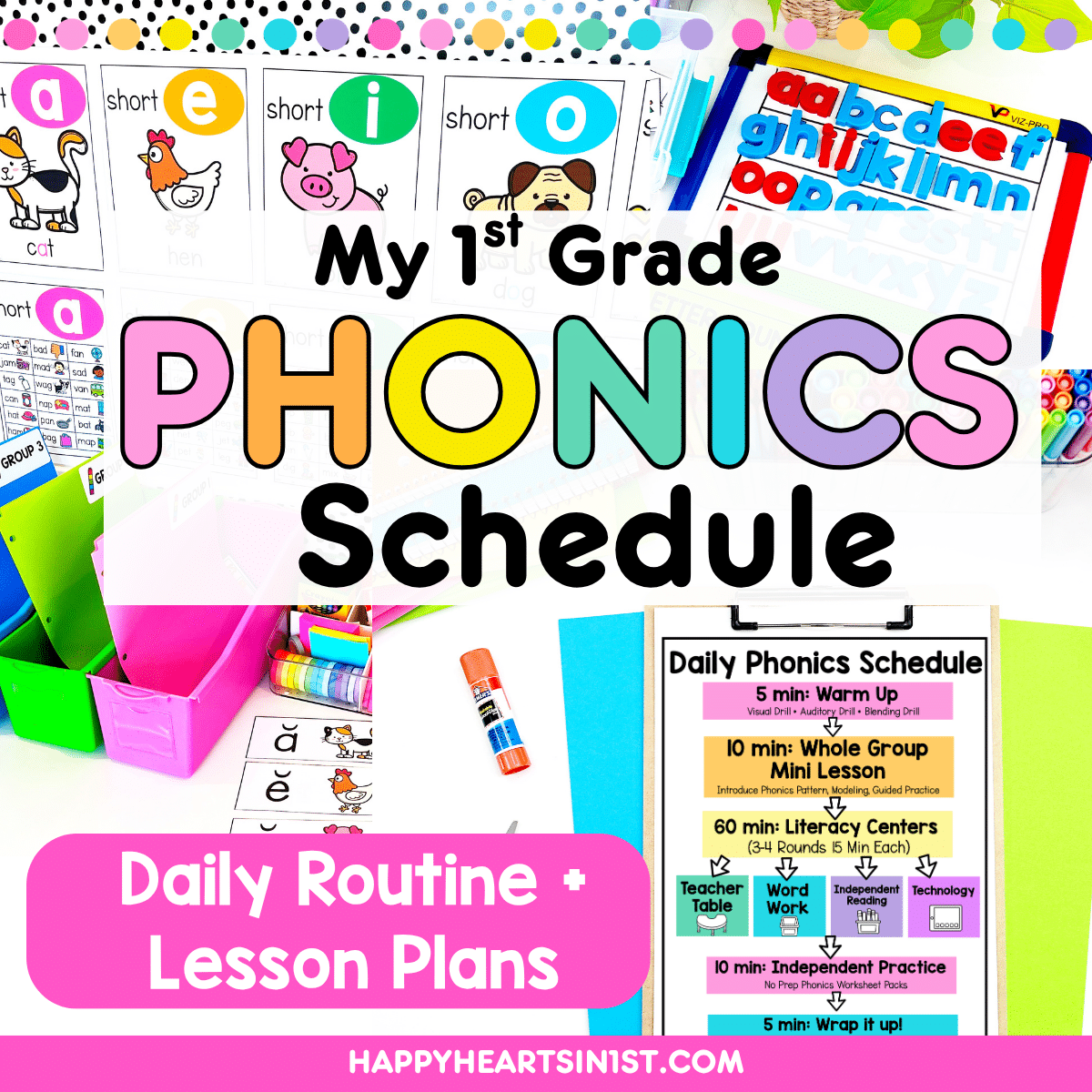
Planning a daily phonics schedule in 1st grade can feel overwhelming. There are so many phonics skills to teach, and finding engaging lessons and activities for each one takes time. The good news is that your 1st grade phonics schedule doesn’t have to change every week. In fact, using the same simple structure all year long has made my students more confident, more independent, and has saved me so much planning time.
In this post, I’ll walk you through my daily 1st grade phonics schedule, including whole group lessons, literacy centers, independent practice, weekly assessments, and the Teach It, Practice It, Apply It system I use to keep phonics instruction simple all year long.
One of the biggest things that’s simplified phonics in my classroom is using the same routine every week. Instead of searching for new activities for every phonics skill, I simply change the skill while keeping the routine the same.
My students know exactly what to expect. They become more confident, work more independently, and I spend so much less time planning each week.
In this post, I’ll walk you through my simple Teach It, Practice It, Apply It phonics schedule, where I recommend starting at the beginning of the year, and how all of my phonics resources work together to create one complete system!
My Structured Literacy Approach to Teaching Phonics
One of the best things that happened during my first few years of teaching was being sent to Orton Gillingham training. It completely changed the way I thought about teaching phonics and reading.
I learned the importance of teaching phonics explicitly, systematically, and building one skill at a time. Instead of jumping around, students need opportunities to learn a new skill, practice it in different ways, and apply it until they’re confident.
That philosophy has shaped every phonics resource I’ve created. Whether you’re using my Phonics Slides, Decode the Room activities, or No Prep Worksheets, they’re all designed to follow the same structured approach while giving students plenty of opportunities to practice each new skill.
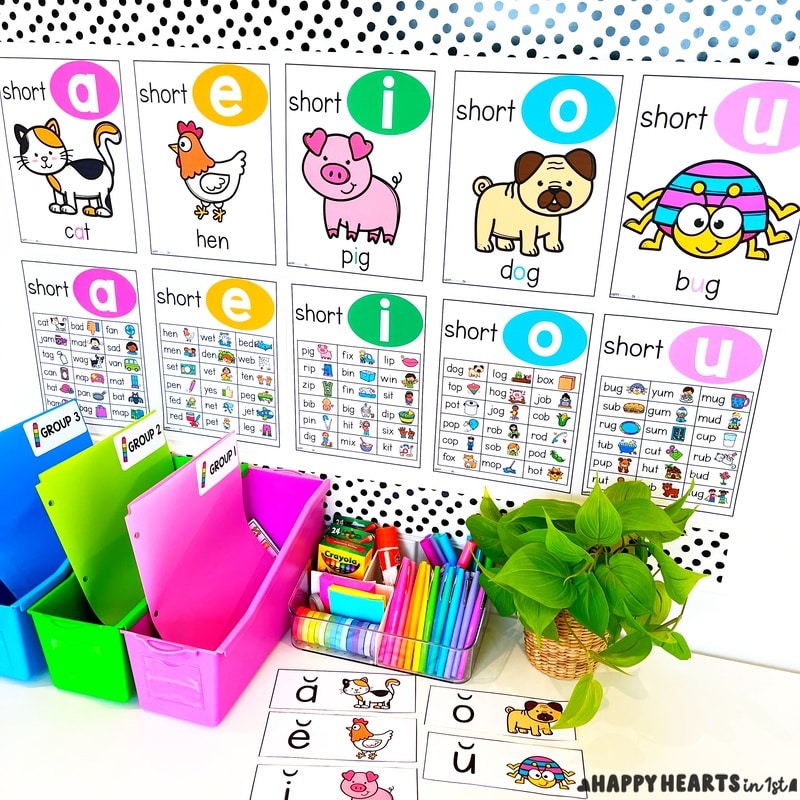
My Simple Teach It, Practice It, Apply It Phonics Schedule
One of the biggest reasons this routine works is because it stays the same all year long. As students learn new phonics skills, the routine doesn’t change. I simply swap out the phonics skill while keeping the activities familiar.
What Does My Daily Phonics Block Look Like?
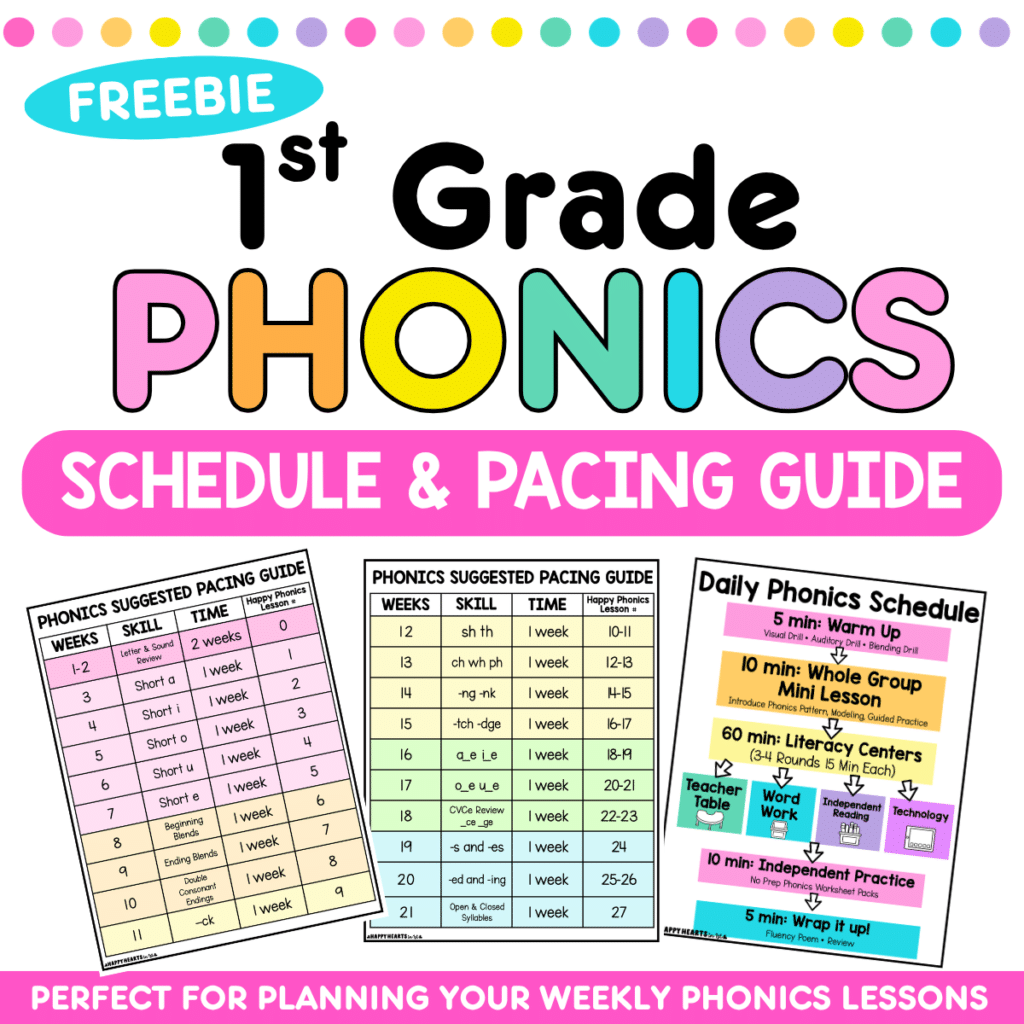
Before we dive into each part of my phonics routine, here’s a look at what our daily phonics schedule looks like. The exact timing may vary depending on your literacy block, but the overall routine stays the same all year long. As we move through this post, I’ll explain each part in more detail.
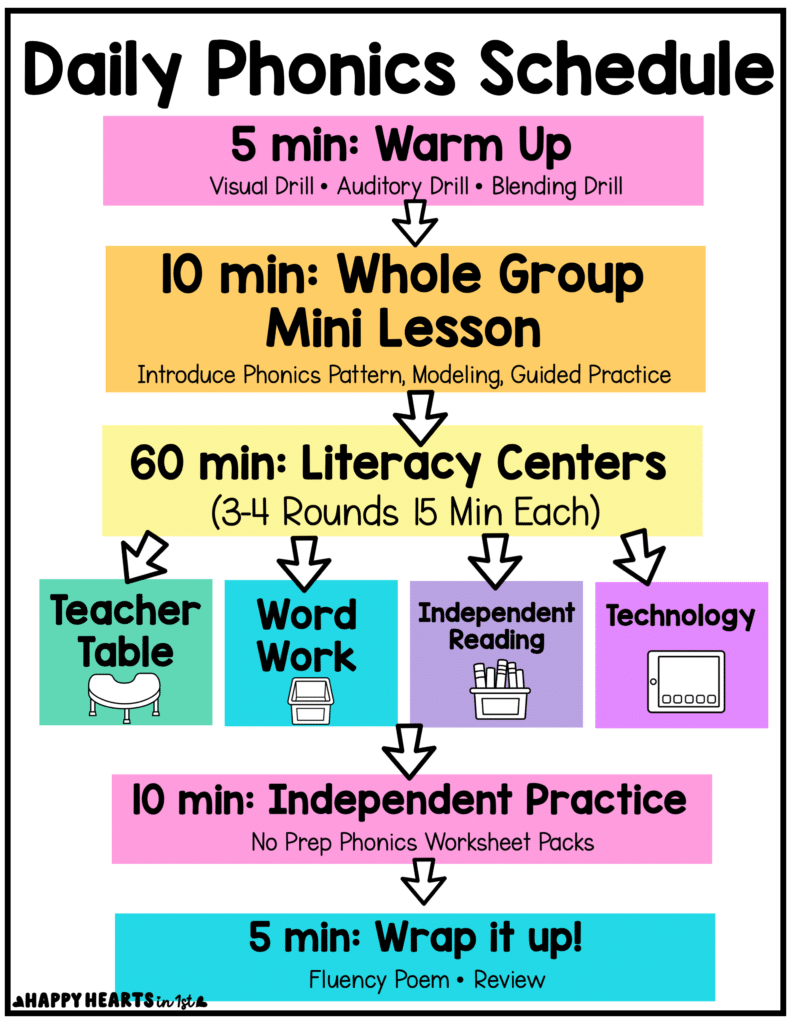
Every day, our phonics block follows the same predictable routine. While the phonics skill changes each week, the structure stays the same. This consistency helps students become more independent and allows me to spend less time planning and more time teaching.
Our phonics instruction is built around three simple steps:
- 💗 Teach It
Introduce the new phonics skill through explicit, whole group instruction. - 💗 Practice It
Build confidence through engaging literacy centers, games, and repeated practice. - 💗 Apply It
Reinforce the new skill through independent practice, small groups, fluency, and weekly assessments.
Want My FREE 1st Grade Phonics Pacing Guide? 💗
Planning out an entire year of phonics can feel like a LOT!
I put together a FREE 1st Grade Phonics Schedule + Pacing Guide to make it easier. It includes my suggested order for teaching 38 weeks of 1st grade phonics skills PLUS a simple daily phonics schedule you can use to plan your literacy block!
💗 Grab the FREE Phonics Pacing Guide!
Phonics Schedule Step 1: Teach it! Whole Group Phonics Lessons for 1st Grade
Every new phonics skill starts with explicit, whole group instruction. Before asking students to practice independently, I want to make sure they have a strong understanding of the new phonics pattern.
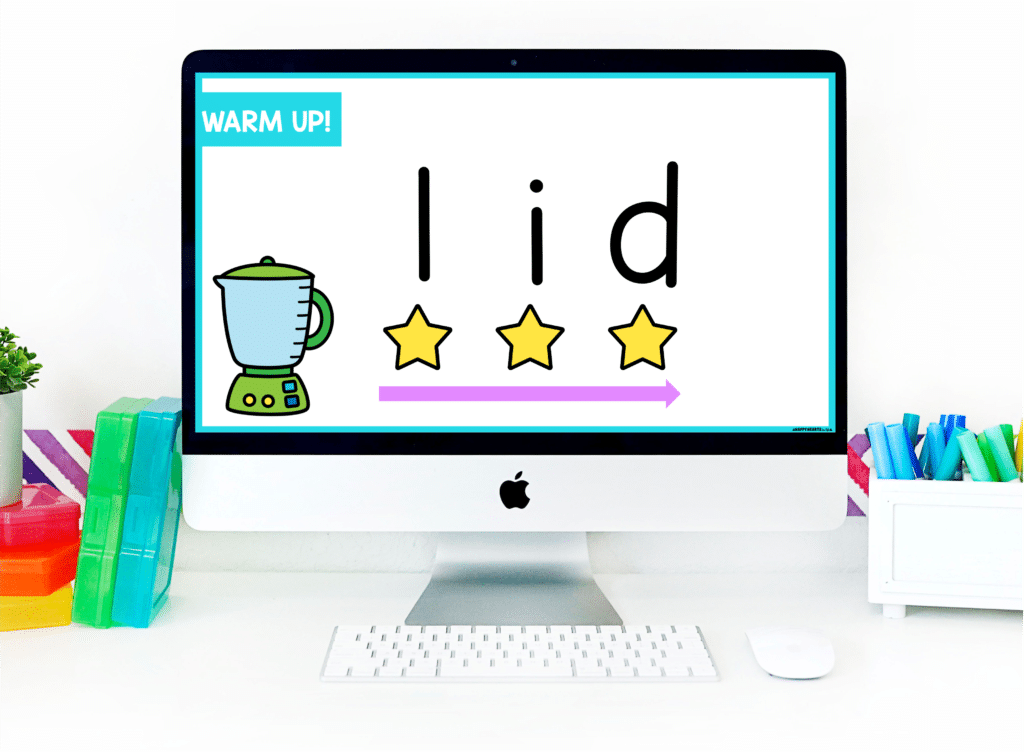
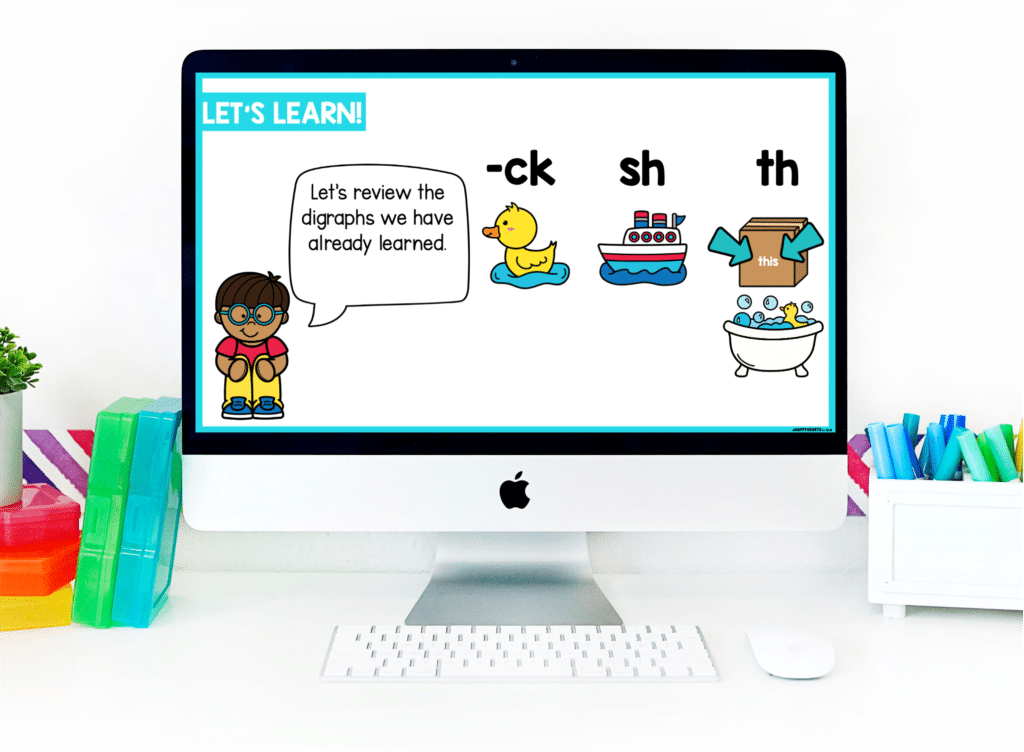
My students join me on the rug with a turn and talk partner and a dry erase board, so everyone is actively participating throughout the lesson. I use interactive phonics slides to guide our learning, and we follow the same lesson routine each week. The consistent structure helps students know what to expect while allowing us to focus on the new phonics skill.
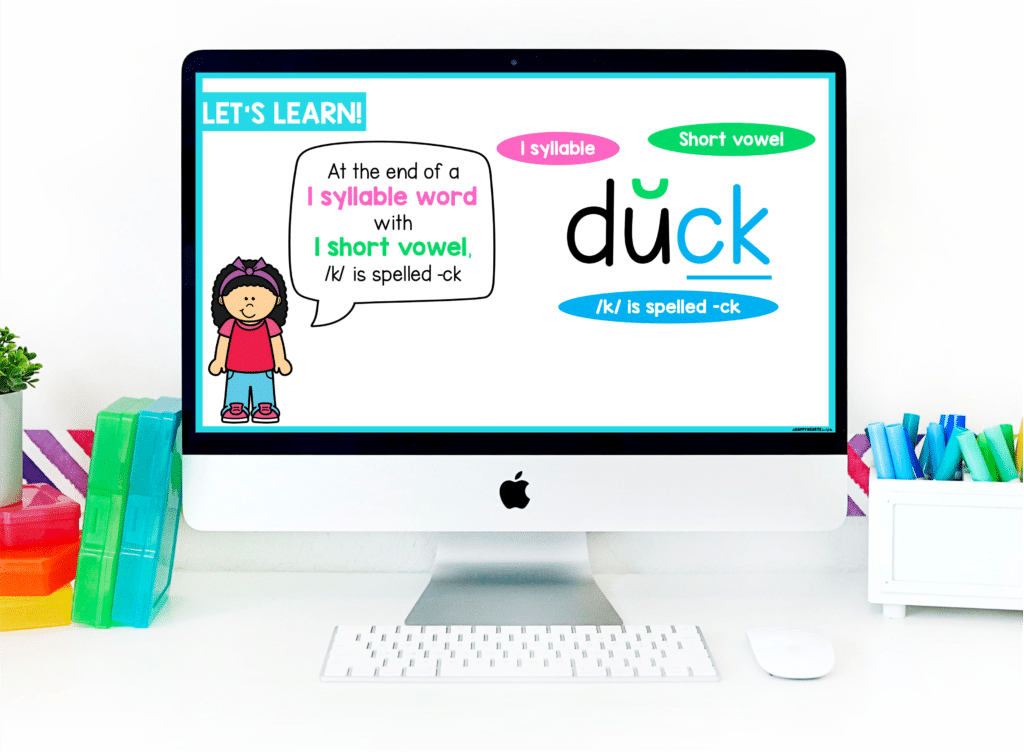
Throughout our lessons, students are actively participating by:
- Reviewing previously learned phonics skills
- Reading and blending words
- Listening for target sounds
- Building and writing words
- Mapping phonemes
- Reading connected text
By keeping the routine consistent, I can spend less time explaining directions and more time helping students become confident readers. explaining new procedures each week. Students become more confident, participate more, and are ready to move into independent practice.
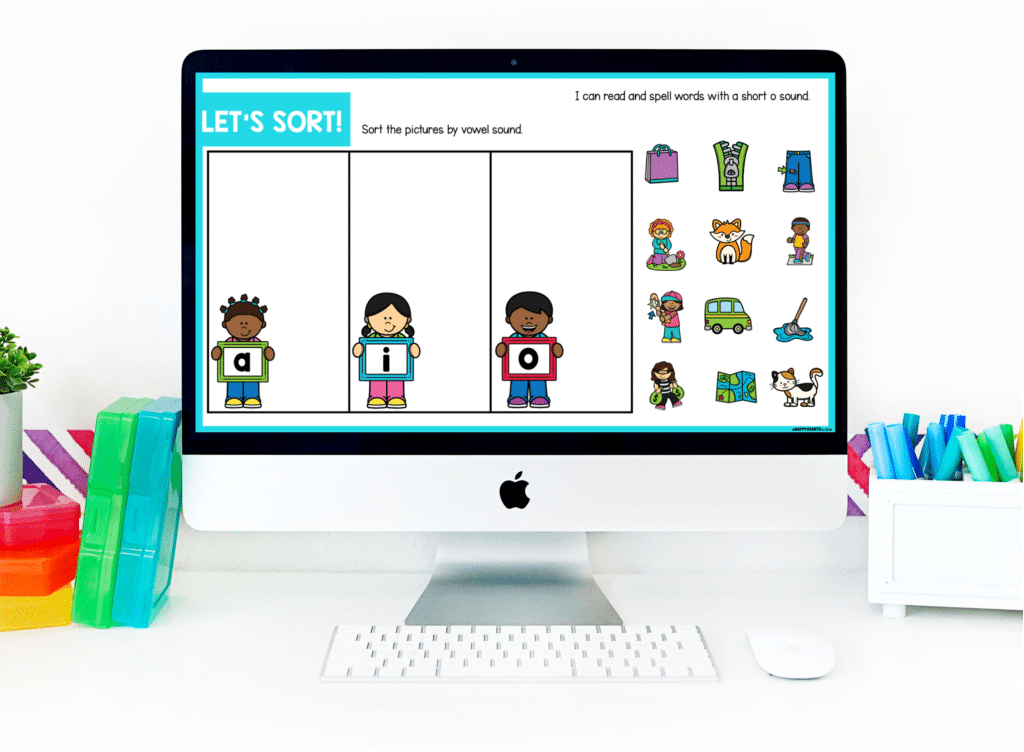
👉 Want a closer look at my whole group lessons? Read my full post: 1st Grade Phonics Lessons: How I Teach Phonics with Slides.
Want slides for every 1st grade phonics skill made for you? Check out my 1st Grade Phonics Slides bundle!
Phonics Schedule Step 2: Practice It! 1st Grade Literacy Centers for every Phonics Skill
After our whole group phonics lesson, students have opportunities to practice the new skill throughout our daily literacy centers.
Each day, my students spend about 45 minutes rotating through reading centers. During that time, one of their center rotations is Word Work, where they practice the phonics skill we’re learning that week through engaging, hands on activities.
Just like my whole group lessons, the routines stay the same all year long. Instead of teaching brand new center activities each week, I simply change the phonics skill. This allows students to work independently while spending more time reading, sorting, building, and manipulating words.
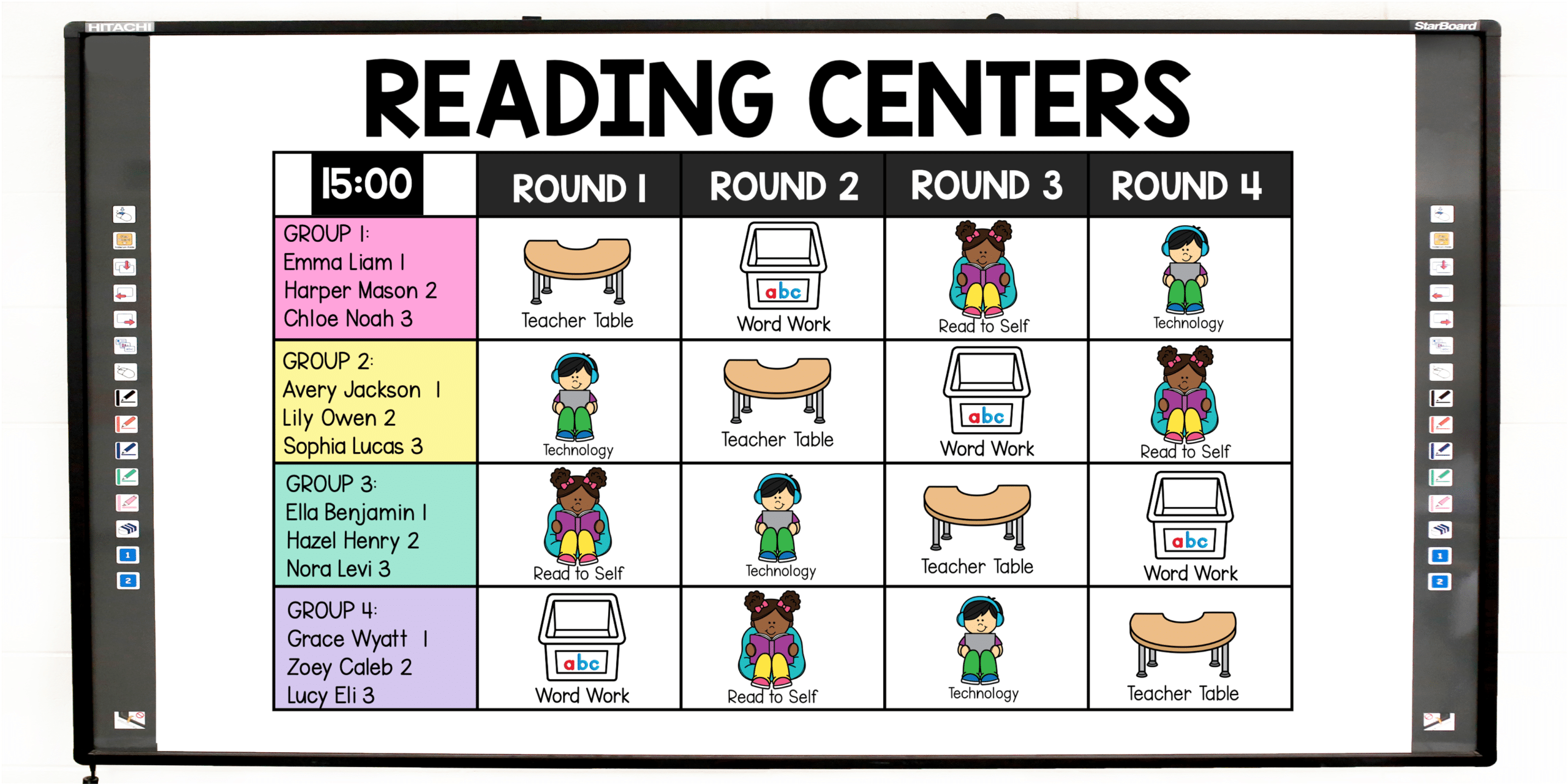
Here are a few of the Word Work routines we use every week:
Decode the Room
One of my students’ favorite Word Work activities is Decode the Room. Students move around the classroom reading words with the target phonics skill before recording them on a response sheet. Because the routine stays the same each week, students can work independently while practicing new phonics patterns through movement and repeated reading.
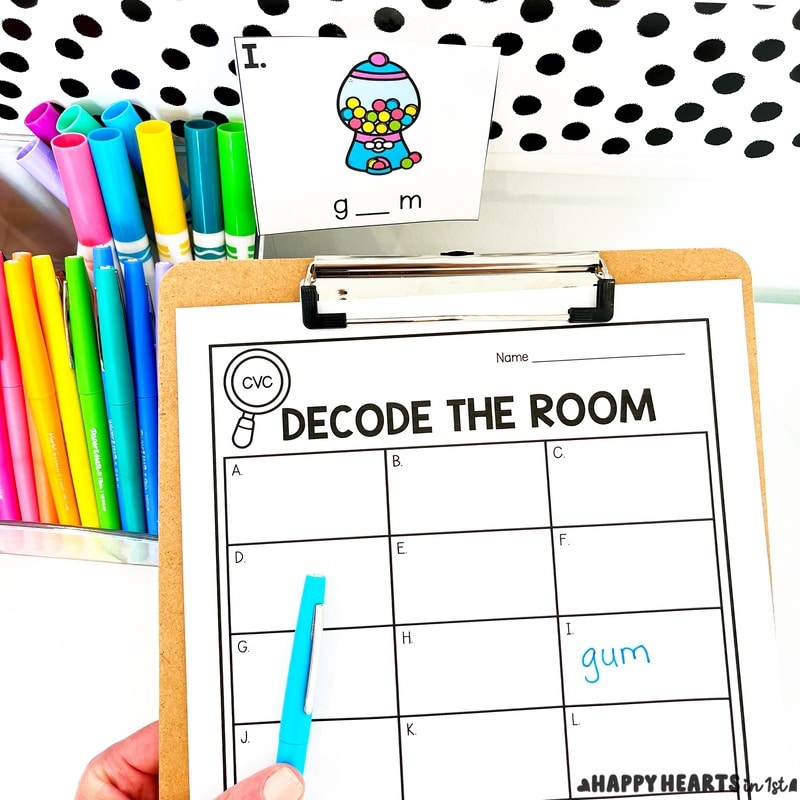
💗 The best part? Once students learn the routine, I simply swap out the phonics skill each week. They already know what to do, so I spend less time explaining directions and more time working with small groups.
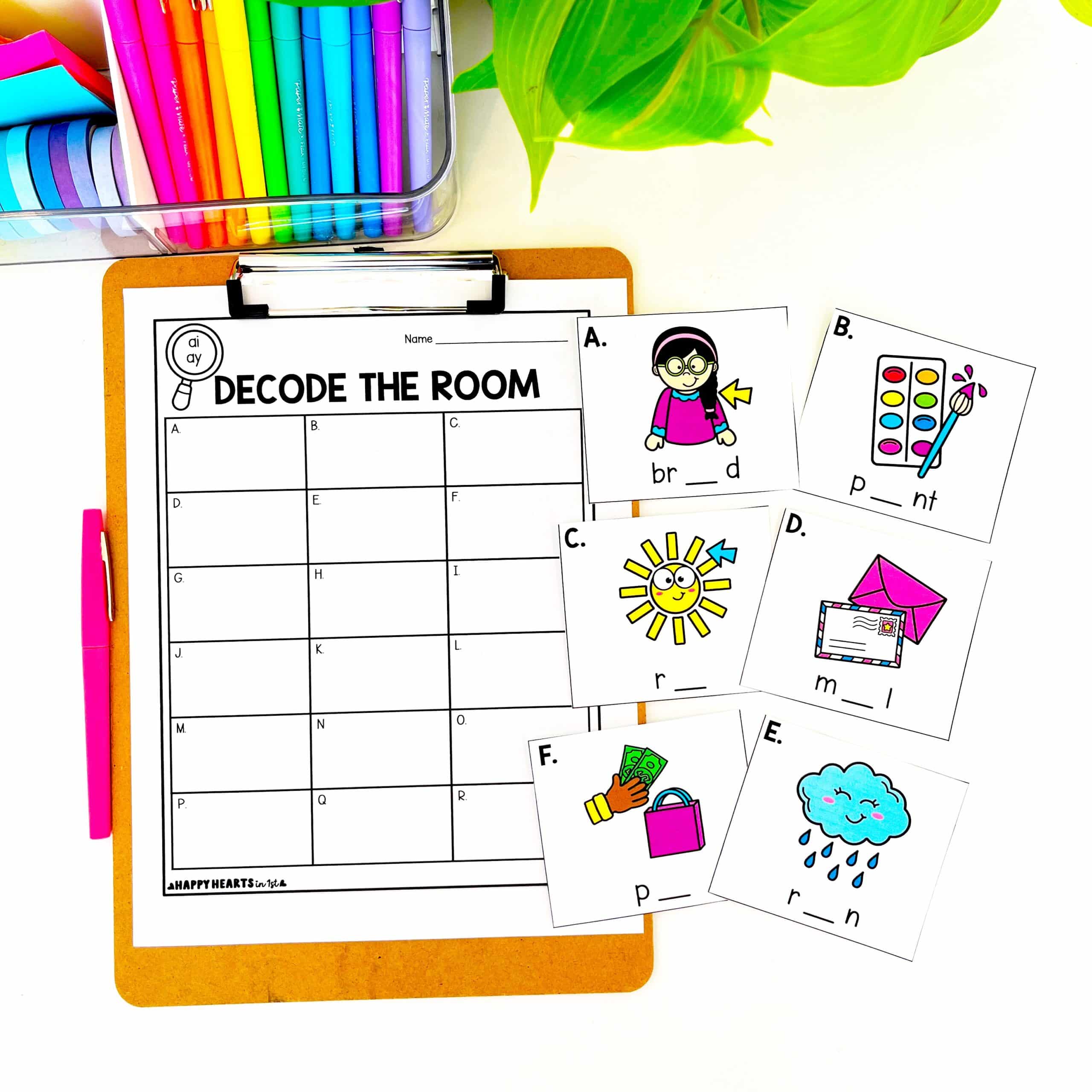
Phonics Sorts
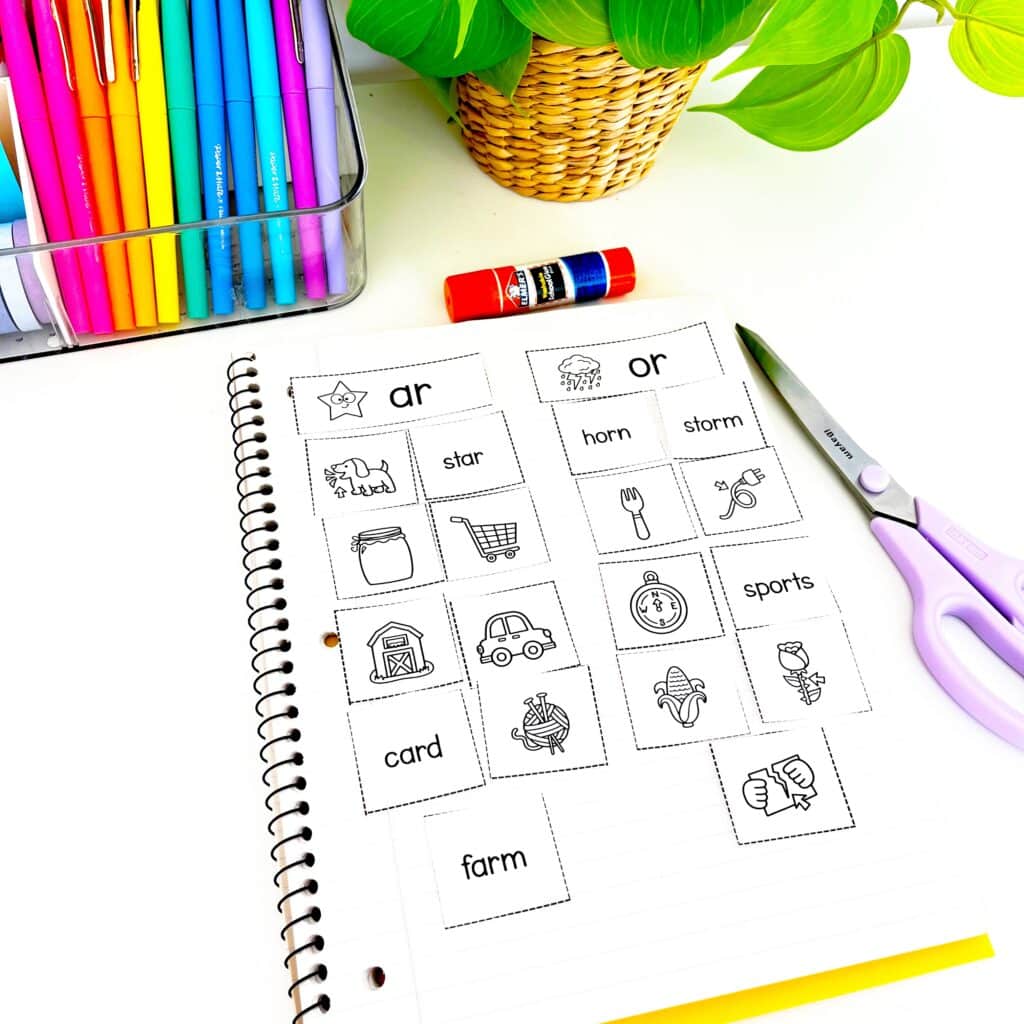
One of my favorite Word Work routines is our weekly phonics sort. At the beginning of each week, students cut out their individual sort and store the pieces in a small zipper pouch. This only takes a few minutes on Monday morning, and then the sort is ready to use all week long.
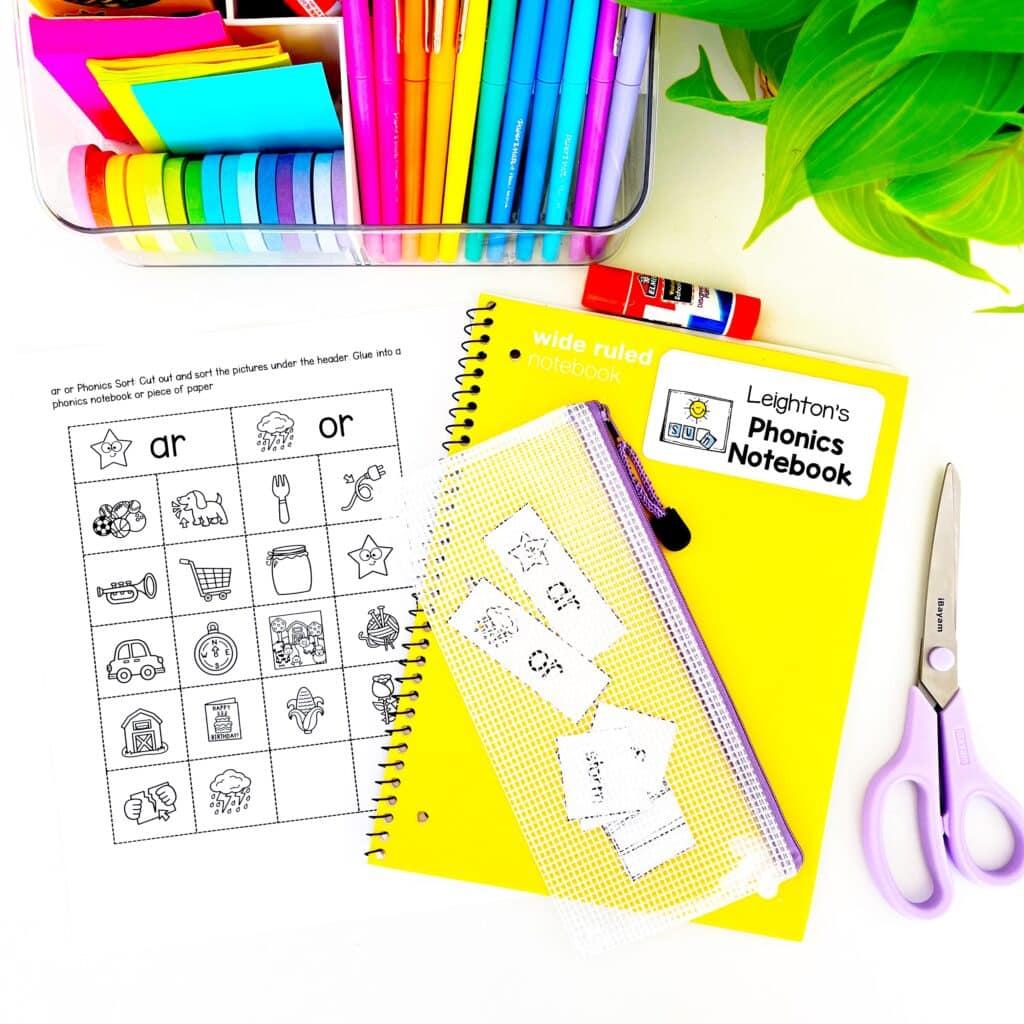
Throughout the week, students revisit the same sort during Word Work to practice reading, comparing, and sorting words by the target phonics skill. Repeated practice helps students recognize spelling patterns, strengthen decoding skills, and build confidence with each new concept.
At the end of the week, students glue their completed sort into their phonics notebooks. This gives them a growing collection of phonics skills they can revisit throughout the year while also creating a meaningful record of their learning.
Phonics Match
Our picture and word cards are one of the most versatile resources in our classroom because we use them in so many different ways. During Word Work, students can use the cards to play a simple memory match game, matching each picture to its corresponding word with the target phonics skill.
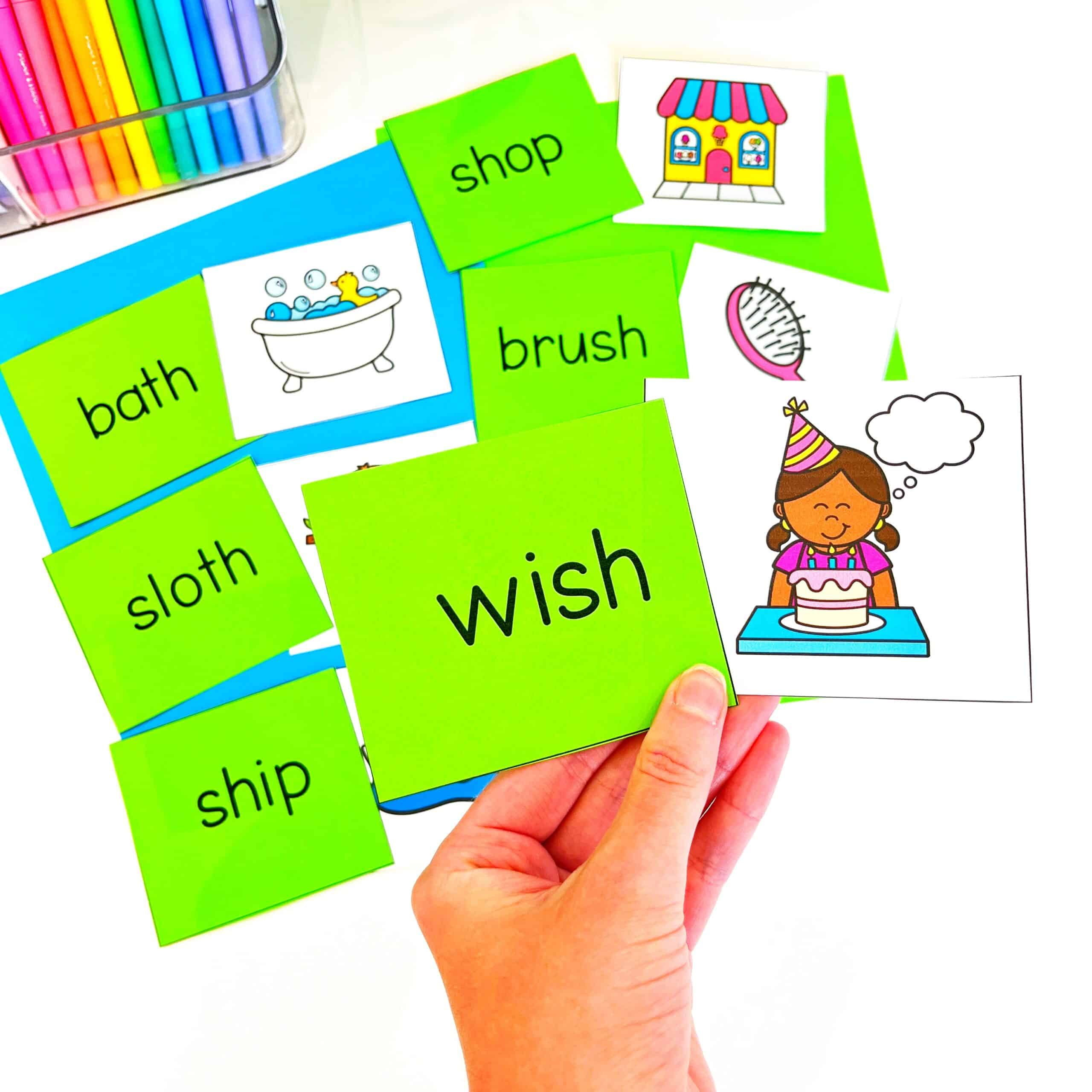
I also love using these same cards during our whole group phonics lessons. On Thursdays, we get up and moving with a collaborative review game called Find My Match. Each student receives either a picture card or a word card featuring our weekly phonics skill. Students walk around the classroom reading words and looking for their matching partner.
Once everyone has found their match, we gather together and use the same cards to sort the words in our pocket chart. It’s a fun, engaging way to review the phonics skill while giving every student an opportunity to read, move, and participate.
Pocket Chart Sort
Our pocket chart sorts are another simple routine that we use throughout the week. Using the same cards from our Word Work Center Pack, students sort words under the appropriate phonics heading.
I love that this activity can be used in so many different ways. Sometimes students complete the sort independently during Word Work, while other times we build the sort together during a whole group lesson or use it for additional practice in small groups.
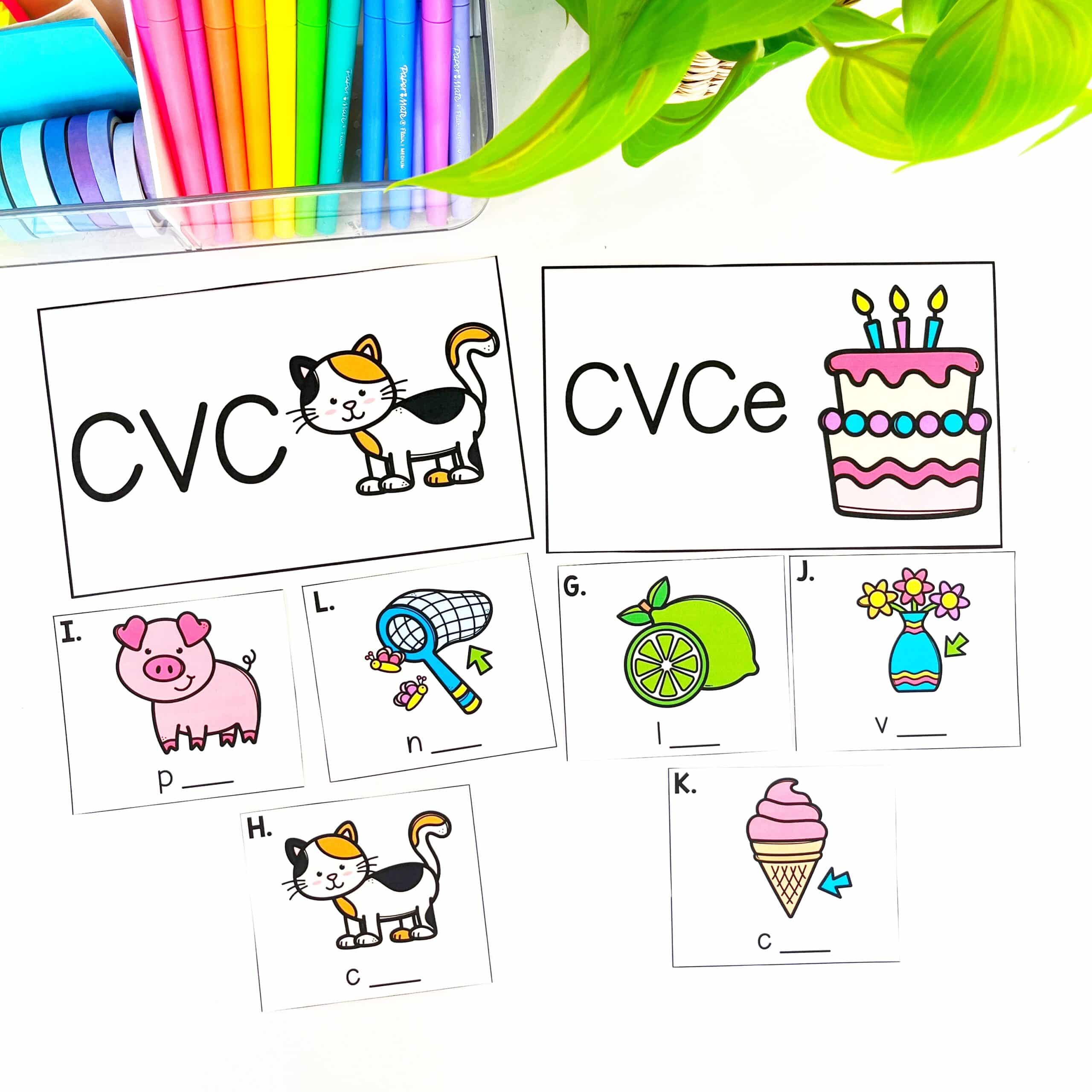
Because we’re always using the same set of cards, students become familiar with the routine and can focus on applying the new phonics skill instead of learning new directions. It’s an easy way to encourage meaningful conversations about sounds, spelling patterns, and why words belong in each category.
All of these Word Work activities are included in my Decode the Room Yearlong Bundle! It gives you multiple ways to practice each phonics skill using the same familiar routines all year long.
Phonics Schedule Step 3: Apply It!
After spending time learning the new phonics skill during our whole group lesson and practicing it through hands on Word Work activities, I like to slow things down with a few minutes of focused independent practice.
By this point, students have had multiple opportunities to hear, read, build, sort, and manipulate words with our target phonics skill. Independent practice gives them one final opportunity to apply what they’ve learned on their own while helping me see who is ready to move on and who may need a little extra support.
All of the worksheets I use to apply our weekly phonics skills are from my Phonics No Prep Worksheets Packs!
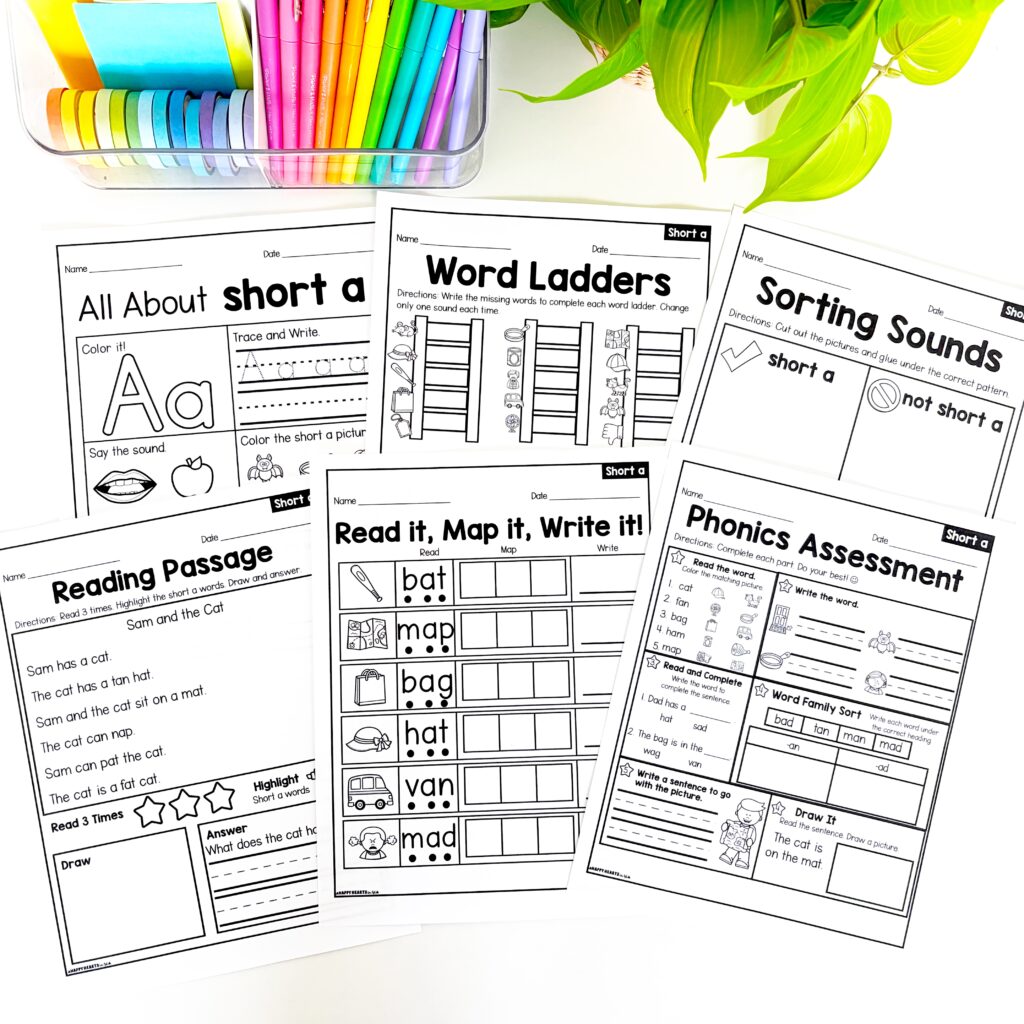
Weekly Phonics Work Pack
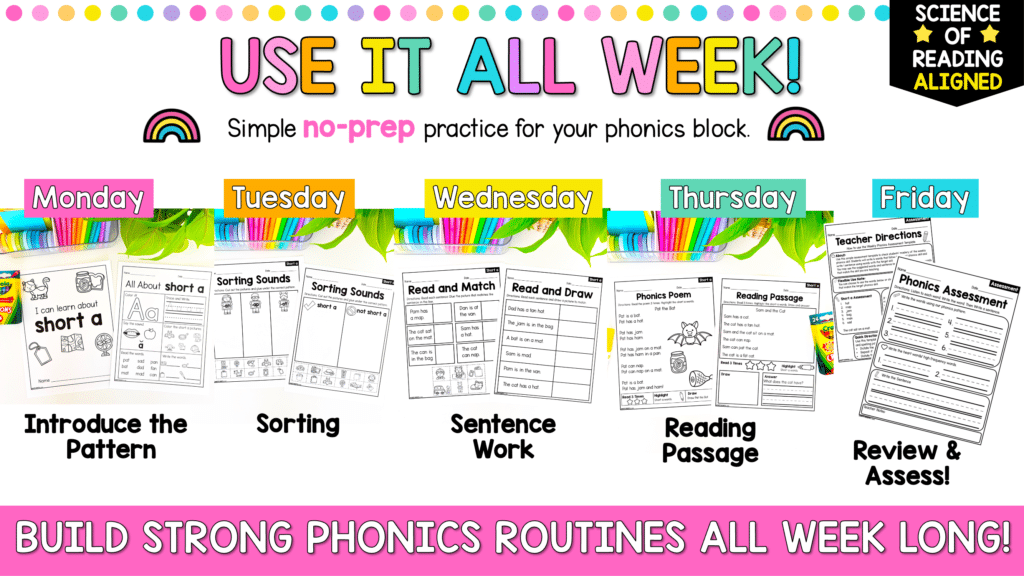
Each day, my students complete one worksheet from our weekly phonics work pack. Every page focuses on the phonics skill we’re learning that week while providing a variety of meaningful reading and writing practice.
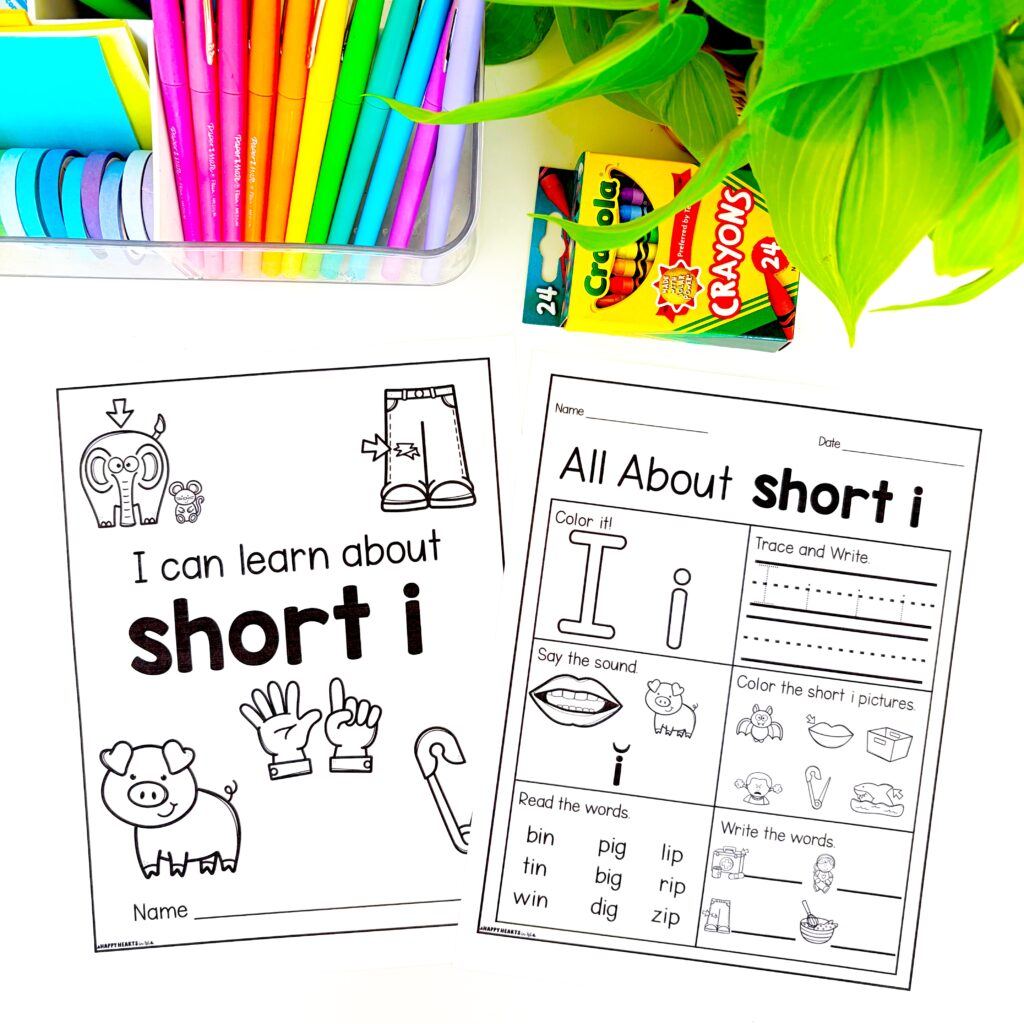
Throughout the week, students practice skills like reading words, writing words, sound mapping, building sentences, reading fluency passages, reading comprehension, and applying the phonics pattern in different ways. Since the format of the activities stays consistent, students know what to expect and can work independently with confidence.
Teacher Table and Small Groups
While students are completing their Word Work activities during literacy centers, I meet with small groups at my teacher table. I love that I can continue practicing the same weekly phonics skill by pulling activities from the Small Group Toolkit included in each of my No Prep Phonics Packs.
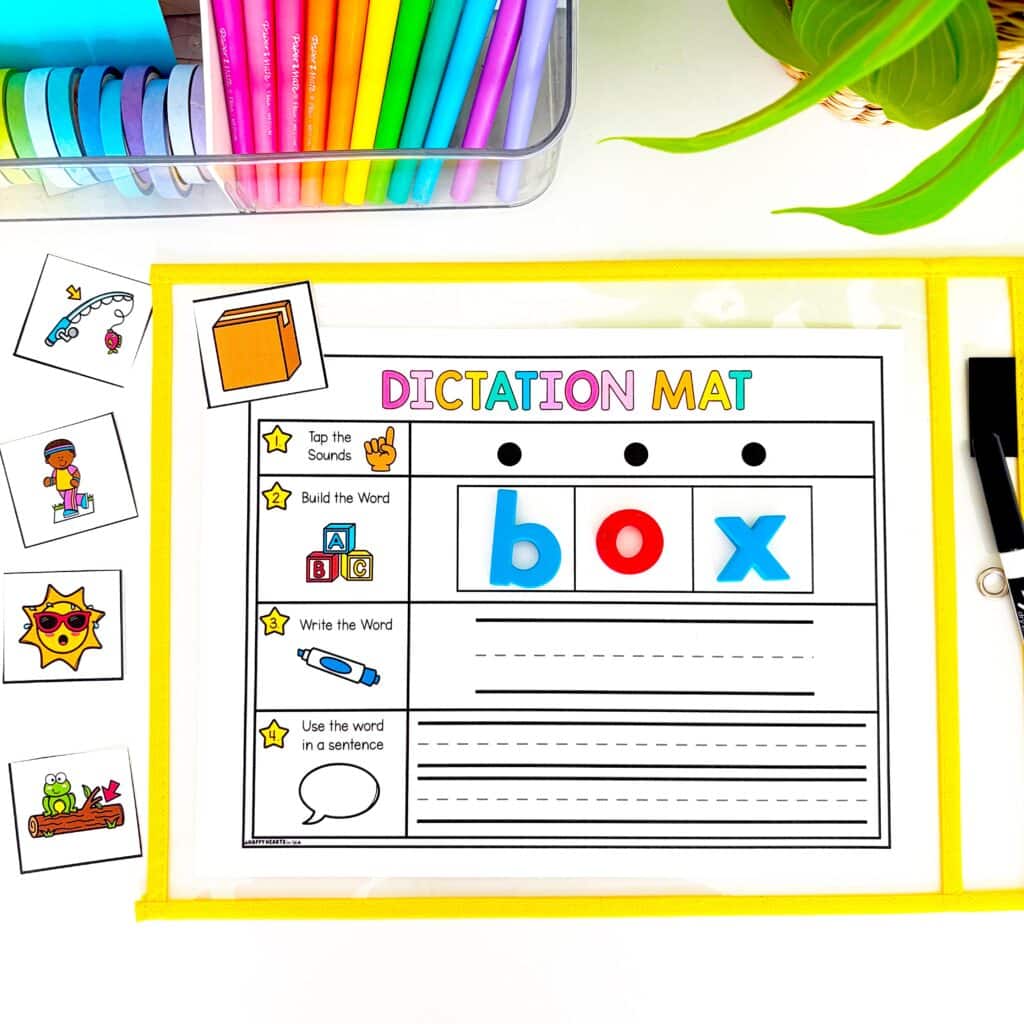
Each toolkit includes hands on activities like sound mapping mats, dictation practice, magnetic letter word building, fluency practice, decodable word lists, and assessments to help me provide targeted instruction based on my students’ needs.
Daily Phonics Poems
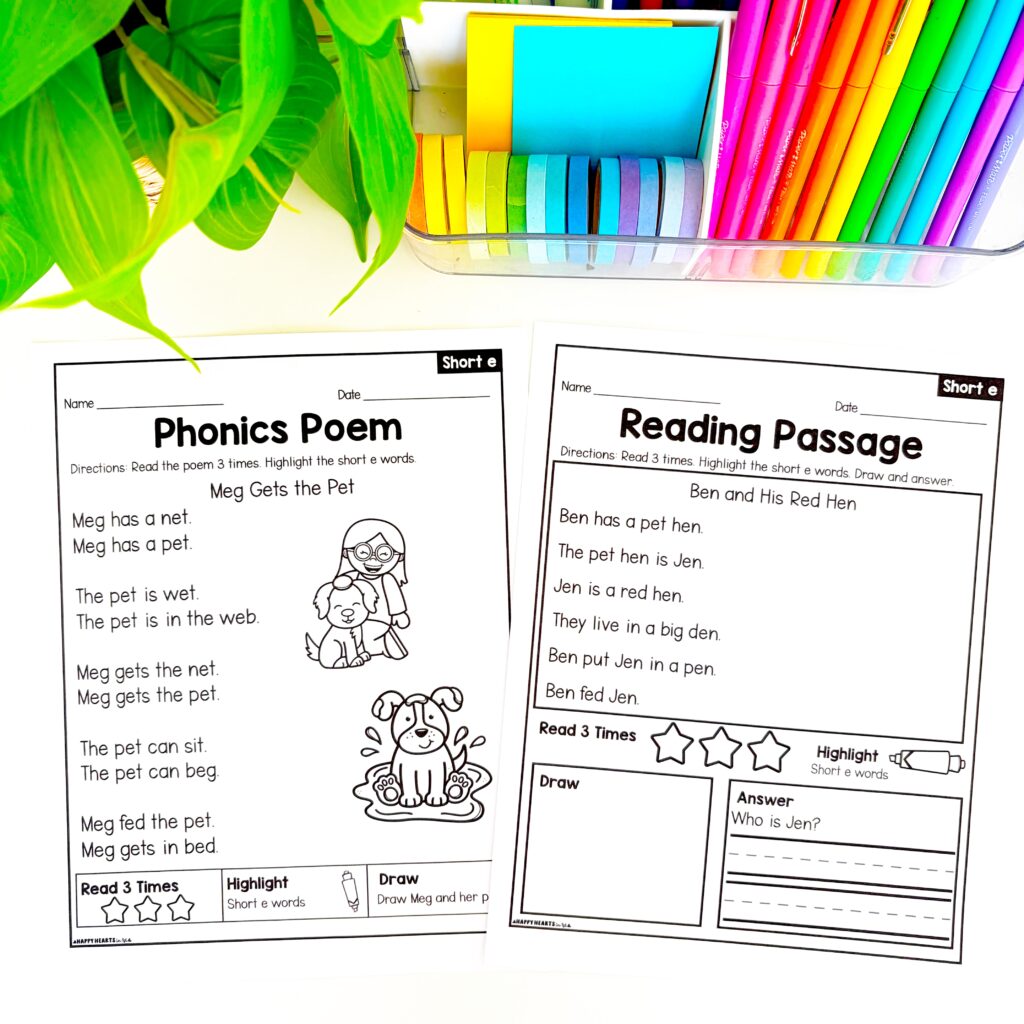
One of my favorite ways to reinforce our weekly phonics skill is with our Daily Phonics Poems. Each day, I display the poem on my interactive whiteboard, and we read it together as a class to build fluency, confidence, and automaticity.
After reading, we become phonics detectives by searching for and highlighting words with our target phonics pattern. This simple routine encourages students to apply the skill in connected text while giving them repeated exposure to words they’ve been practicing all week.
I love ending our phonics block with a poem because it’s engaging, requires very little prep, and gives students one more meaningful opportunity to read, notice patterns, and celebrate their growing reading skills.
How I fit Assessment into our Phonics Schedule in 1st Grade
Every Friday, we take a break from our usual phonics lesson to review the week’s skill and complete a quick assessment. I use the assessment templates included in my No Prep Phonics Packs to see who has mastered the skill and who may need a little extra practice before we move on.
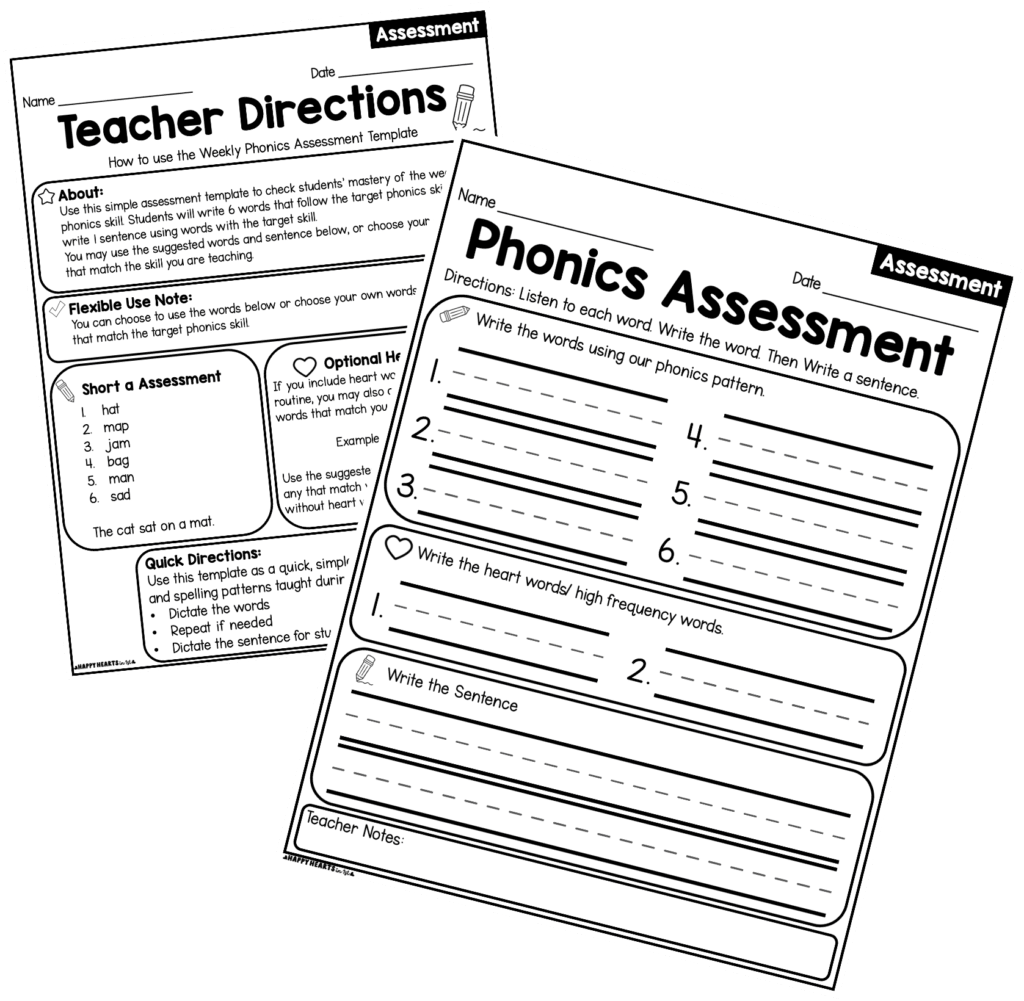
Because students have spent the week learning the skill through whole group lessons, literacy centers, independent practice, and small group instruction, the assessment is quick, low stress, and gives me the information I need to plan my next steps.
Fast Finishers
When students finish their daily phonics work, I like to have meaningful extension activities ready that continue reinforcing their learning.
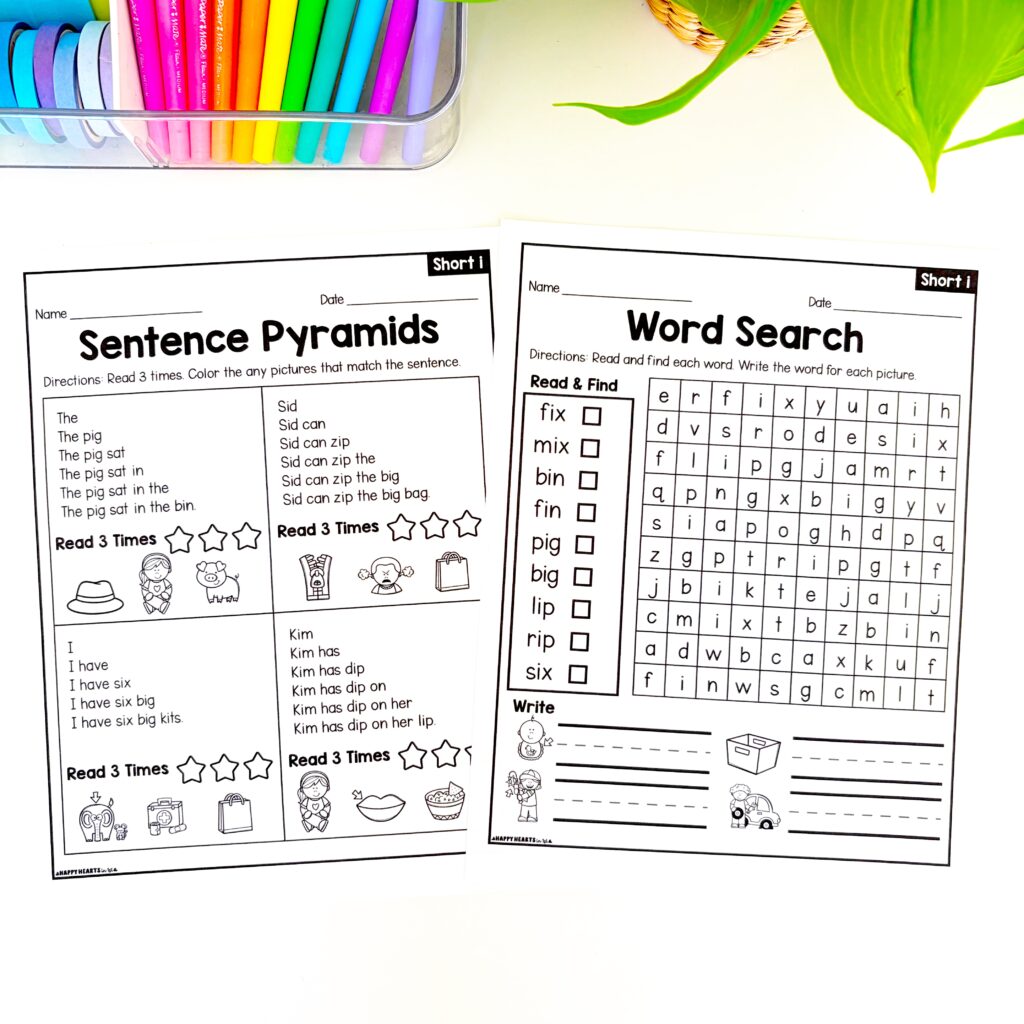
All of my Phonics No Prep Packs include fun pages like Word Searches and Word Ladders that students love!
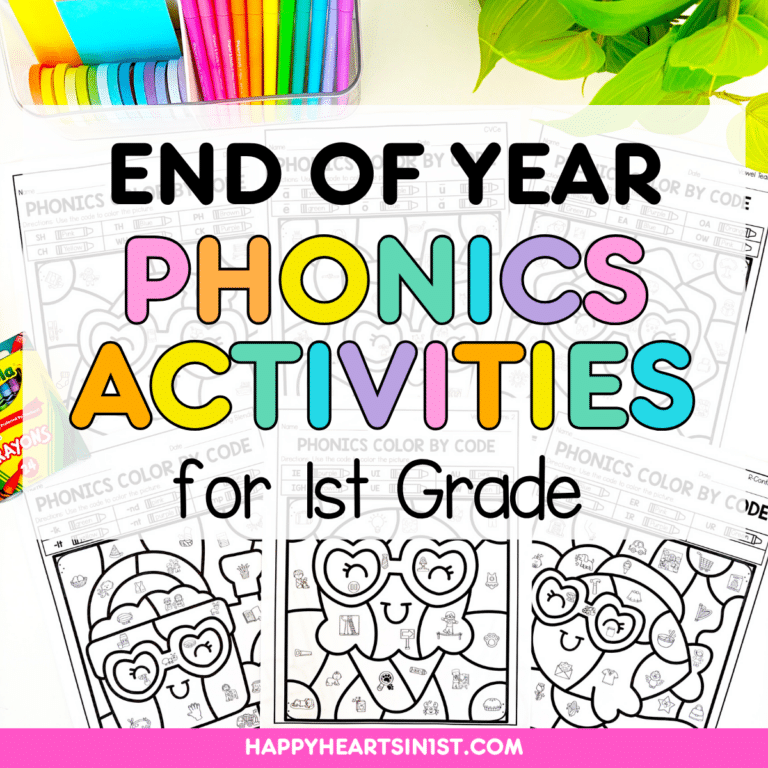
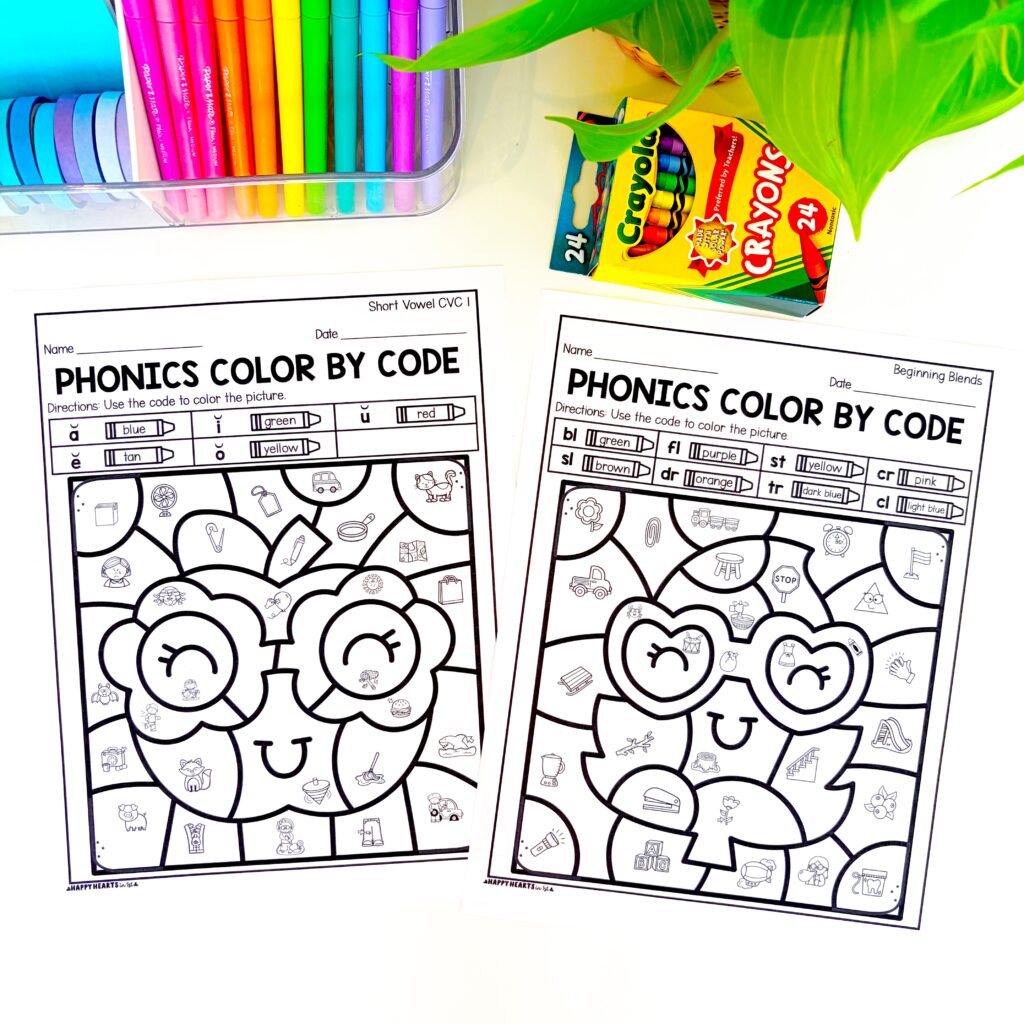
Another favorite option is my Phonics Color by Code pages. Since these review previously taught phonics skills, they’re perfect for spiraling old concepts while students work independently. Students love the coloring aspect, and I love that they’re continuing to strengthen their decoding skills!
My Daily Phonics Schedule
One of my favorite things about this routine is how simple it is to implement. While every classroom schedule is different, here’s what a typical phonics block looks like in my first grade classroom.
💗 Teach It | 15 Minutes Whole Group Lesson
We begin with a whole group phonics lesson where I explicitly teach our new phonics skill. I use interactive lessons, word building, decoding practice, and connected text.
💛 Practice It | 45 to 60 Minutes Literacy Centers
During literacy centers, students practice the weekly phonics skill through consistent Word Work routines. They include Decode the Room, phonics sorts, matching games, and pocket chart activities. While students are working independently, I meet with small groups using my Small Group Toolkit.
💙 Apply It | 15 Minutes Independent Practice
We wrap up our phonics block with focused independent practice using one page from our weekly phonics work pack. Students can continue practicing with phonics poems, challenge activities, or review previously taught skills with Phonics Color by Code pages.
No matter which activity we’re completing, we’re always focused on the same phonics skill. The routine stays the same while the phonics pattern changes each week, helping students build independence and confidence all year long.
Why This Phonics Routine Works
When I first started teaching, I felt like I needed a brand new center or activity every week to keep my students engaged. It wasn’t sustainable, and honestly, it wasn’t helping my students become more independent.
The biggest shift I made was creating consistent routines instead of constantly creating new activities.
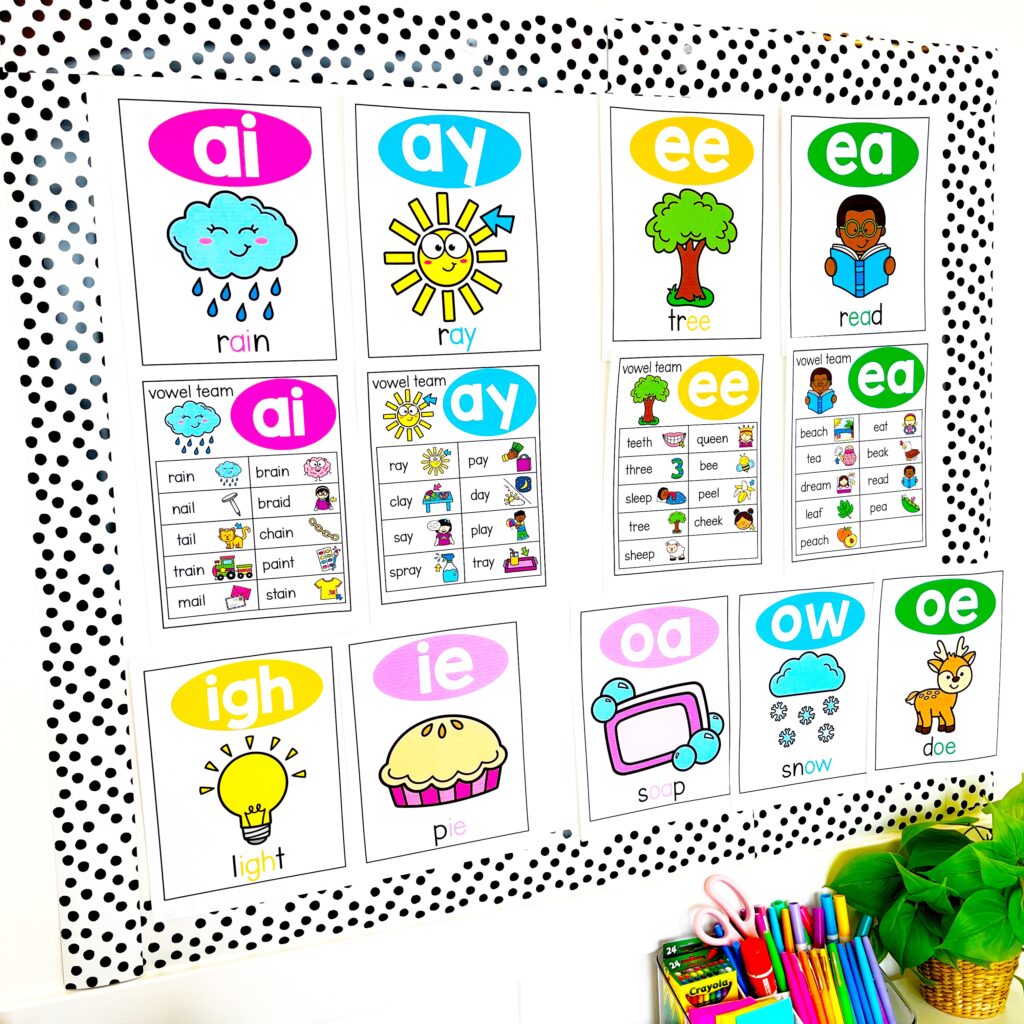
Now, my students know exactly what to do because the routines stay the same. The only thing that changes is the phonics skill we’re learning. Instead of spending time teaching new directions each week, I can spend that time teaching students to become stronger readers.
This simple Teach It, Practice It, Apply It routine has made my phonics block more organized, my students more confident, and my lesson planning easier. Whether you’re just getting started or looking to simplify your literacy block, I hope this routine gives you ideas you can use in your own classroom.
Ready to Build Your Own Phonics Routine?
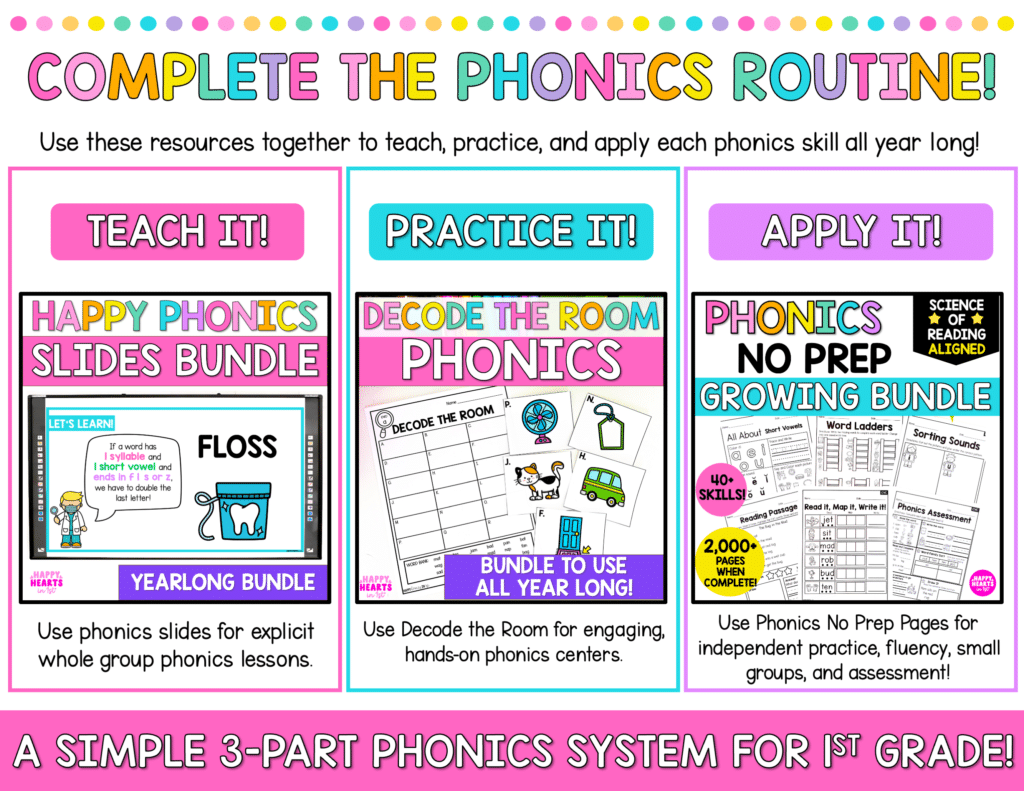
If you’re ready to create a simple, consistent phonics routine in your classroom, these are the three resources I use all year long.
💗 Teach It: Phonics Lesson Slides
Introduce new phonics skills with interactive lessons, word building, and connected reading practice.
💛 Practice It: Decode the Room & Word Work Centers
Give students meaningful, hands on practice through engaging literacy center routines that stay consistent all year.
💙 Apply It: No Prep Phonics Worksheets & Small Group Toolkits
Reinforce weekly phonics skills with independent practice, targeted small group instruction, phonics poems, and ready to use assessments.
Together, these resources create a complete phonics system that helps students build confidence while making lesson planning simple.
Find my complete phonics collection here!
Related Posts
Looking for more first grade literacy ideas? These blog posts are a great place to start.
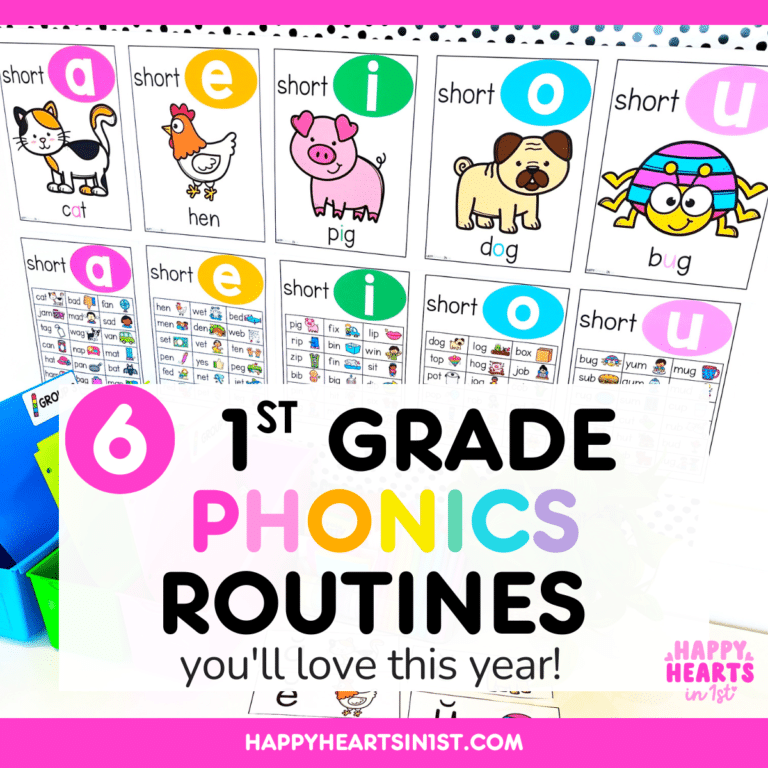
6 Phonics Routines You’ll Love this Year
1st Grade Phonics Lessons: How I teach Phonics With Slides
Frequently Asked Questions
How long should a first grade phonics lesson be?
I typically spend about 15 minutes teaching our new phonics skill. Then students practice during literacy centers and finish with independent application. Every classroom schedule is different, so adjust the timing to fit your students’ needs.
Can I use this routine with any phonics curriculum?
Yes! This routine works alongside any phonics curriculum or scope and sequence. Simply change the weekly phonics skill while keeping the routines consistent.
What are the best phonics activities for first grade?
A structured literacy phonics block includes explicit instruction, hands on practice, independent application, and small group support. Activities like phonics sorts, sound mapping, Decode the Room, fluency practice, and decodable reading all help students become stronger readers.
How do you keep phonics centers organized?
I use the same center routines all year long. Students quickly learn the expectations, and I simply swap out the weekly phonics skill. This saves planning time and helps students work independently.
What phonics skills should first graders learn first?
I recommend beginning the year with a review of letters and sounds before moving into short vowels. Taking time to strengthen these foundational skills helps students feel more confident as new phonics concepts are introduced.