



Literacy centers can be such a fun part of the day in 1st grade! 💗
But planning brand new centers every single week can get overwhelming fast. One of the biggest things that made literacy centers easier for me was realizing that students do NOT need a completely new activity every Monday.
Instead, I love using a few simple literacy center routines again and again throughout the year.
Students learn how the activity works once. Then I can simply switch out the phonics skill, words, or text we are practicing.
The skill changes. The routine stays familiar! 🙌
This saves so much planning time, but it also helps students become more independent. Instead of spending center time figuring out new directions, they can jump right into practicing the skill.
Today I’m sharing some of my favorite literacy centers for 1st grade that you can use week after week!
How I Structure My Literacy Block
Before we get into the centers, let’s talk about where they fit into the literacy block.
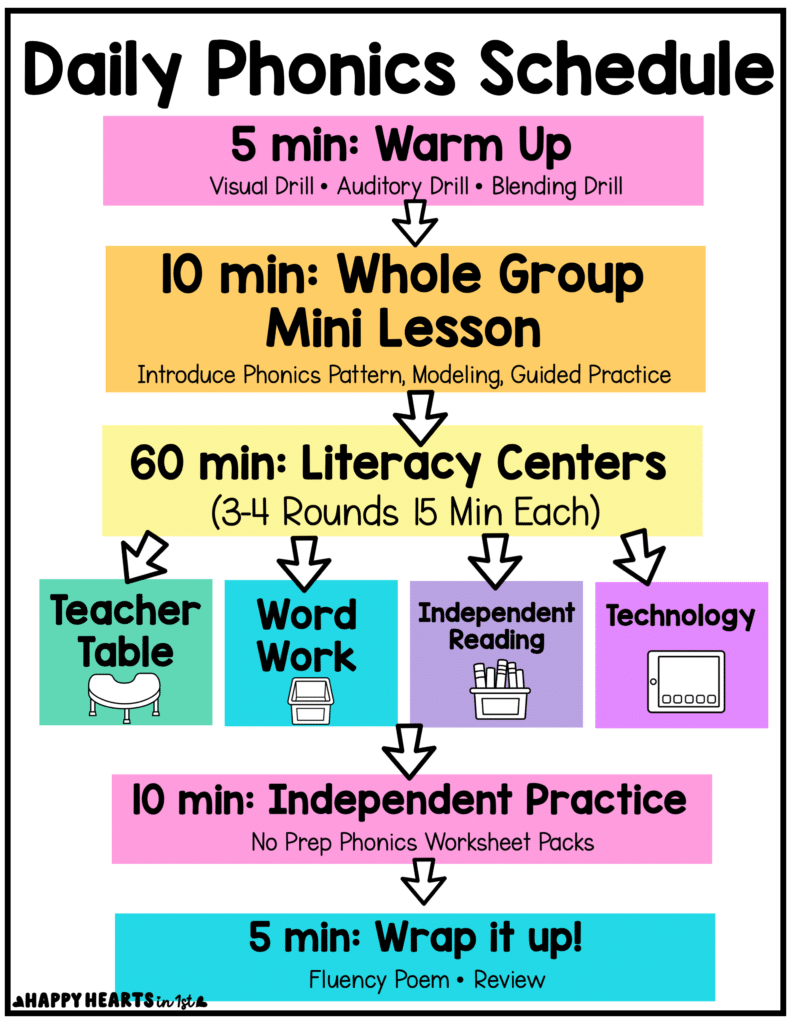
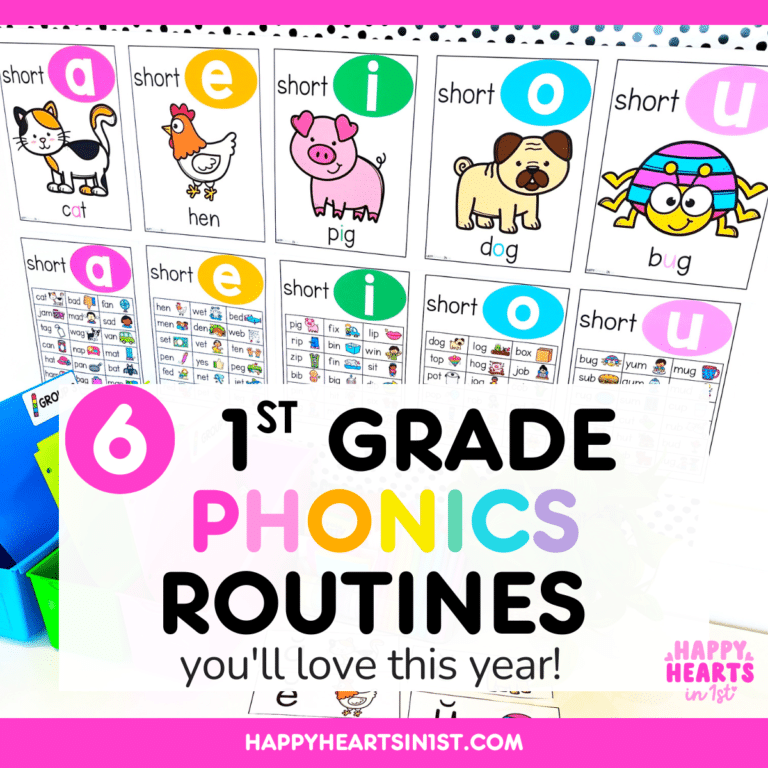
I like to start with a whole group phonics lesson. This is where I introduce the new phonics skill, explicitly model it, and give students guided practice before asking them to work independently.
During our whole group lesson, we might review previously taught sounds, introduce the new phonics pattern, blend and decode words, map words together, and practice reading the pattern in words and sentences. You can read more about my Whole Group Phonics Lessons and find Phonics Slides for every 1st grade skill here!
Then students move into daily literacy rotations while I meet with small groups.
This is exactly why predictable center routines are so important. If students need me to explain a brand new activity every week, it makes it really hard to focus on the students sitting at my teacher table.
When students already know the center routine, they can get started independently while I work with a small group. 🙌
Read more about our Daily Phonics Schedule Here!
Keep Literacy Center Rotations Visual
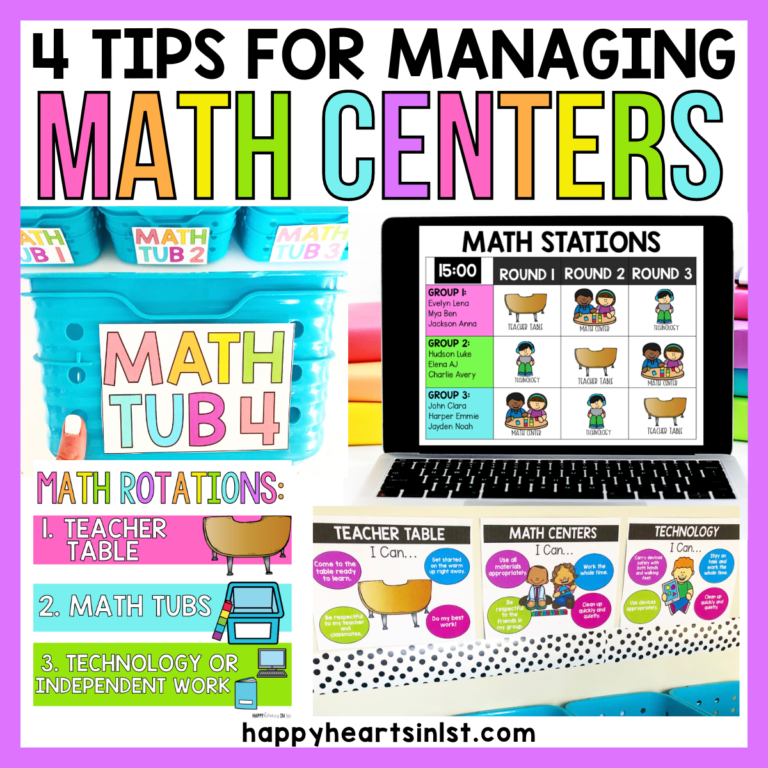
One thing that helps literacy centers run SO much more smoothly is keeping the rotations visual.
I love using Center Rotation Slides so students can quickly see which group they are in, where they are going, and what comes next.
Instead of hearing “Where do I go now?” over and over 😂, students can look at the board and find their next rotation.
The slides are editable, so you can customize the groups, center names, icons, and number of rotations to fit your classroom.
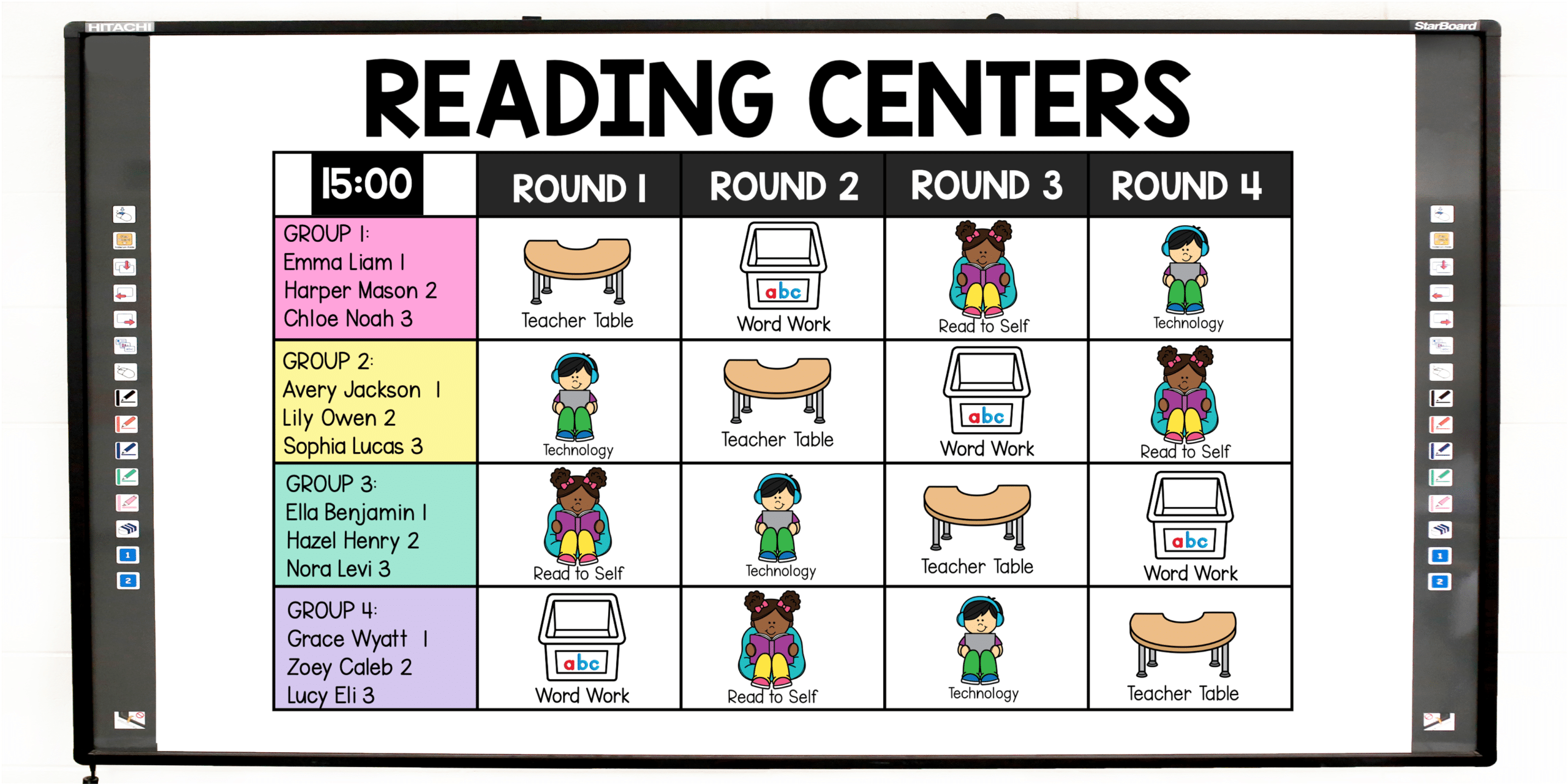
Once the rotation system is in place, I try to keep the actual center activities just as predictable.
These are some of my favorite literacy centers for 1st grade because the routine can stay the same even as the phonics skill changes.
Here are some of my favorite literacy center routines to repeat throughout the year.
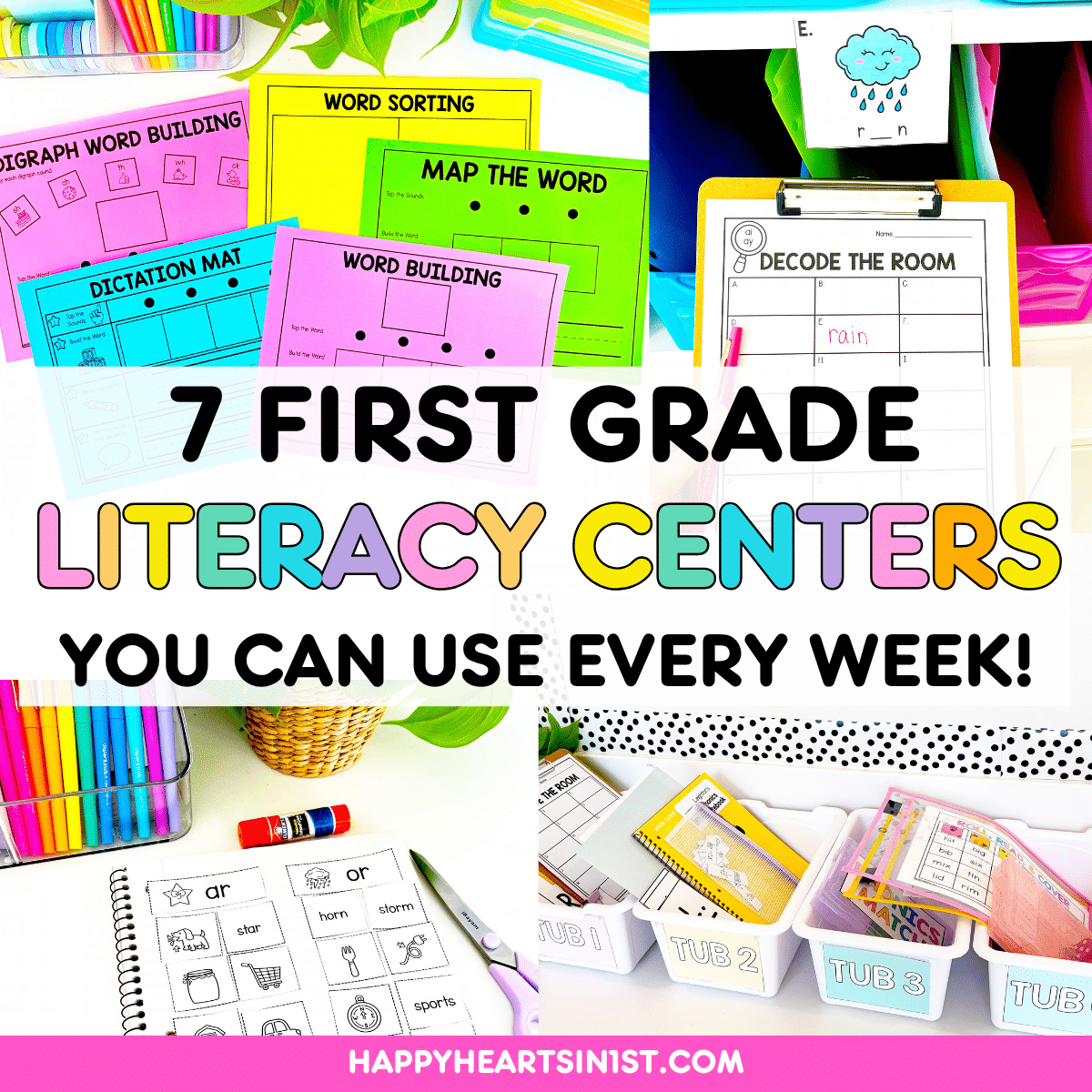
1. Literacy Centers: Decode the Room Phonics Center
Decode the Room is one of my favorite literacy center routines because students can use the same activity format all year long.
The directions are simple. Students grab a recording sheet and clipboard, find the task cards around the room, decode the word or complete the phonics task, and record their answer.
Once students understand the routine, I just switch out the cards as our phonics skills change.
One week they might practice short vowels. Later they can work on blends, digraphs, vowel teams, r controlled vowels, and more.
Students are getting new phonics practice without learning a brand new center every week. 🥰
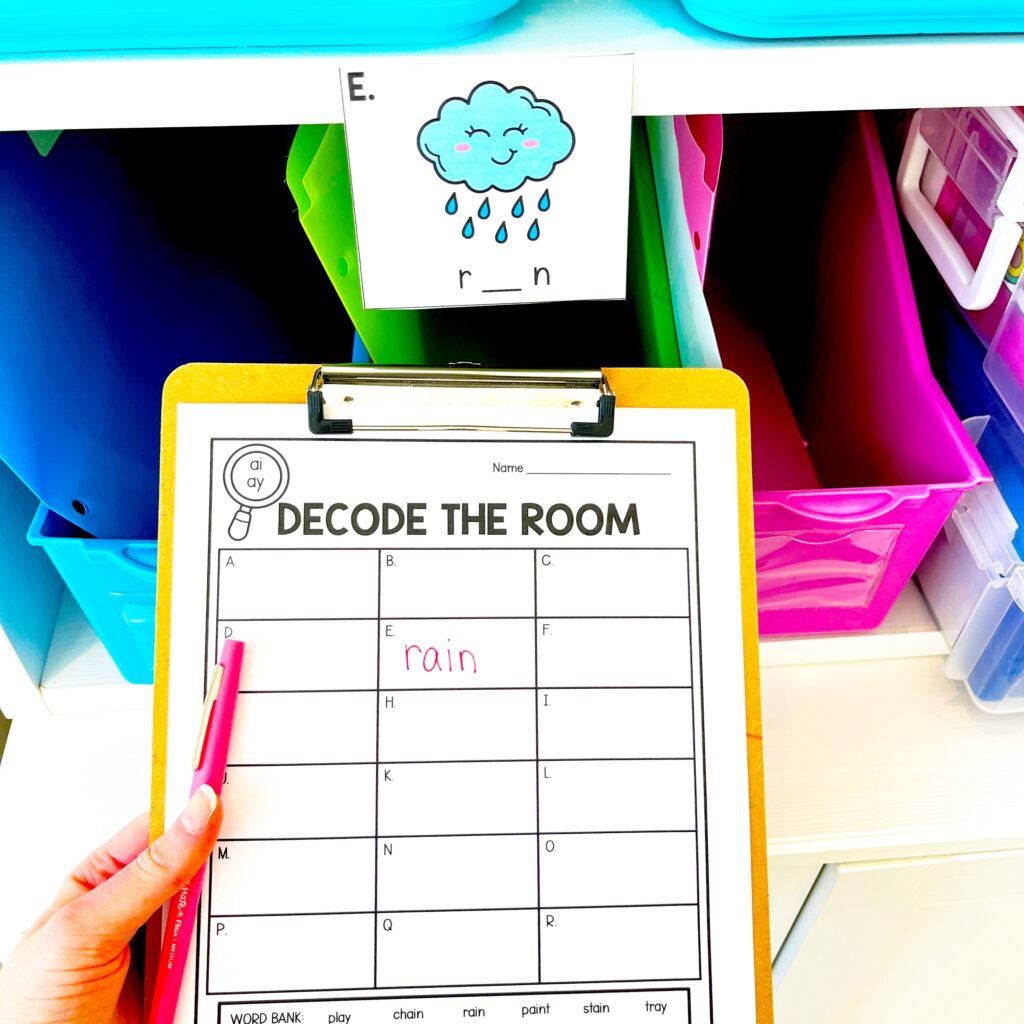
I also love that this center gets students up and moving after sitting for a whole group lesson.
Find a whole year of Decode the Room Phonics Centers here!
2. Literacy Centers: Phonics Sorts
Phonics sorts are another routine I use again and again because they give students a chance to really compare the patterns they are learning.
I like using two different kinds of sorts.
The first is a pocket chart sort. Students read a word or look at a picture, decide which phonics pattern it belongs with, and sort it into the correct category.
These work really well during centers, small groups, or even as a quick whole group review.
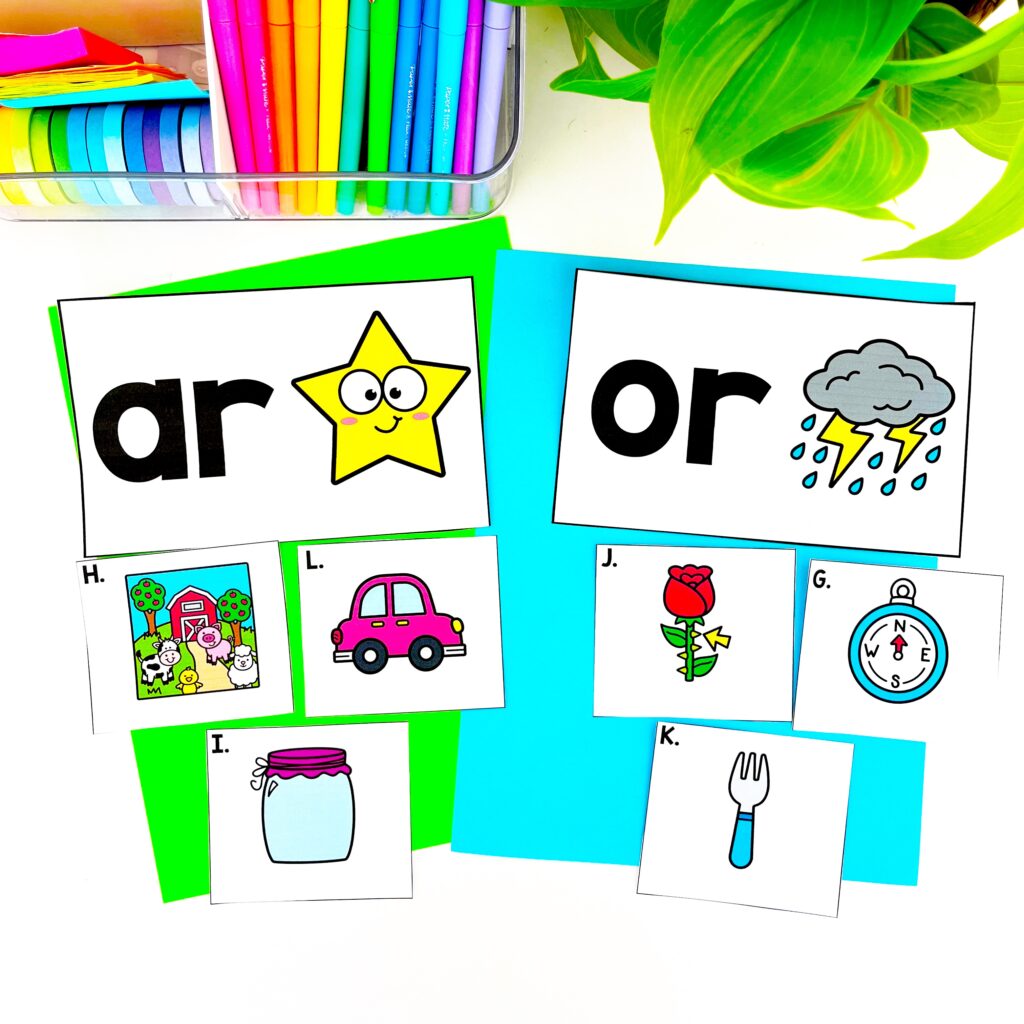
I also love having students complete a cut and paste phonics sort each week.
Students cut out the words or pictures, sort them by pattern, and glue the completed sort into their phonics journal.
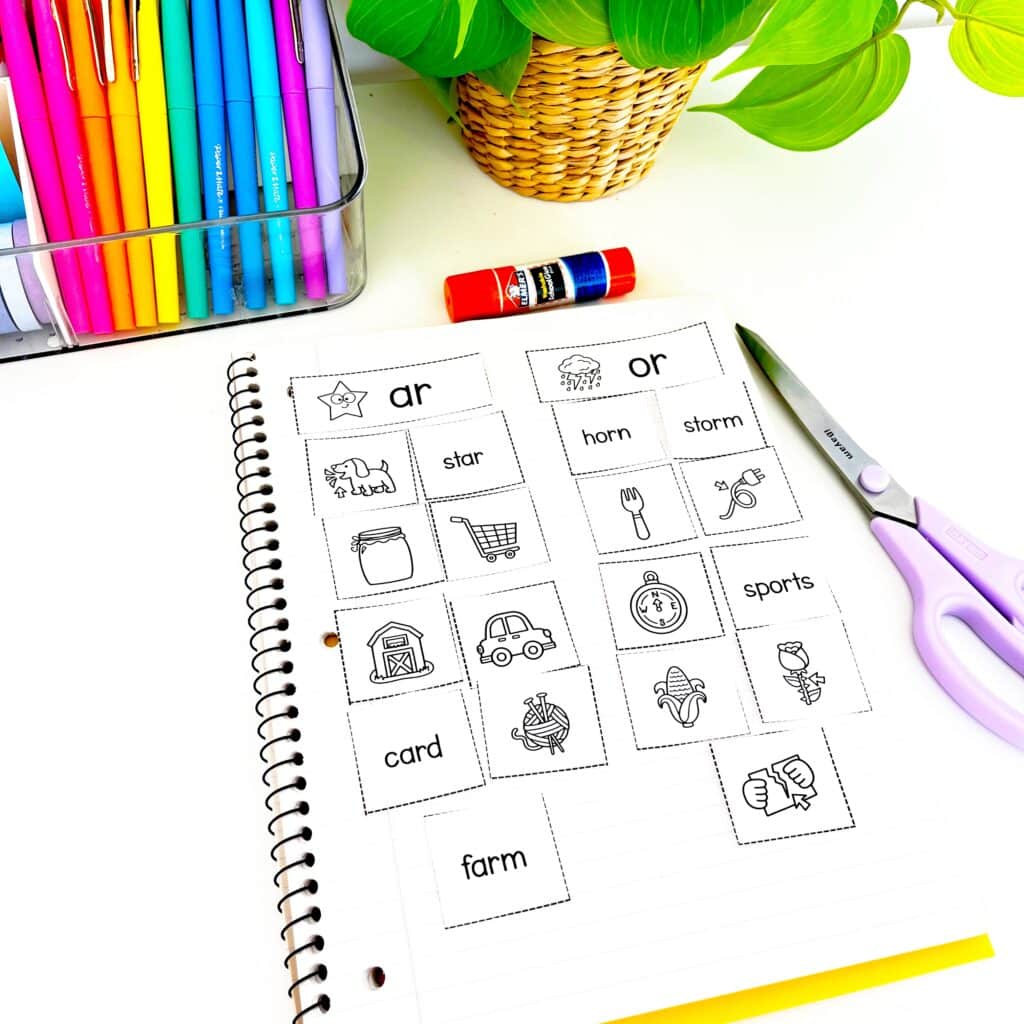
This gives students something they can go back and look at later when they need a quick reminder of a pattern we have already learned.
The skill changes from week to week, but students already know exactly how to complete the sort.
Find Phonics Sorts for the whole year here!
3. Word Building and Sound Mapping
Word building is one of the easiest phonics routines to repeat.
You really don’t need anything fancy!
Students can use magnetic letters, letter tiles, dry erase boards, sound boxes, or word mapping mats.
I choose words that match the phonics skill we are working on that week. Students say the word, identify the sounds, map the sounds to letters, and blend the word back together.
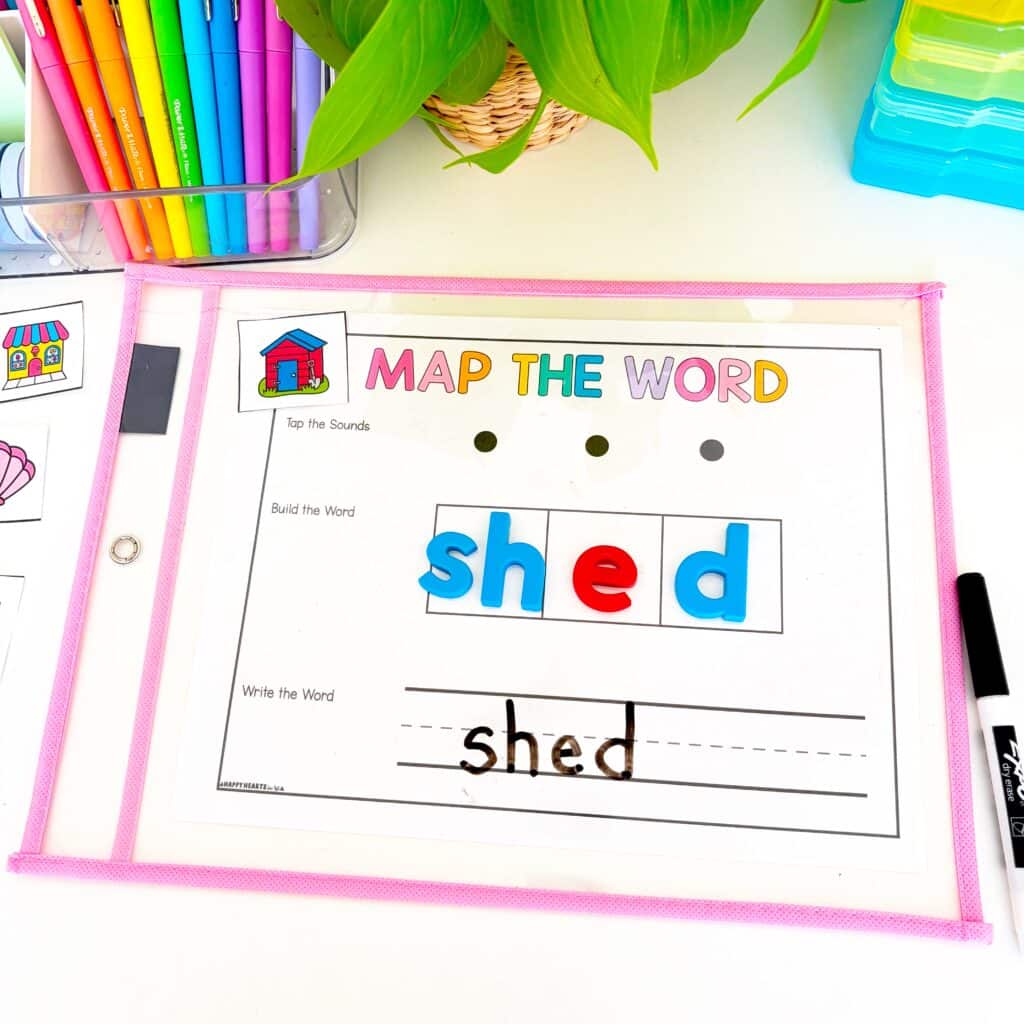
This is such a great way to connect phonemic awareness, phonics, decoding, and spelling.
I also like introducing this routine at the teacher table first. Once students know how to map the words, they can use the same routine independently during literacy centers.
4. Simple Phonics Games
Phonics practice does not have to be complicated to be engaging!
I love using simple games that students can learn once and then use with new phonics skills throughout the year.
A few of my favorites are:
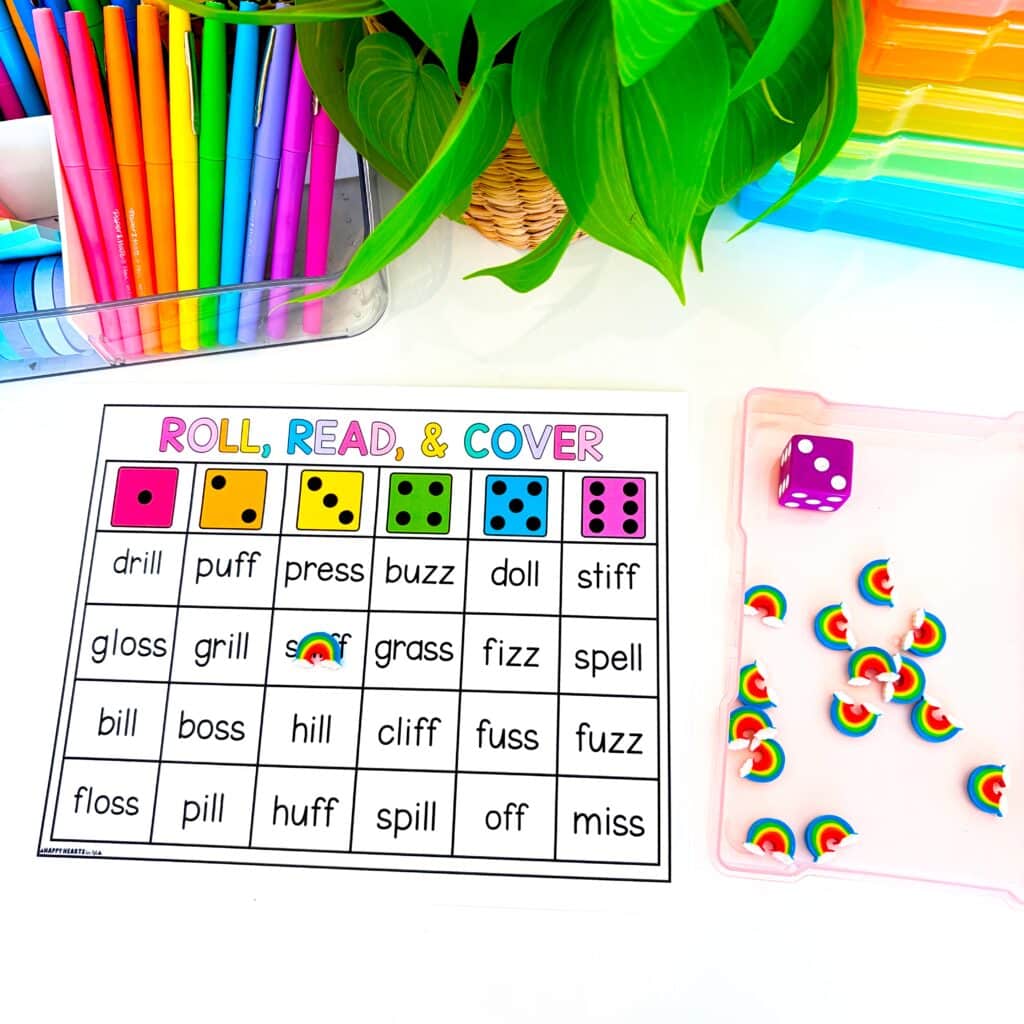
💗 Roll and Read
Students roll a die and read words from the matching row or column.
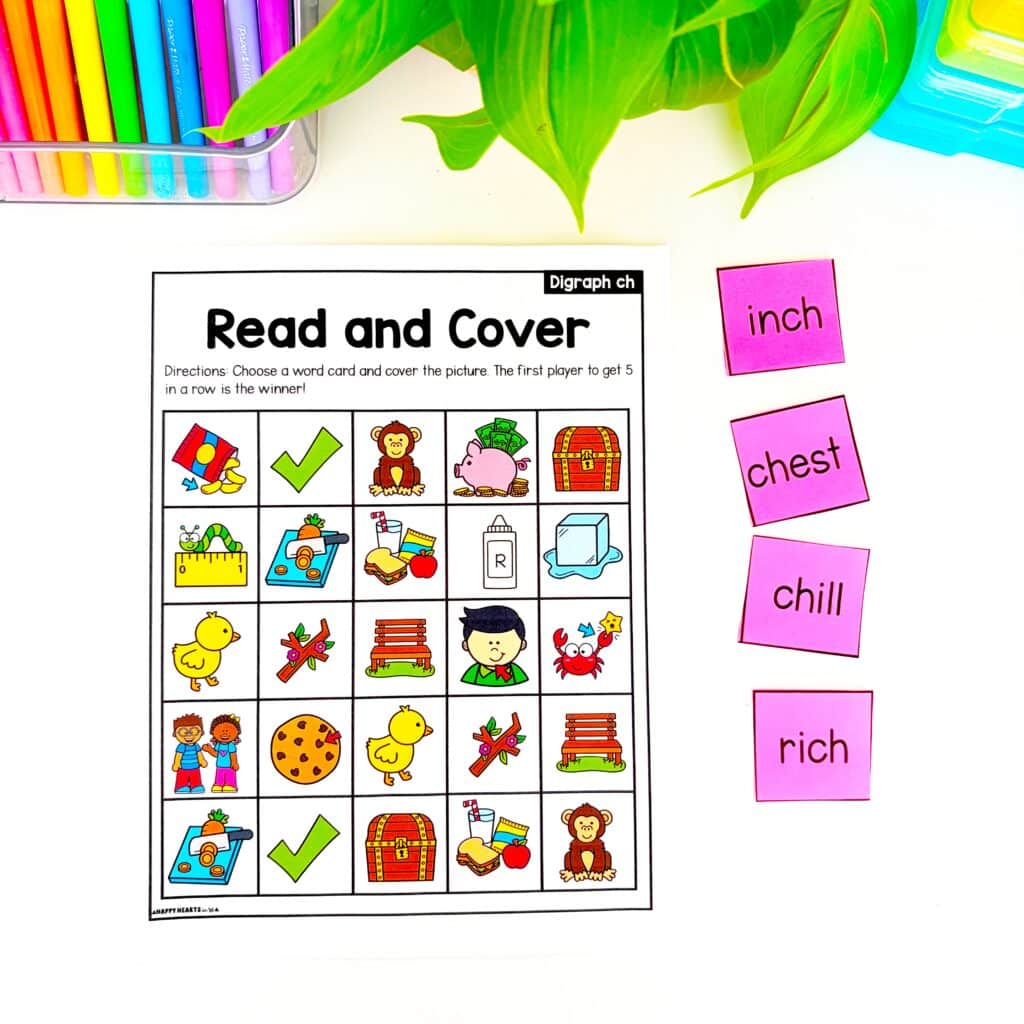
💗 Read and Cover
Students decode a word and cover the matching space on their board.
💗 Phonics Memory Match
Students flip over cards and try to find matching words, pictures, or phonics patterns.
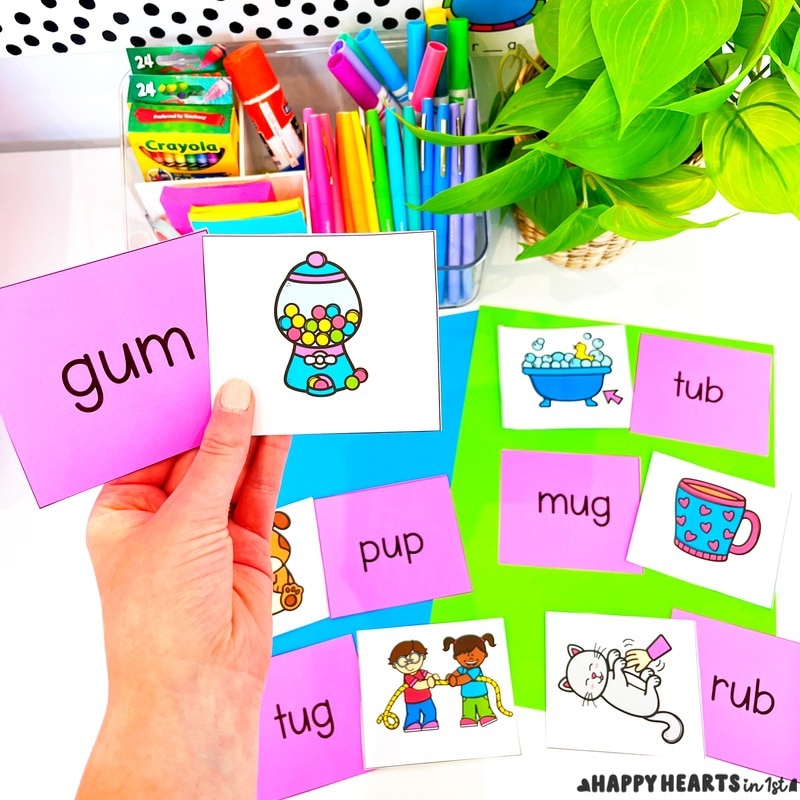
These types of games are great for partner centers because students already understand how the game works. I can simply switch out the words or phonics pattern as we learn new skills.
Same game. New phonics practice. 🙌
5. Independent Phonics Practice
Once students have practiced the skill with support, I want them to have a chance to apply it independently too.
Familiar activity formats make that so much easier because students already know what to do and can focus on the phonics skill instead of the directions.
Students might:
💗 Read and match
💗 Sort words
💗 Complete sentences
💗 Build words
💗 Read and draw
💗 Practice fluency
💗 Read a short decodable passage
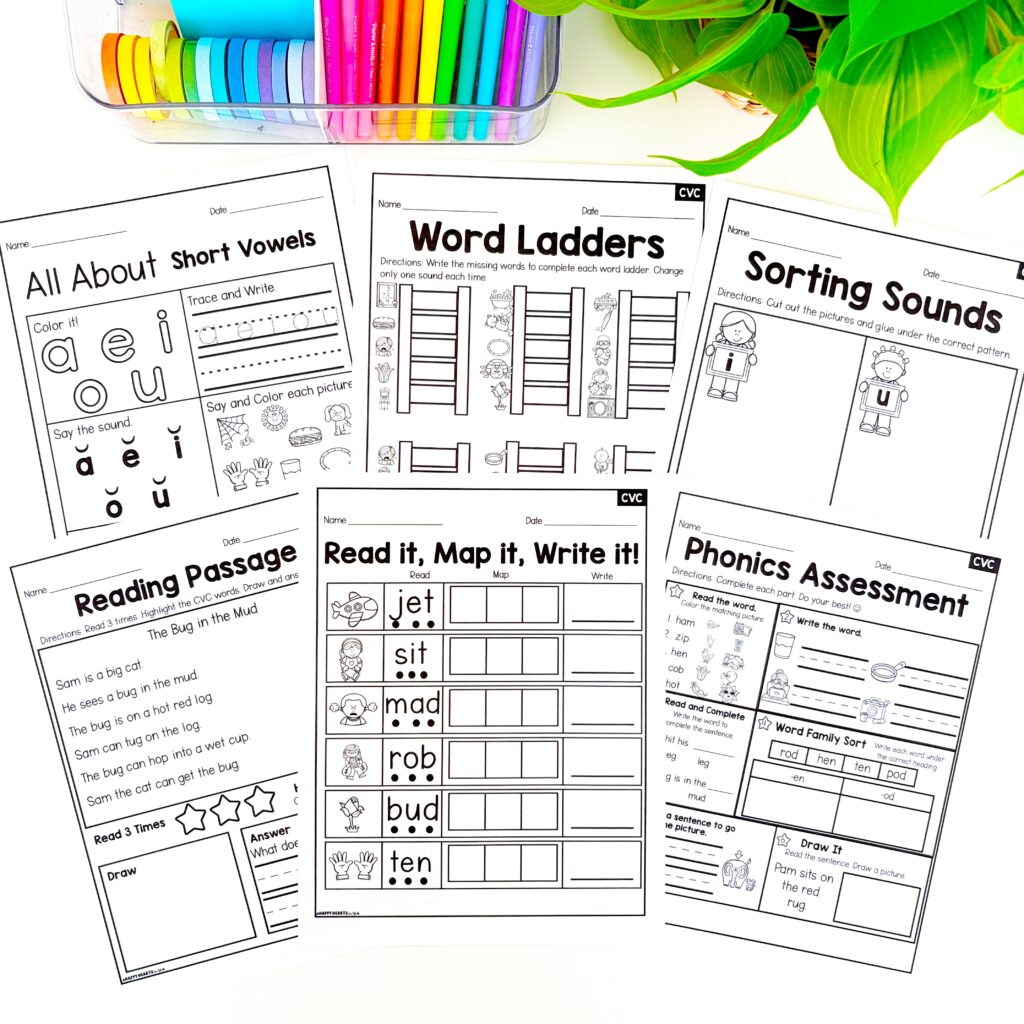
I love using the same types of activities from week to week and just switching out the phonics skill. Students know the routine, and I’m not spending time explaining a brand new worksheet every time. 🙌
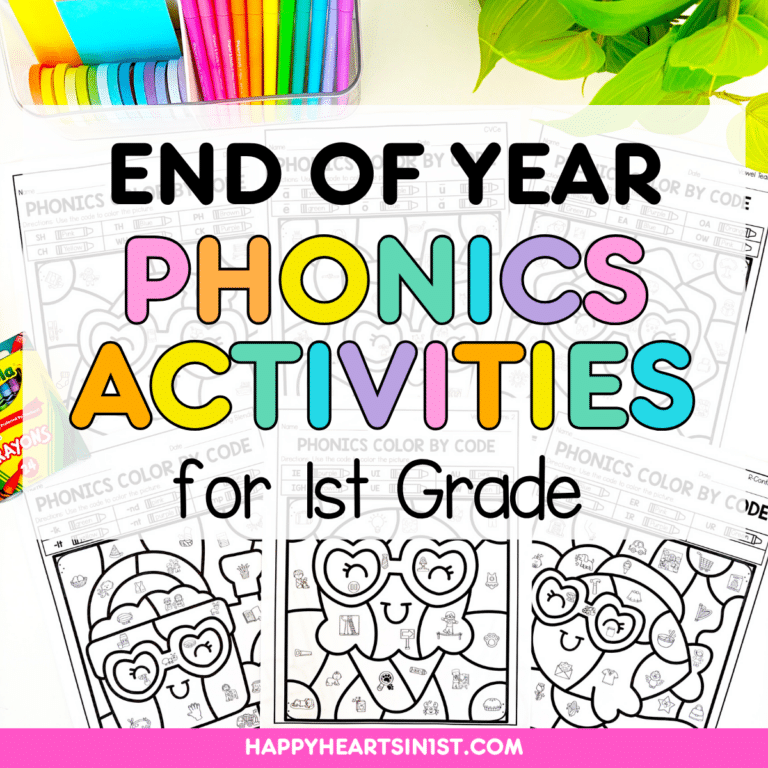
My Phonics No Prep Growing Bundle is built around this same idea. Each phonics skill includes familiar activity types so students get lots of meaningful practice and can become more independent over time.
See my Phonics No Prep Worksheets Bundle
6. Phonics Poems
Phonics poems are another routine I LOVE because they give students a chance to practice the phonics pattern in connected text.
We might read the poem together first, find and highlight words with the phonics pattern, and then reread it to build fluency.
Students can glue the poem into their phonics journal so they can go back and reread it throughout the week.
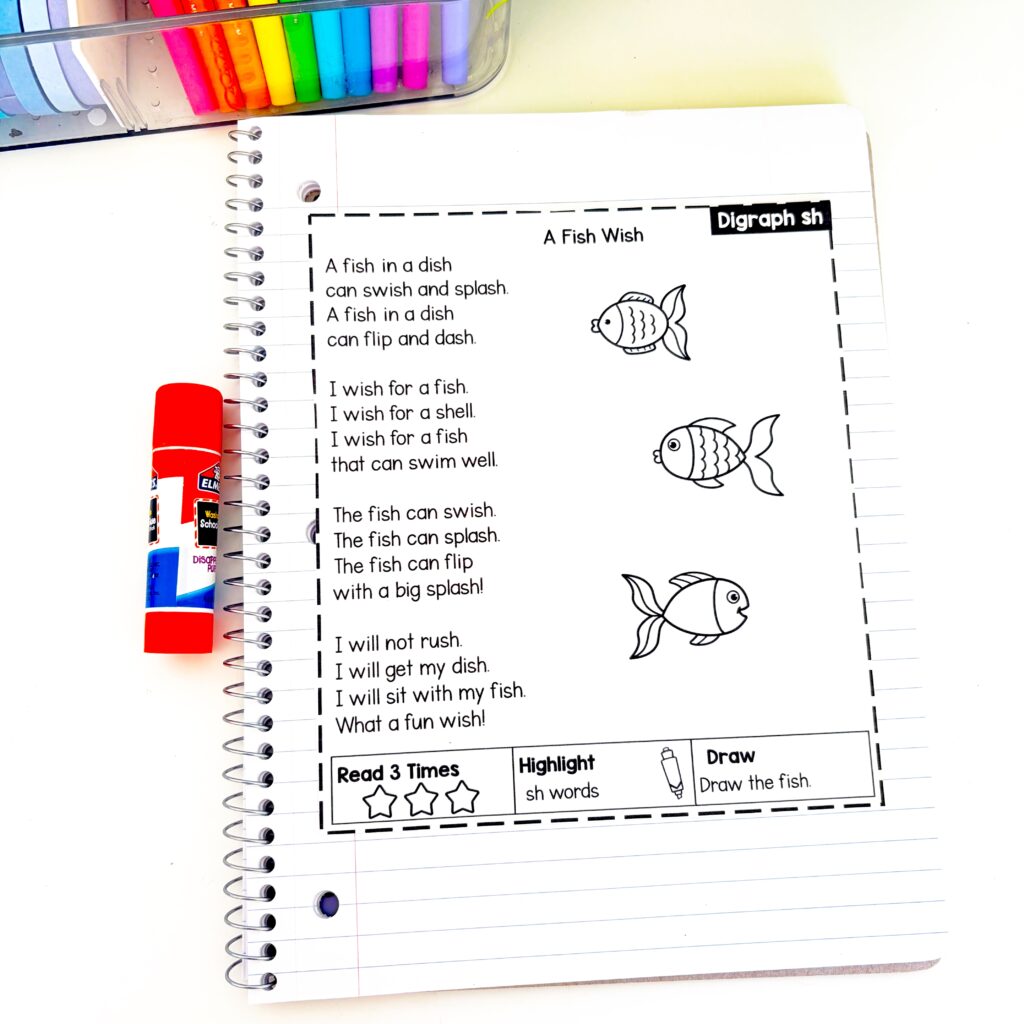
I love that the routine stays simple:
Read it.
Find the pattern.
Highlight the words.
Read it again.
Over time, students build a whole collection of phonics poems they can revisit for extra practice. 💗
Find Phonics Poems you can use for every phonics skill all year long here!
7. Fluency and Connected Text
Students need to take the phonics skill they’ve practiced in individual words and apply it while reading connected text.
That’s where fluency and connected text come in.
Students can practice with fluency lines, sentence pyramids, decodable sentences, short passages, and other connected text that includes the phonics pattern.
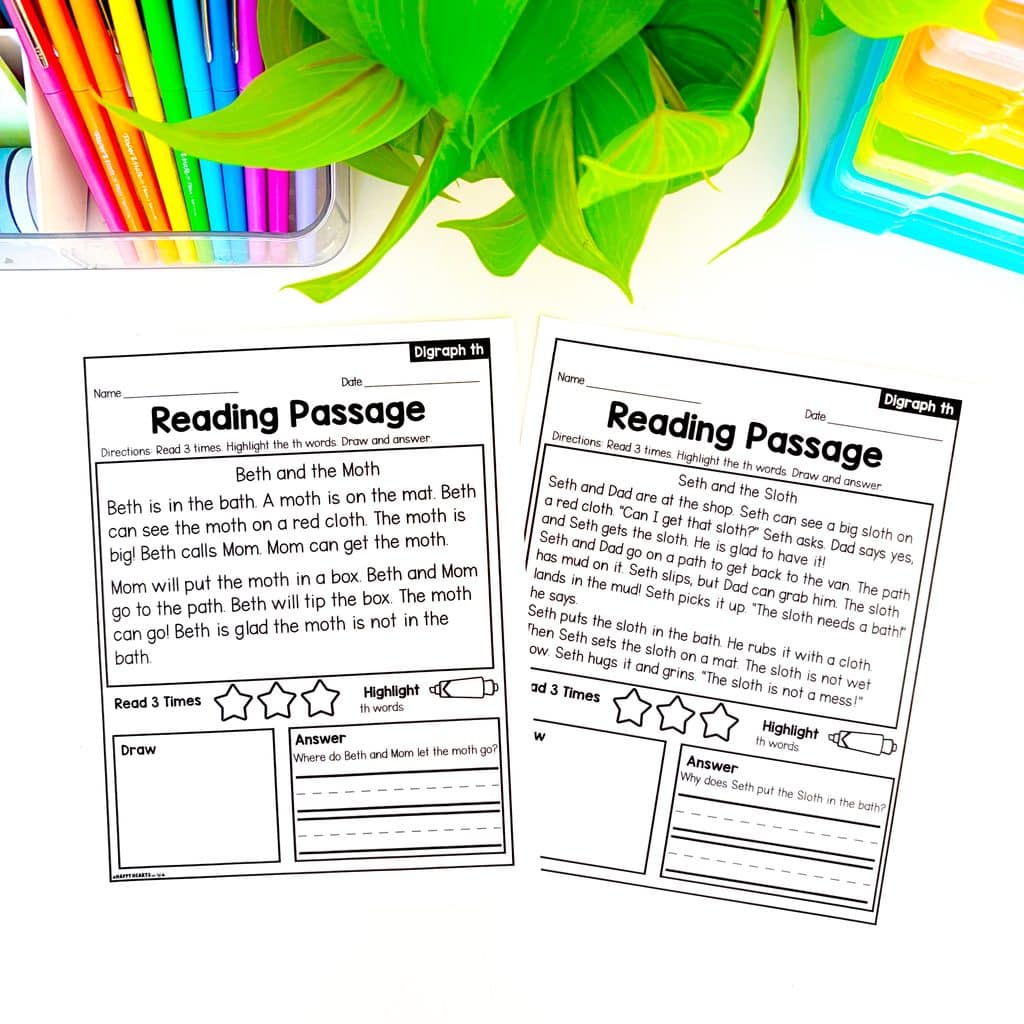
The routine can stay really simple.
Read once for accuracy.
Read again for fluency.
Find the words with the phonics pattern.
Then reread.
This helps bridge the gap between:
“I can read this word.”
and
“I can recognize this pattern while I’m reading a sentence or passage.”
That is such an important part of phonics instruction.
The Secret to Easier Literacy Centers
The biggest thing I’ve learned about literacy centers for 1st grade is that more variety does not always make centers better. Students don’t need a brand new activity every week. They need meaningful practice, clear routines, and enough repetition to become independent.
I would much rather have students know exactly how to complete a handful of strong literacy center routines than constantly introduce something new.
The skill can change without changing the whole center. 💗
That means less prep for you, less time explaining directions, and more uninterrupted time for small group instruction.
A Simple Phonics System for Literacy Centers
I like thinking about phonics instruction in three simple parts:
TEACH IT → PRACTICE IT → APPLY IT
During whole group instruction, I teach the new phonics skill.
During literacy centers and small groups, students practice the skill with hands on activities.
Then students apply the skill independently and in connected text.
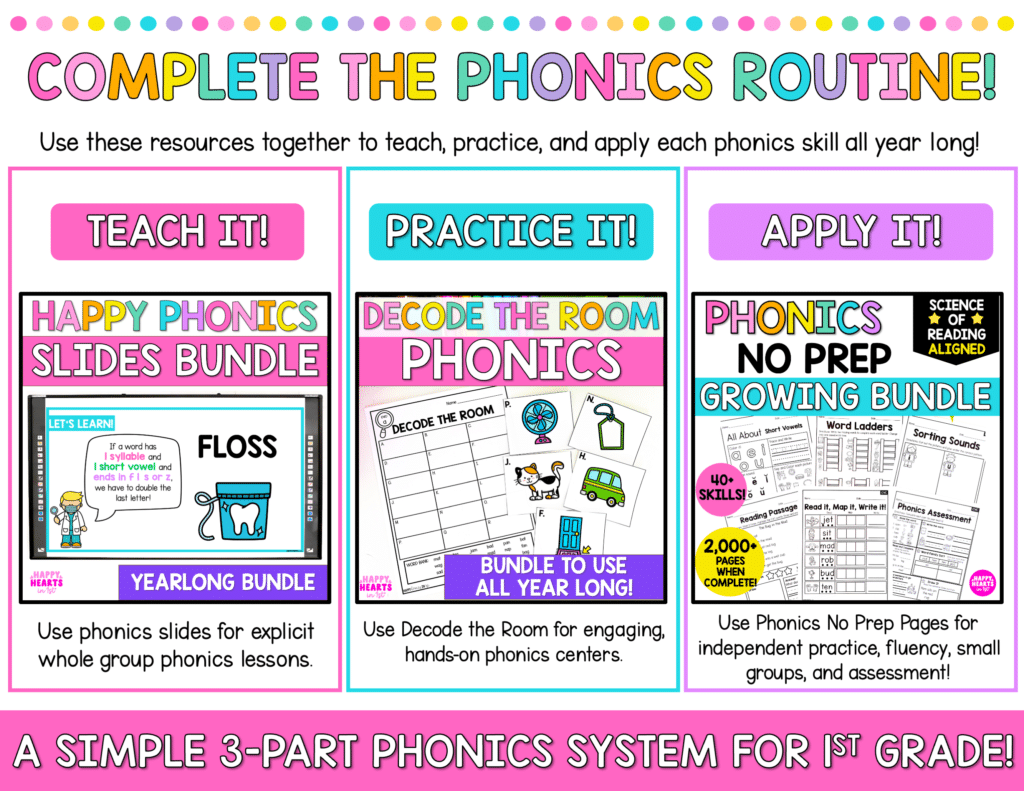
That is exactly how my phonics resources are designed to work together.
Happy Phonics Slides give you the whole group lesson.
Decode the Room gives students a familiar hands on center routine.
Phonics No Prep Worksheets give students independent practice, fluency, small group activities, and assessment.
You do not have to reinvent your phonics block every week.
Build the routine once, then keep using it as your students learn new phonics skills throughout the year! 🥰
See My 1st Grade Phonics Resources 💗
Want My FREE 1st Grade Phonics Pacing Guide?
If you are trying to figure out what phonics skills to teach and when, I have something free for you!
I put together a FREE 1st Grade Phonics Schedule + Pacing Guide with my suggested 38 week phonics sequence plus a simple daily phonics schedule.
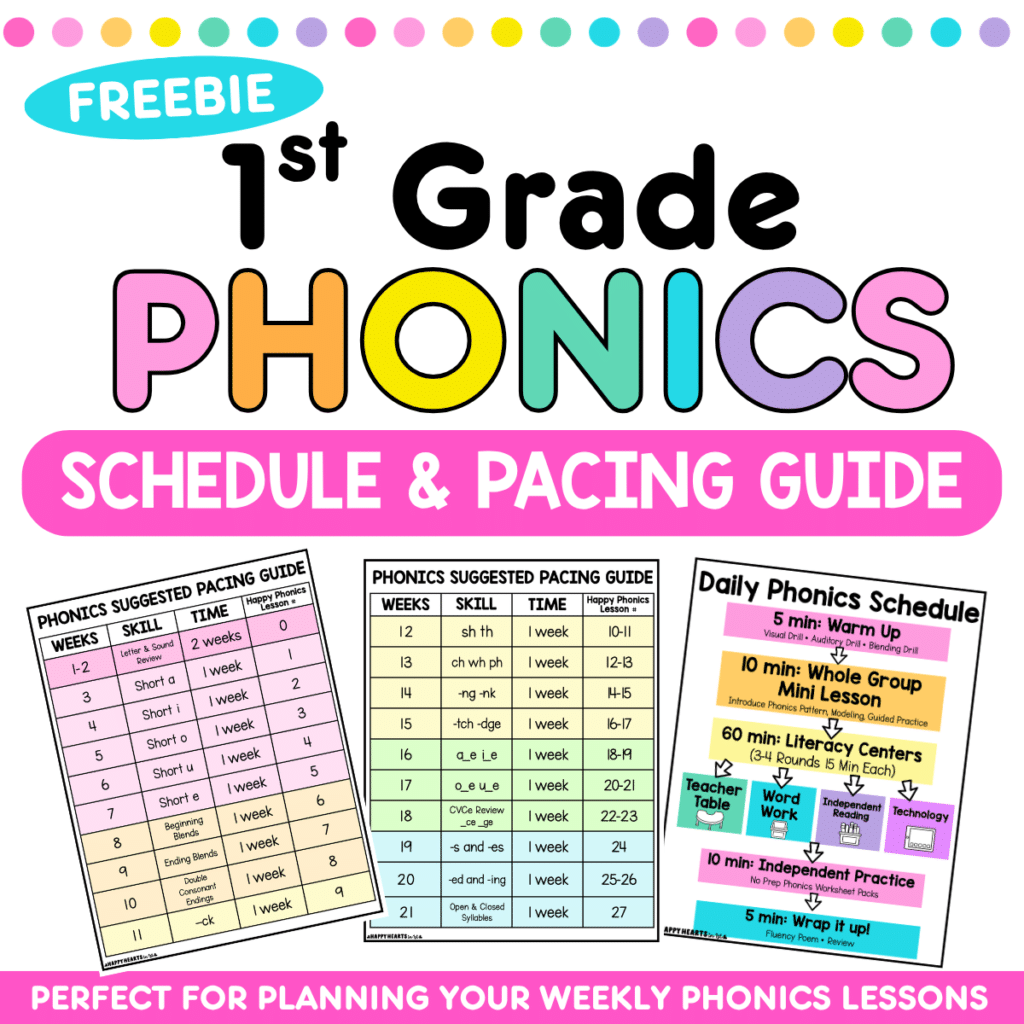
Grab the FREE Phonics Pacing Guide! 🙌
I hope these literacy center ideas make your phonics block feel a little simpler!
Remember, you do not need to plan brand new centers every week.
Keep the routines familiar and switch out the skill. 💗
Your students know what to do, and you get a little planning time back too! 🥰