




I’m excited to share some of my favorite magic e activities for 1st grade! This is such a fun time of year because reading really starts to take off. Students are learning new sounds and realizing they can read SO many more words! 💗
Magic e is such a fun part of that process! Students get to take words they already know and discover how one little e can change them.
But learning the rule is just the beginning. Students need opportunities to practice through reading, writing, and hands on activities.
In this post, I’m sharing magic e activities for 1st grade that connect your whole group lessons, literacy centers, and independent practice.
Everything follows my simple Teach It, Practice It, Apply It routine. You can keep the activities familiar while giving students practice with each new pattern! 💗
What Is Magic E?
Magic e is a name we use for the silent e pattern in words like cake, kite, home, and cube.
In these words, the final e is silent, and the first vowel makes its long sound.
You might also hear this called silent e or CVCe. CVCe stands for consonant, vowel, consonant, silent e.
Comparing two words helps students notice the change:
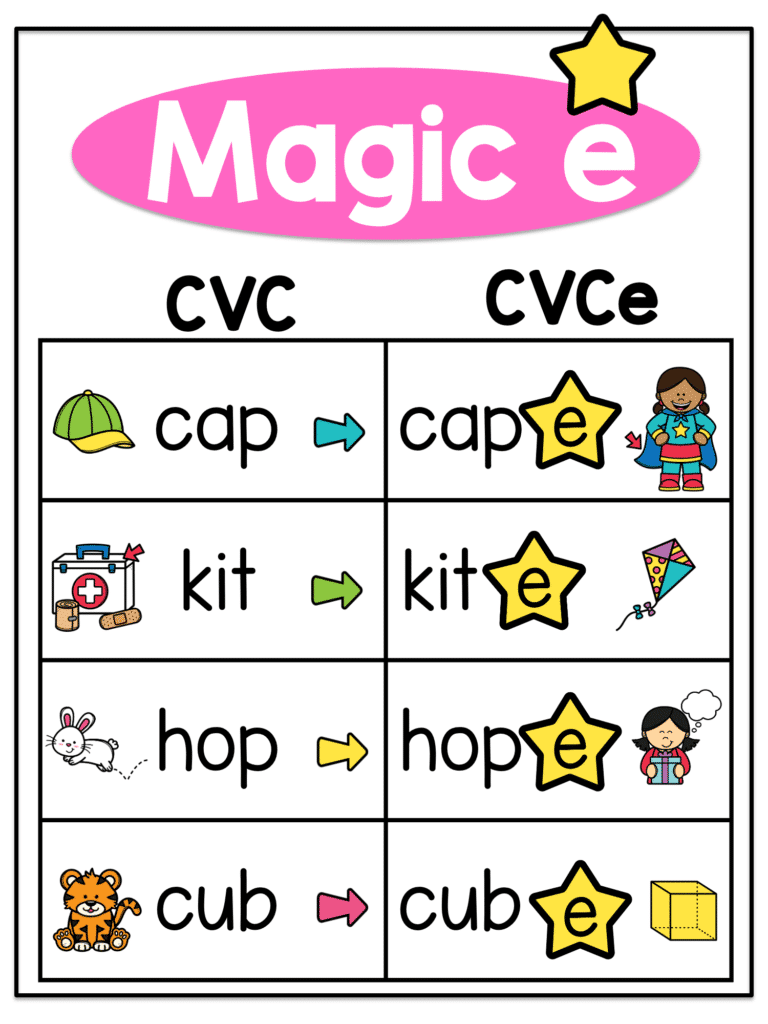
Have students read the first word. Then add the e and read the new word together.
What changed? What sound do they hear now?
Start with clear examples from the pattern you’re teaching. Later, you can compare different magic e patterns as students learn them.
My Simple Routine for Magic E Activities
If you’ve been here awhile, you know I love classroom routines!
Having familiar activities makes planning easier. It also helps students focus on the phonics skill because they already know the directions.
My phonics system has three parts:
- 💗 Teach It: Introduce and model the pattern with whole group lesson slides.
- 💗 Practice It: Give students practice with Decode the Room and familiar word work activities.
- 💗 Apply It: Use the pattern in worksheets, reading passages, fluency practice, and small groups.
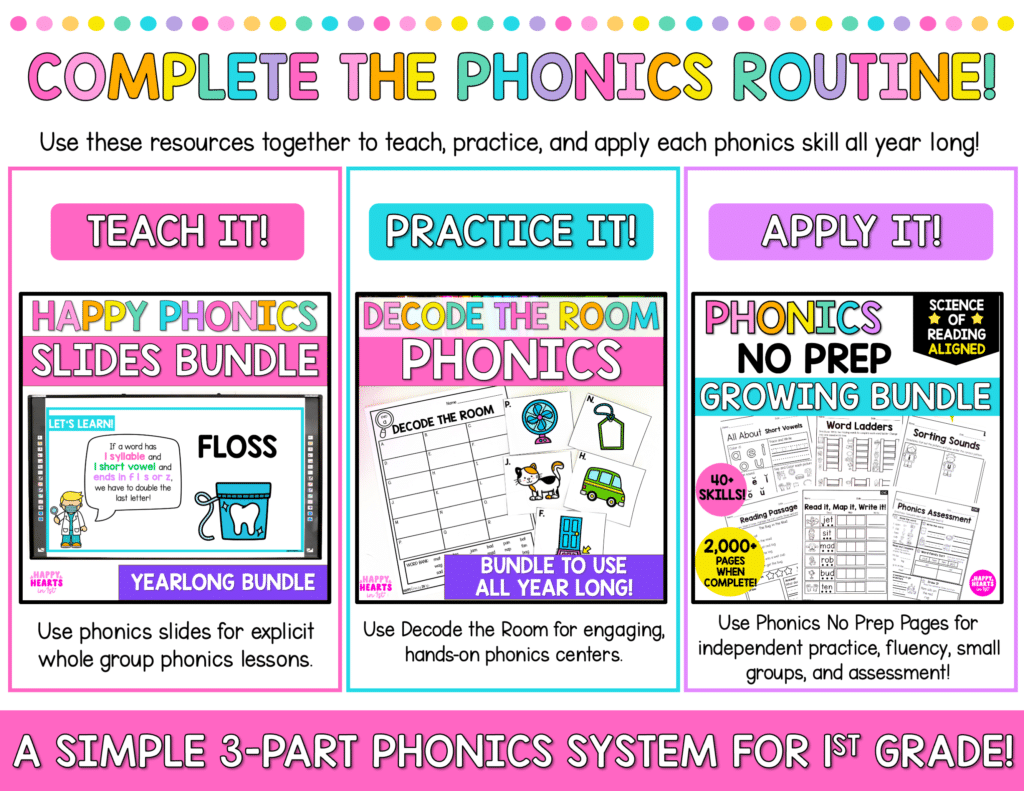
These parts work together throughout your phonics instruction. Students read and write during the lesson, then get more opportunities to practice afterward.
Let’s look at what this can look like with magic e!
Teach It: How to Teach Magic E in 1st Grade
When introducing magic e, I like to start with words students already know.
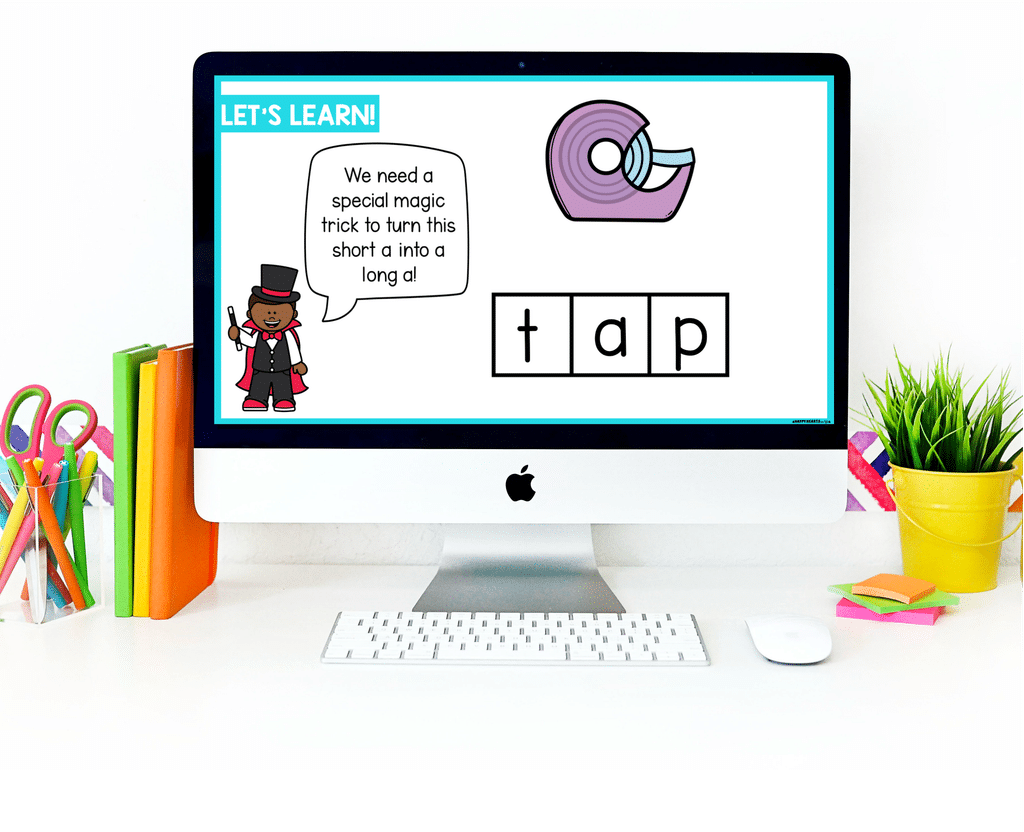
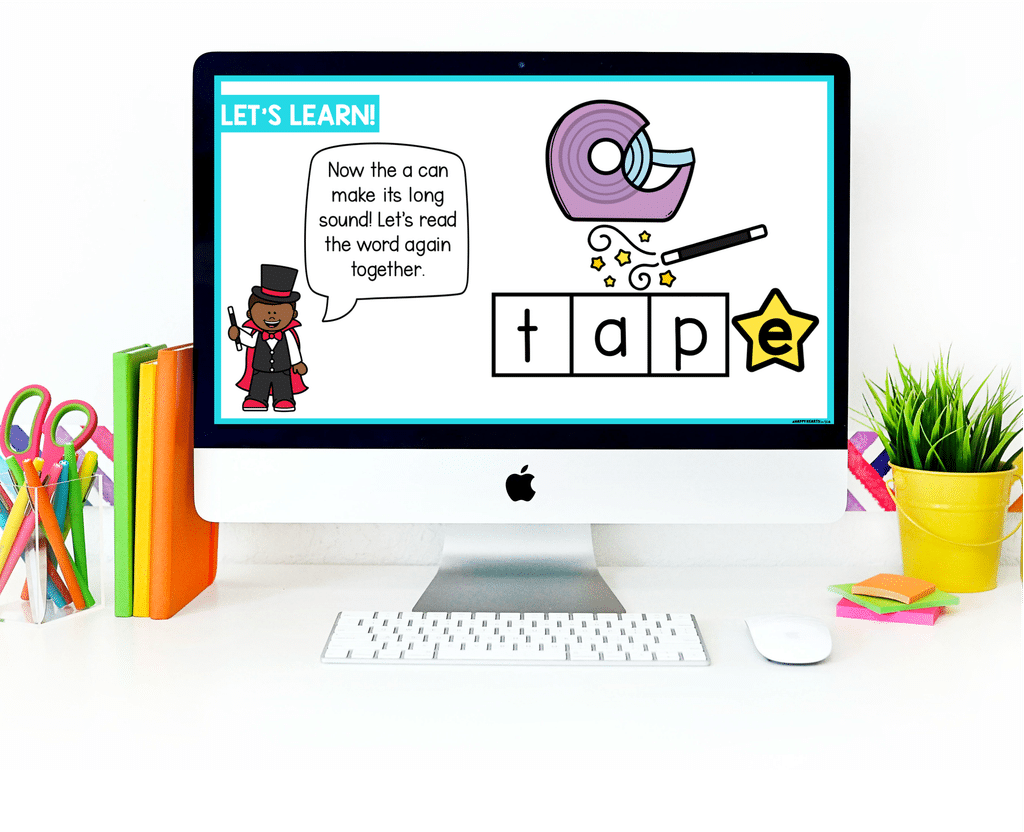
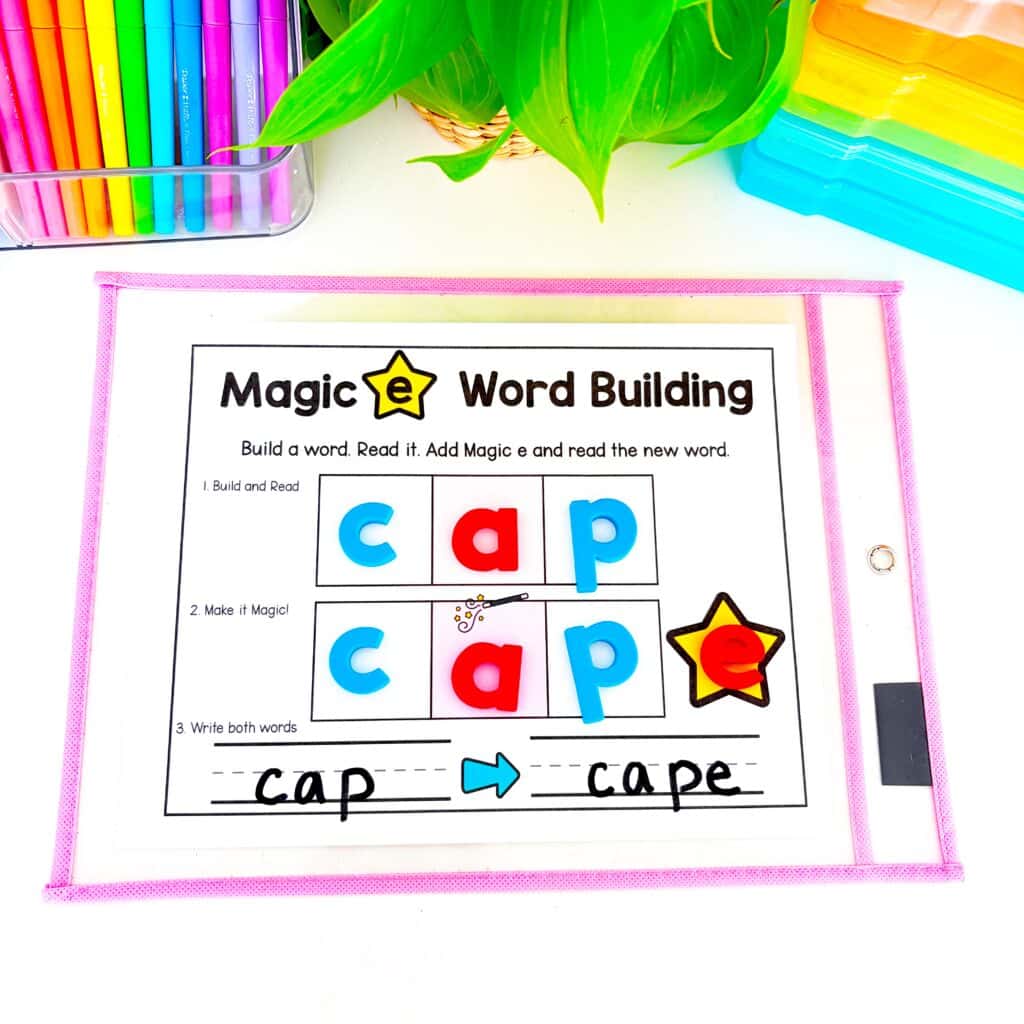
Read a word like cap together. Then add an e and read cape. Talk about what changed and try a few more examples.
Seeing the words side by side helps students notice how the final e changes the vowel sound.
From there, give students plenty of opportunities to practice with you! Read words together, build and spell words, and try reading the pattern in sentences.
Using Phonics Slides for Whole Group Lessons
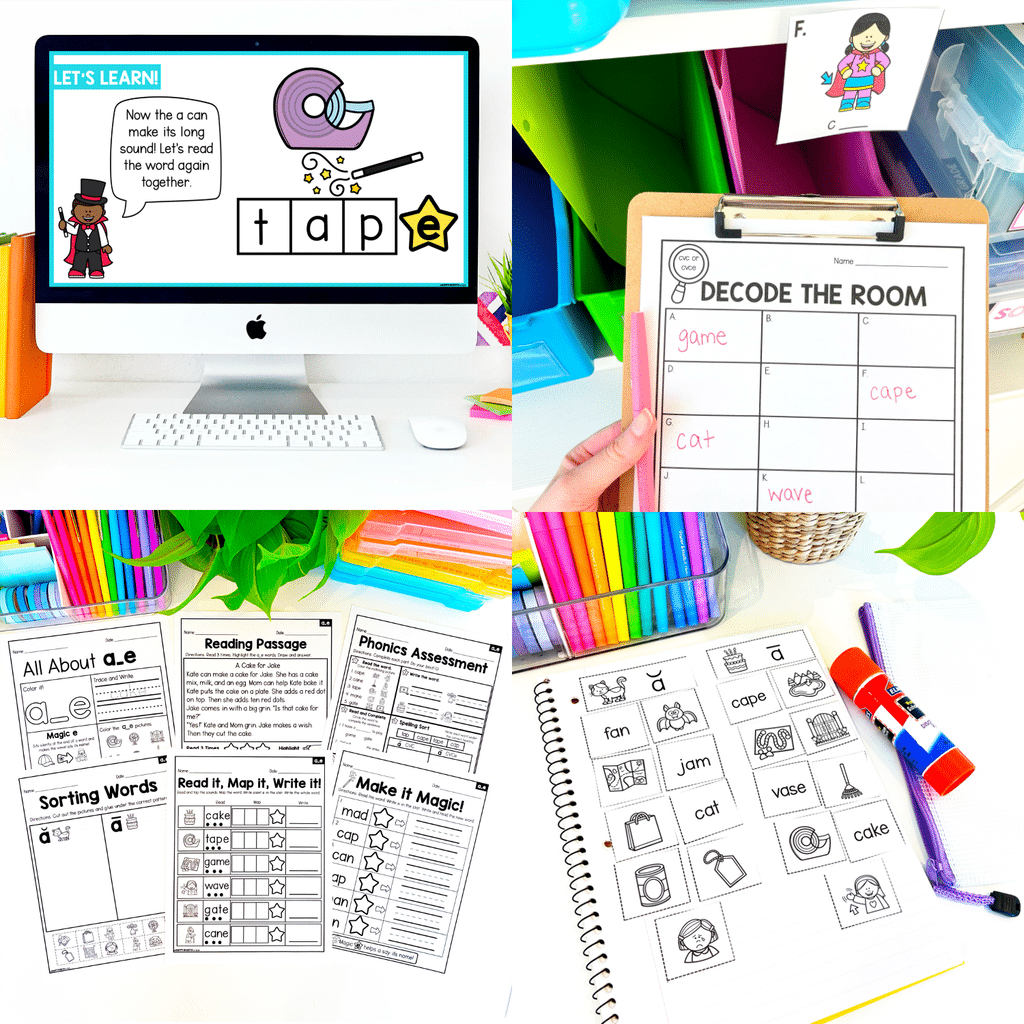
I love using phonics slides to guide this practice because everything is ready in one place.
Have students bring a dry erase board and sit beside a turn and talk partner. Throughout the lesson, they can read with you, share with their partner, and write words on their boards.
Everyone gets to participate! And when students hold up their boards, you can quickly see who needs a little more help.
Want a closer look at how I organize whole group instruction? Read 1st Grade Phonics Lessons: How I Teach Phonics with Slides.
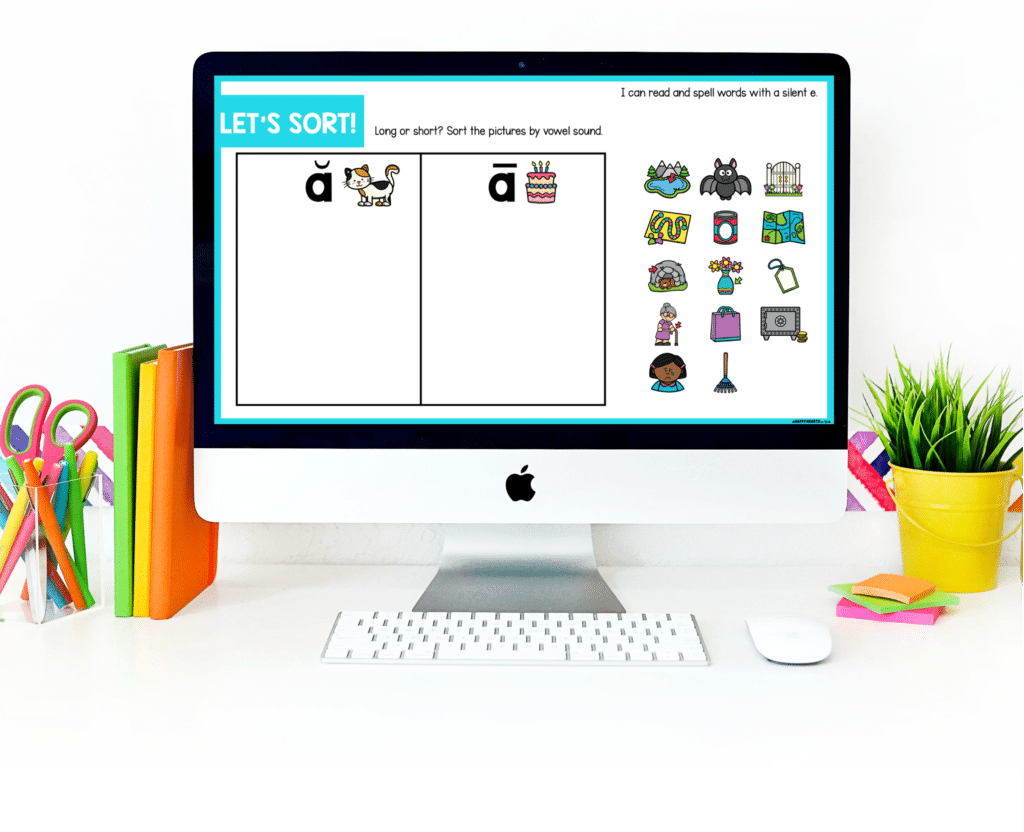
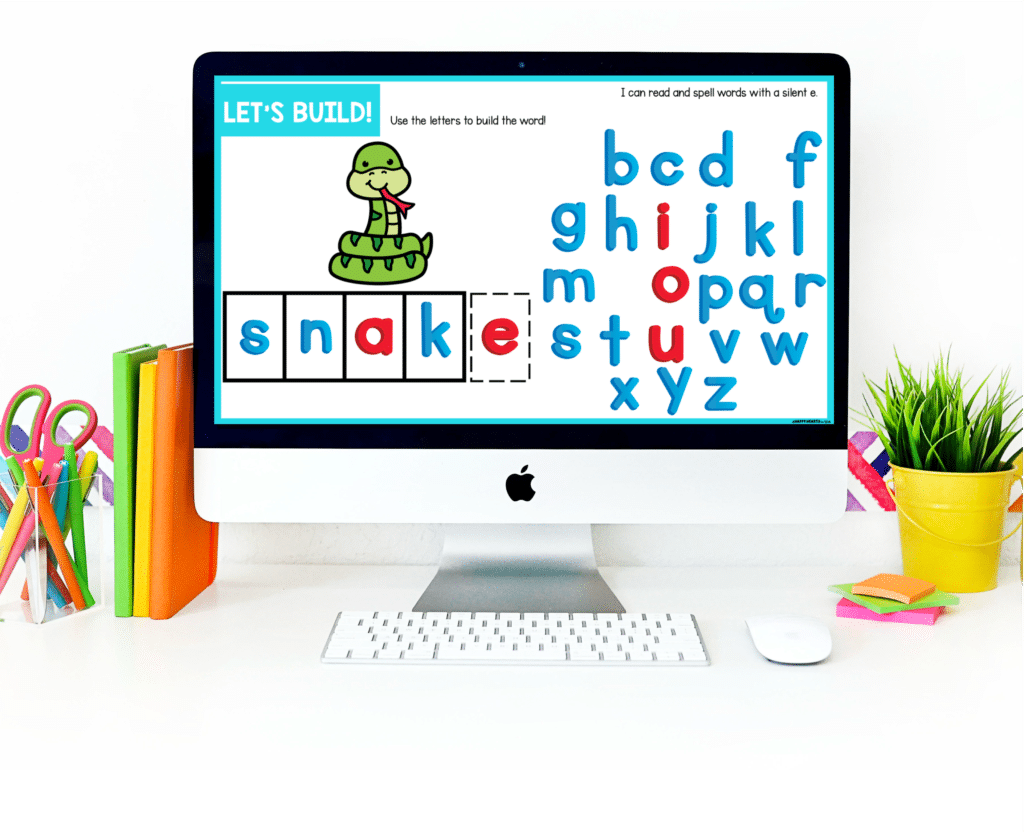
My Happy Phonics Lesson Slides follow a familiar routine with review, explicit teaching, and practice reading and spelling.
You can choose the activities that fit your students and spread the practice throughout the week. There’s no need to fit everything into one lesson!
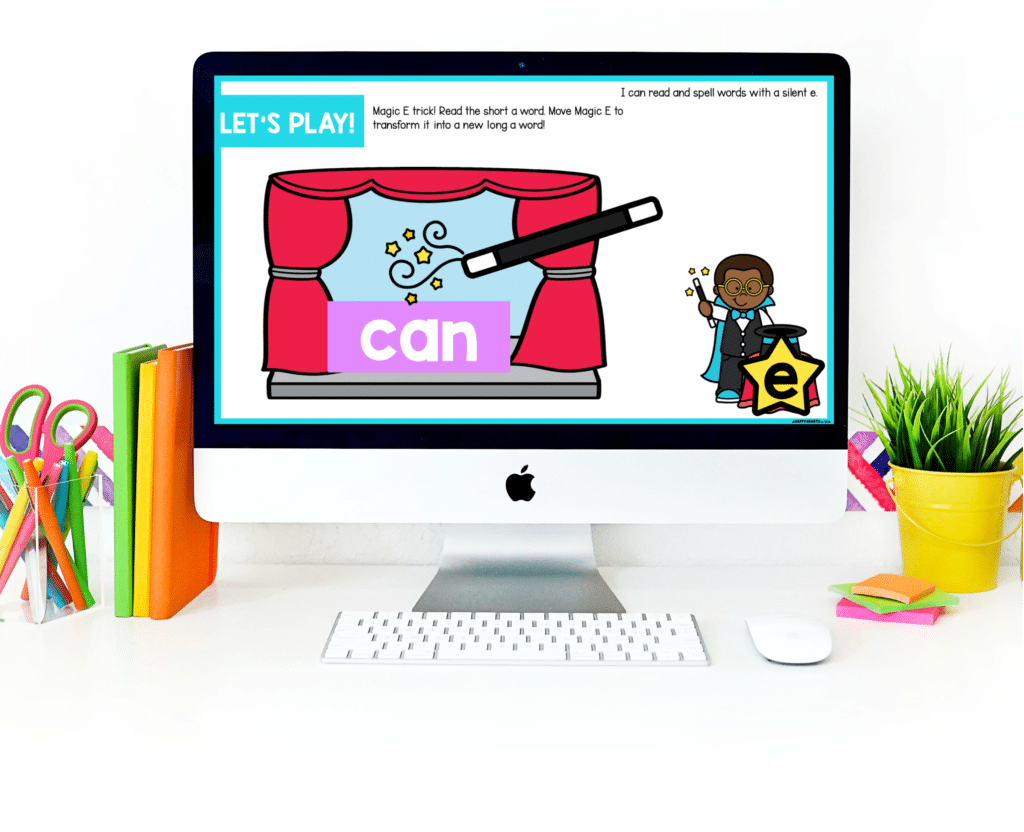
Once students know the routine, you can spend less time explaining what to do and more time working on the phonics skill. 💗
Want Phonics Slides done for you? Find Phonics Slides for the whole year here!
Practice It: Magic E Centers for Word Work
After introducing magic e, students need lots of opportunities to practice reading and spelling words with the pattern.
This is where our familiar Word Work routines come in! 💗 We complete these activities during our daily literacy centers!
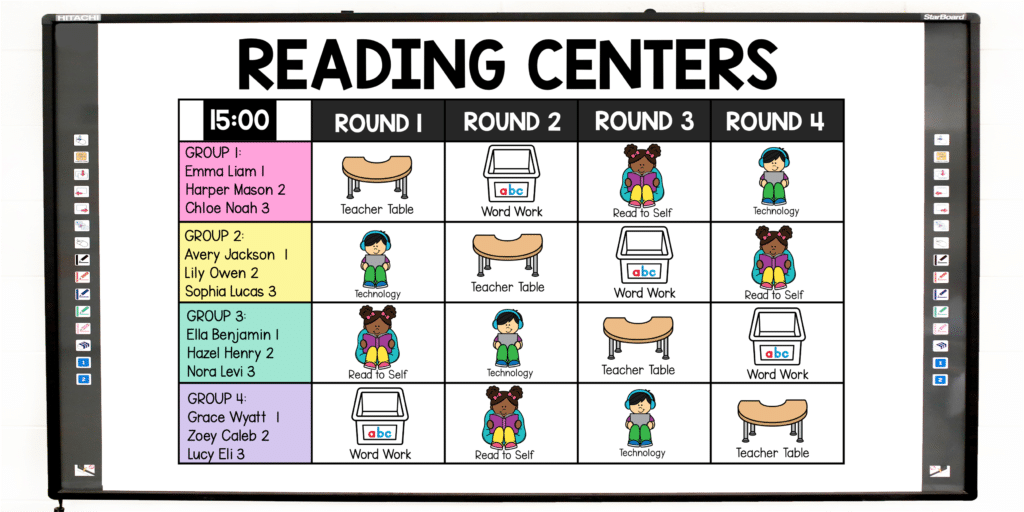
I love having a few activities students already know how to use. When we move to a new phonics skill, I can switch out the cards and keep the directions the same.
Magic E Decode the Room
Decode the Room is one of my favorite phonics centers because students get to move around while practicing their words!
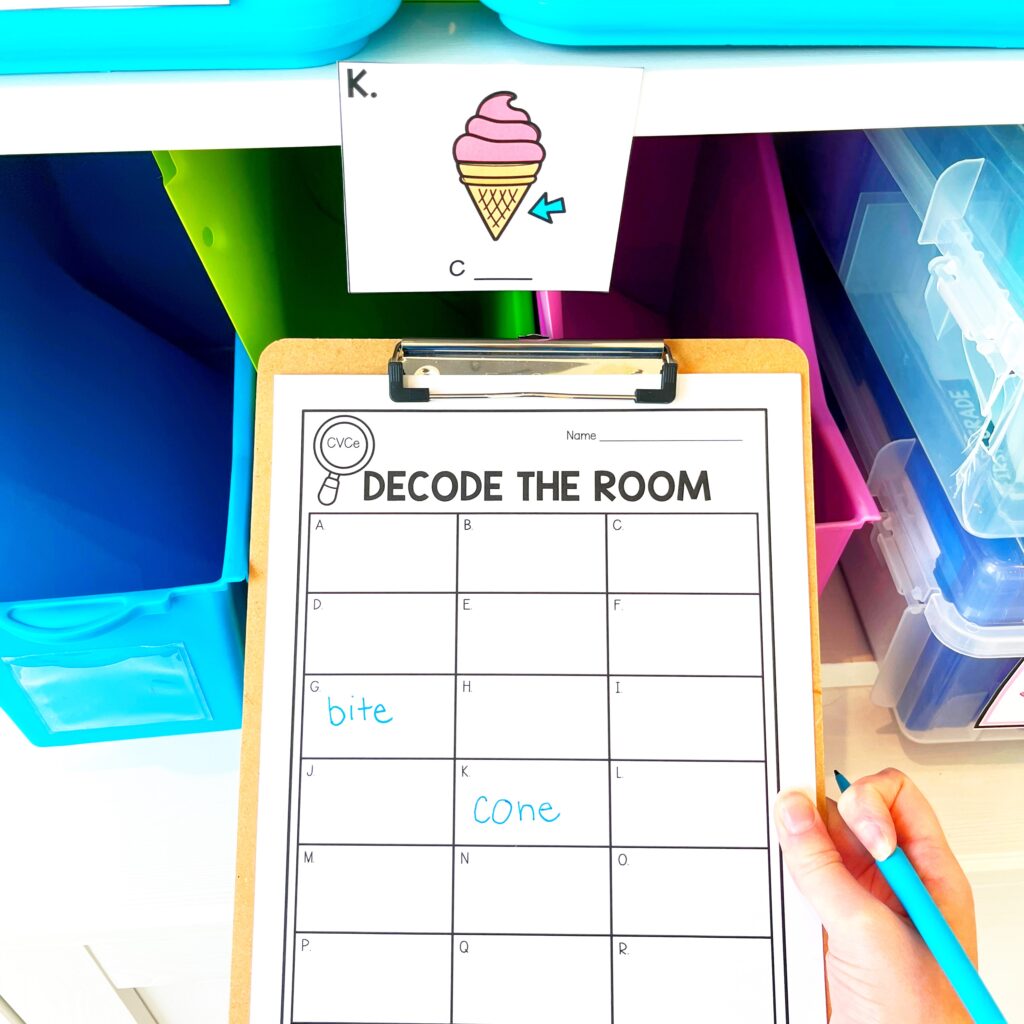
Place the magic e cards around the classroom. Students grab a clipboard and recording sheet, find the cards, and write their answers.
There are differentiated options, so you can choose the cards and recording sheets that fit your students.
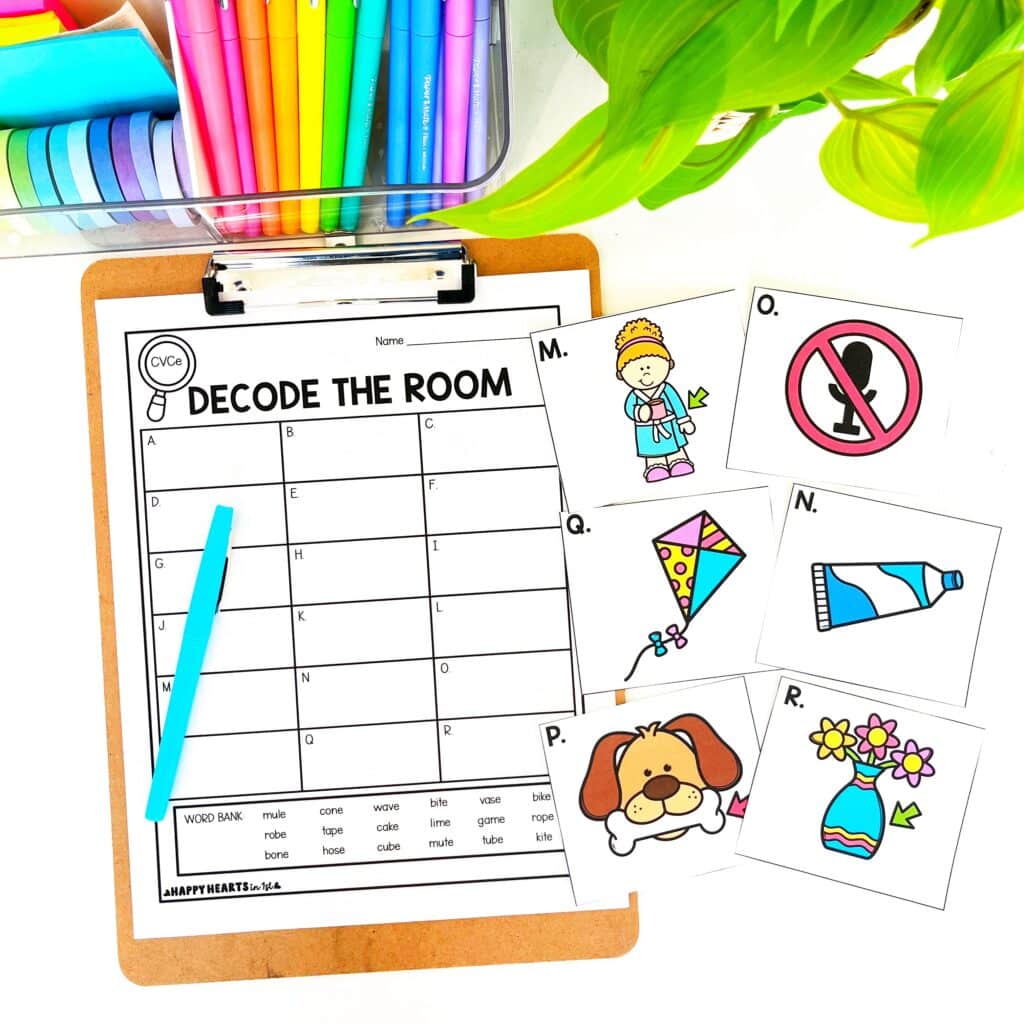
Once students know the routine, they can get started without needing a whole new set of directions. That makes it easier to keep Word Work running while you meet with small groups!
More Ways to Practice with the Same Materials
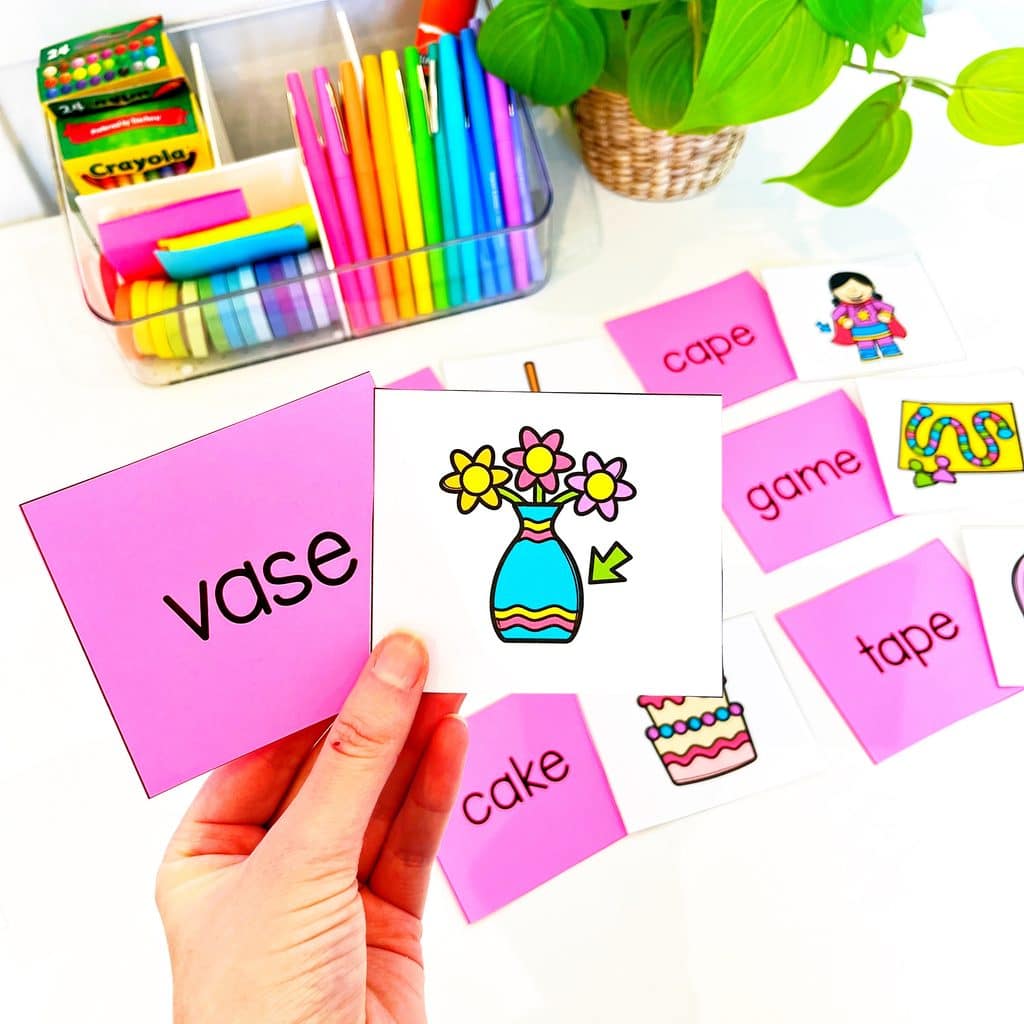
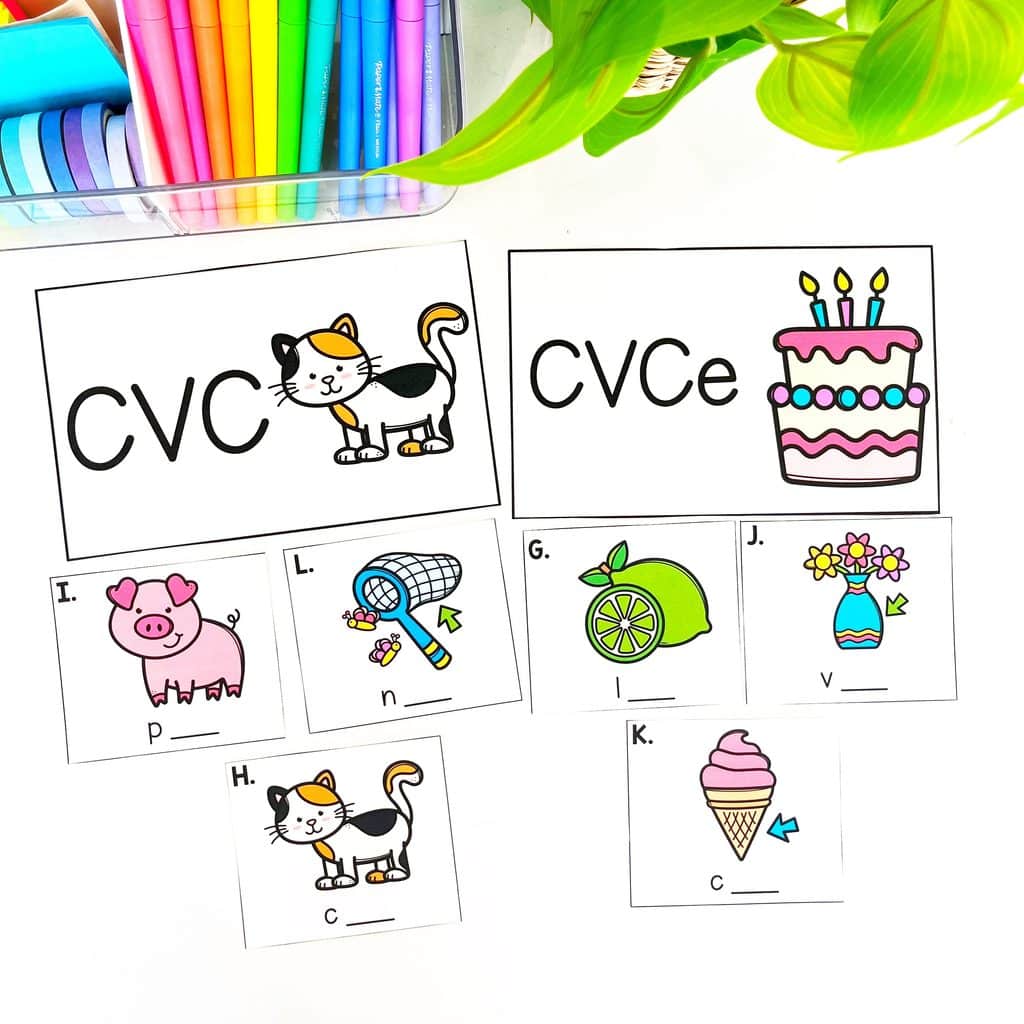
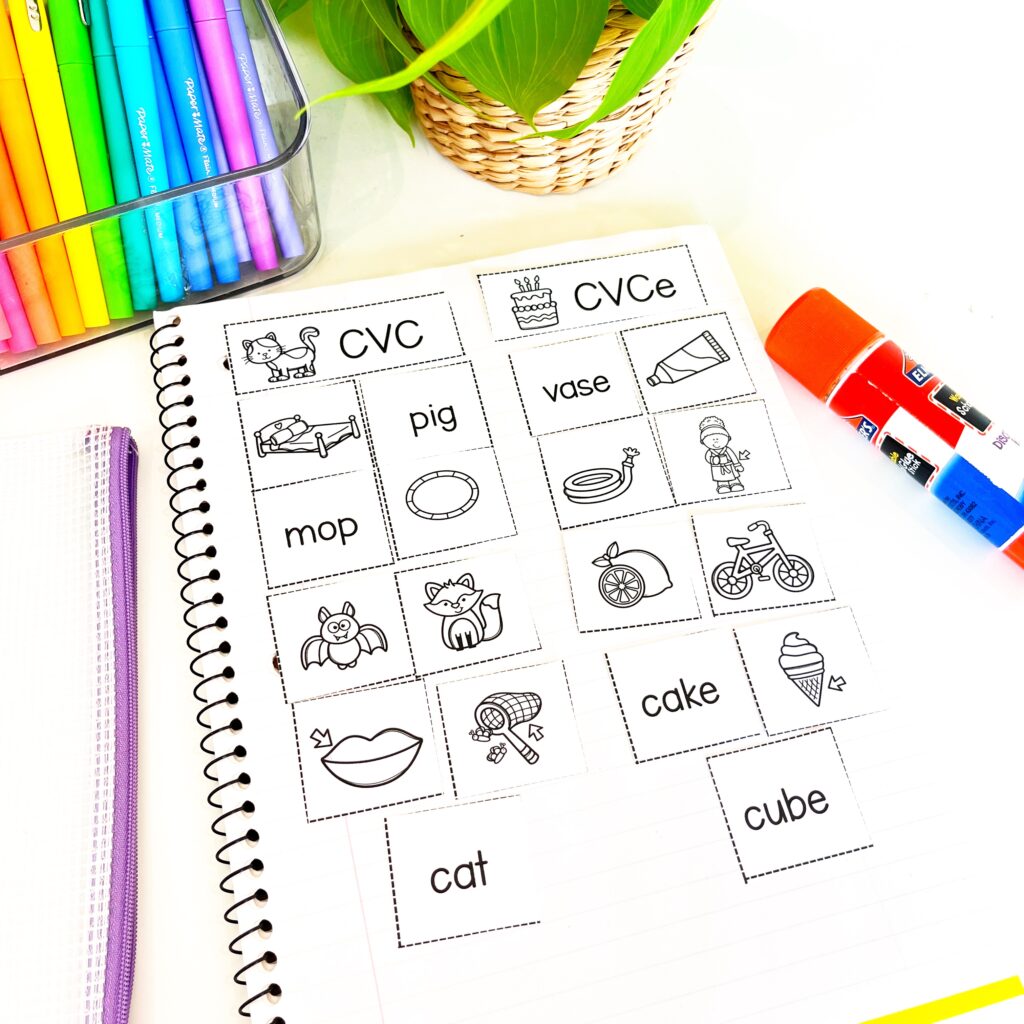
The Decode the Room packs also include picture and word matching cards, phonics posters, and cut and paste sorts.
I love using these materials in more than one way throughout the week!
💗 Picture and Word Match: Students read each word and find its matching picture. They can also use the cards to play Memory Match with a partner.
💗 Phonics Sorts: Students read and sort words by the featured patterns. Keep the pieces in a small pouch so they can practice again before gluing.
💗 Partner Practice: One partner names a picture while the other spells the word on a dry erase board. Then they check the word card together!
You don’t have to put out every activity at once. Choose a few that work for your centers and keep using them as the skills change.
Same routines. New phonics practice! 💗
Find my favorite Decode the Room Centers here!
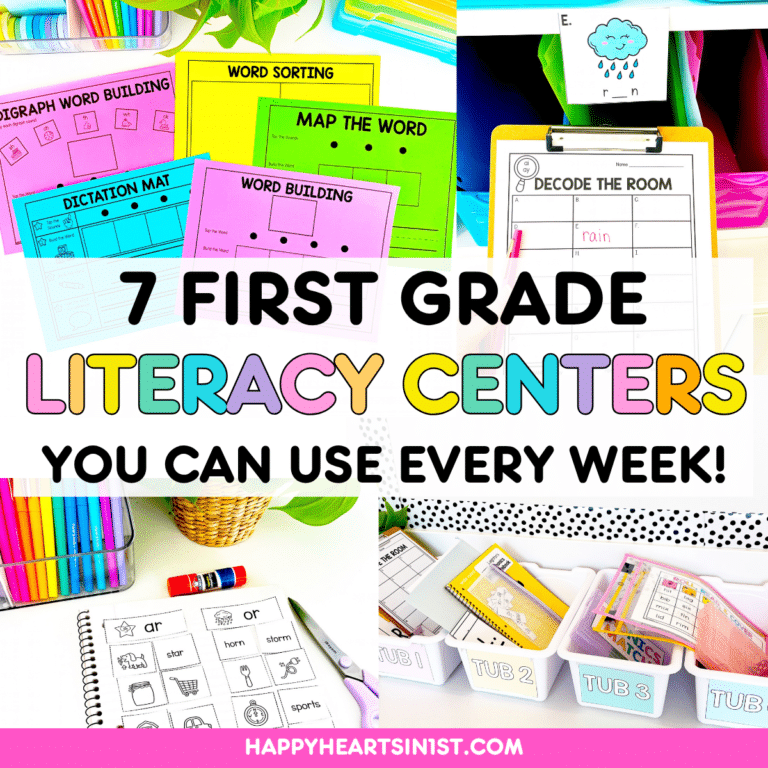
For more ideas you can use throughout the year, check out my blog 7 Literacy Centers for 1st Grade You Can Use Every Week
Apply It: Magic E Worksheets for 1st Grade
After practicing magic e together, I like to give students time to use the skill in their own reading and writing.
This is also a chance to see what’s sticking! Can students read the words? Are they remembering the silent e when they spell?
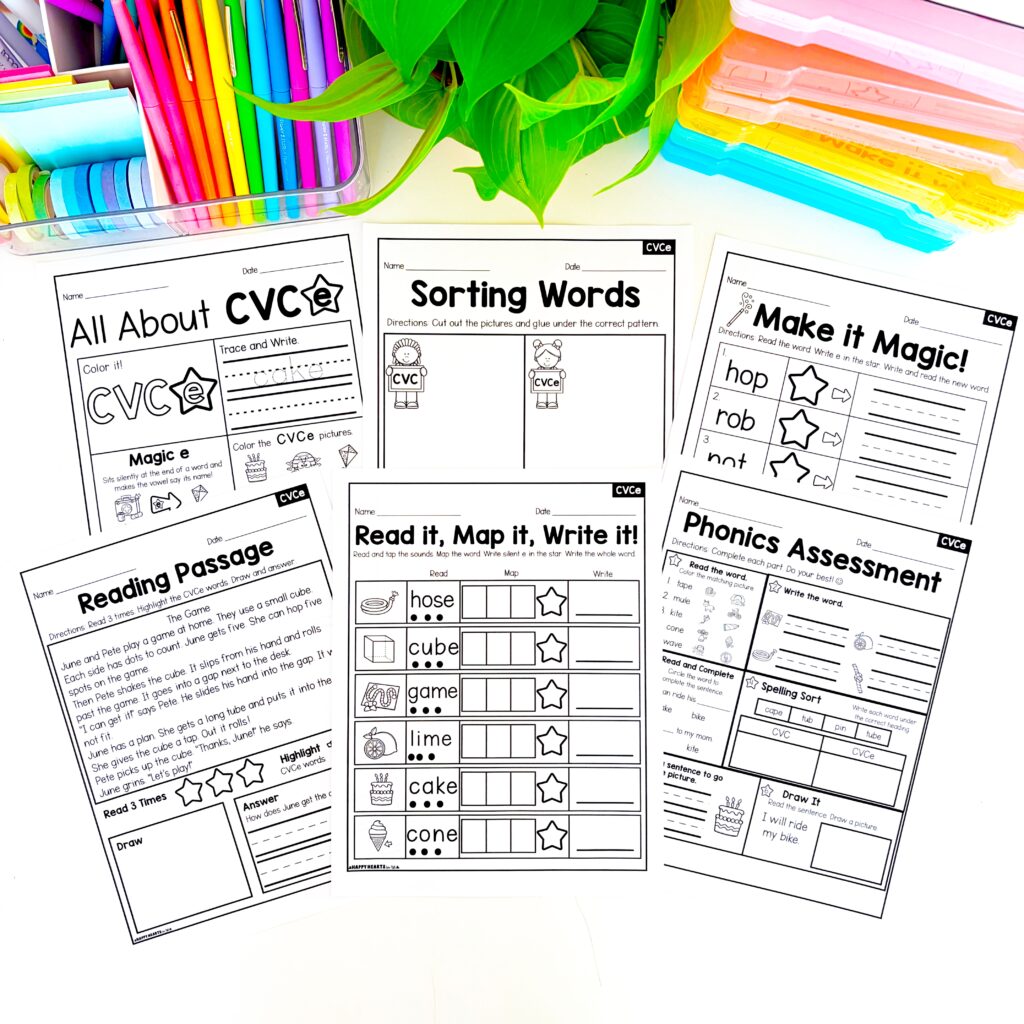
My Magic E Phonics No Prep packs give you options for independent practice, small groups, and review. 💗
Set Up a Weekly Phonics Routine
One thing that makes phonics planning SO much easier is having a plan for how you’ll use your practice pages.
Choose a few activity formats to come back to each week. You might start with word mapping, move into sentence practice, and revisit a passage for fluency.
Once you find a routine that works, keep it! Just pull the matching pages for your next phonics skill.
Students get familiar with the directions, and you know what to look for when planning. 💗
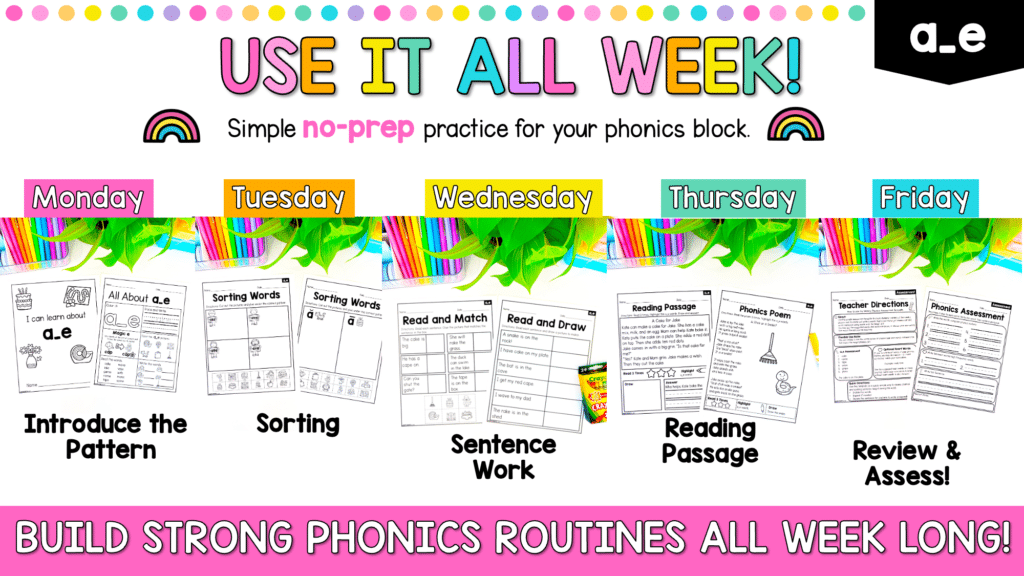
You can use some pages for independent practice and save others for small groups. Choose what your students need and give them time to practice!
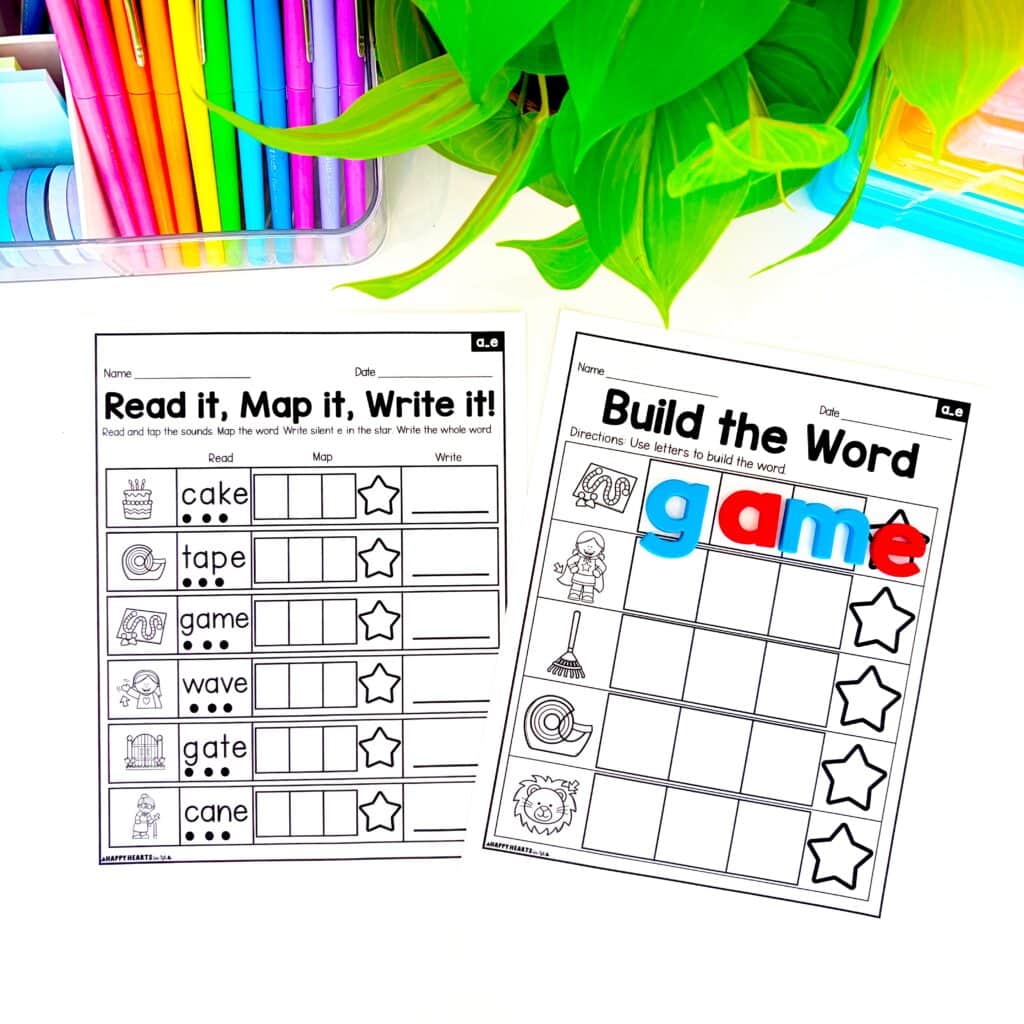
Read, Map, and Write Magic E Words
Start with practice that matches the pattern you’re teaching. Students can say a word, tap its sounds, and connect those sounds to the spelling.
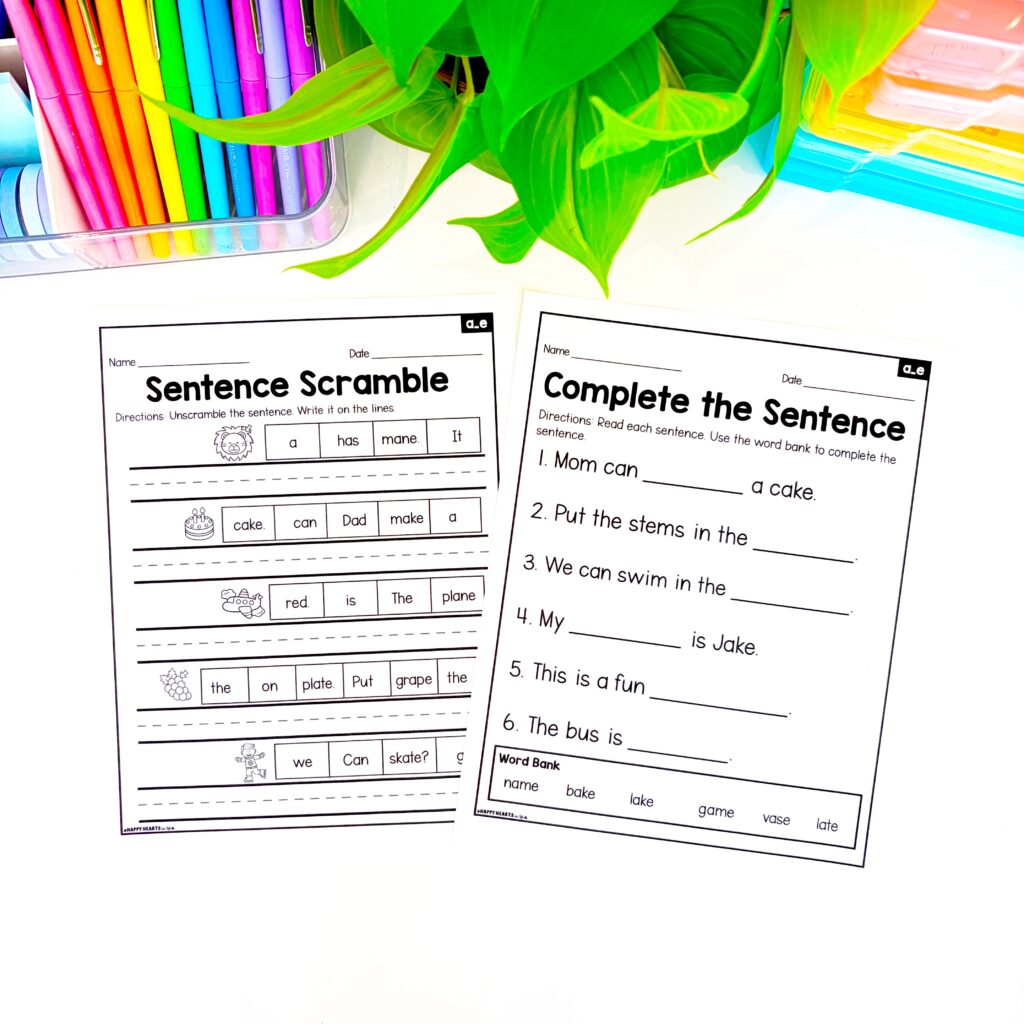
Then move into sentence practice! Students can read and match sentences, put scrambled sentences in order, or write about a picture.
I love having familiar page formats for each skill. Once students know the directions, they can spend more time on the reading and writing.
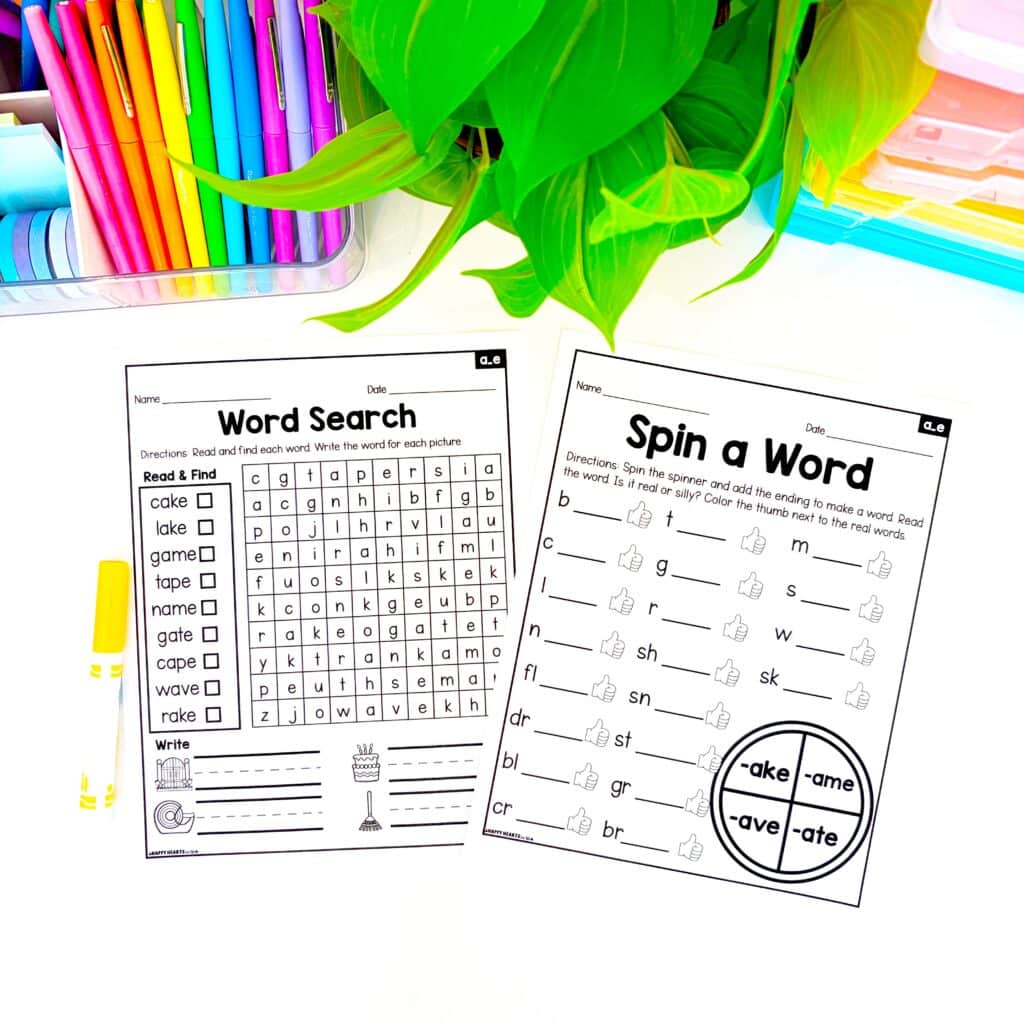
Magic E Reading Passages and Fluency Practice
Students also need practice reading magic e words within connected text.
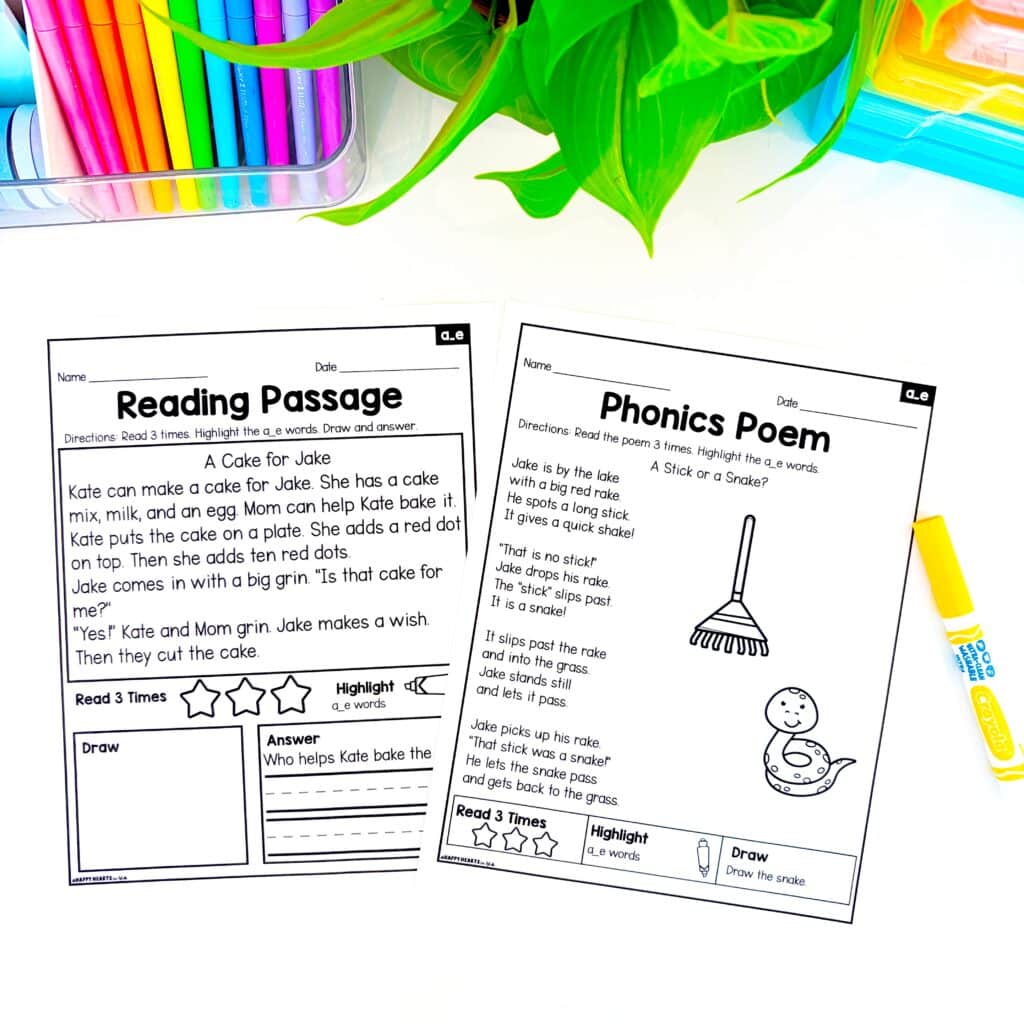
The packs include reading passages, phonics poems, and fluency activities so you can keep working on the pattern beyond individual words.
You might introduce a passage during small groups, help students work through tricky words, and reread it together. Revisit the text later for more practice with accuracy and expression.
Choose text that fits the phonics skills your students have learned. Some students may need to read with you before practicing on their own.
Small Group Tools and Quick Checks
Not everyone will need the same practice, and that’s okay!
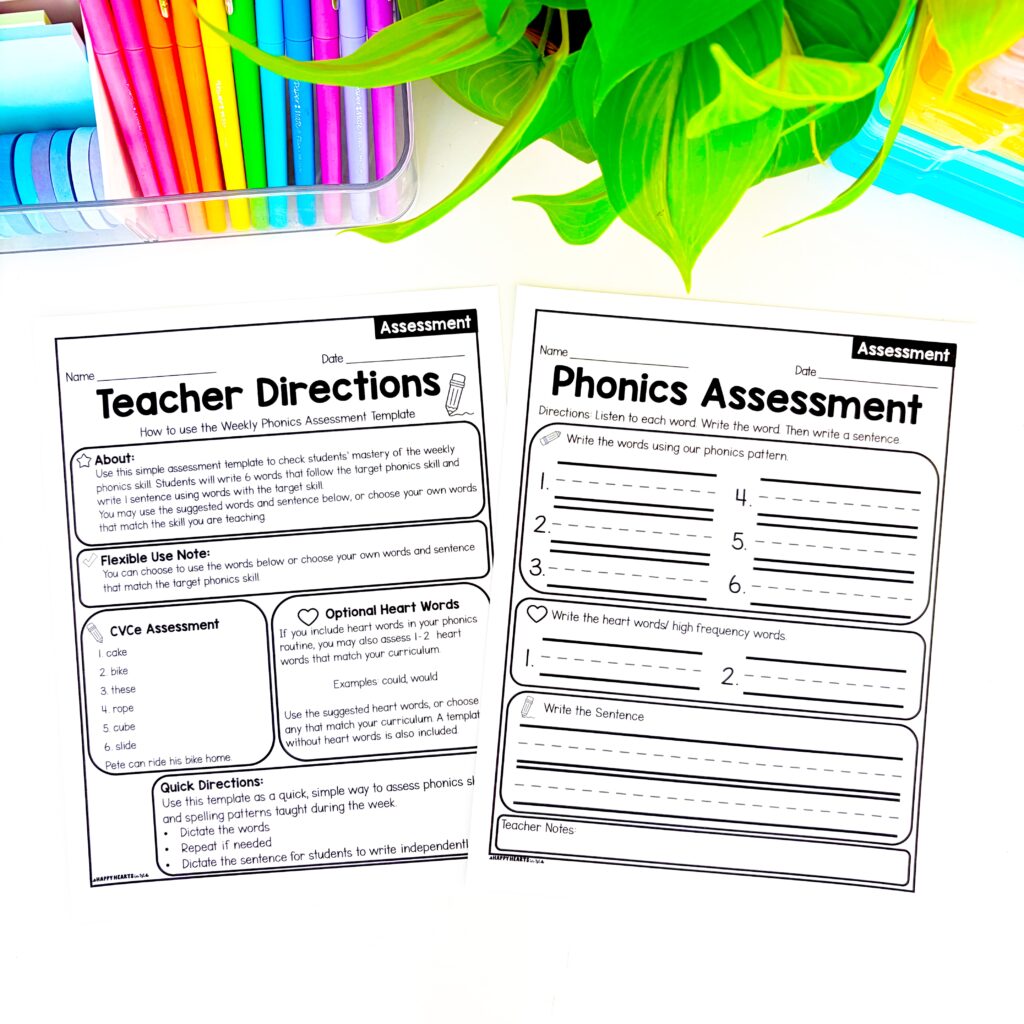
Use the assessments to see who is reading and spelling the pattern independently and who needs more support.
Then pull the small group tools that fit what you noticed. You might revisit word building with one group and practice reading sentences with another.
Having those materials ready makes it easier to give students extra practice without planning a whole new activity.
Choose the Magic E Pattern You Need
There are five CVCe phonics packs available:
💗 a_e: Long A
💗 i_e: Long I
💗 o_e: Long O
💗 u_e: Long U
💗 Mixed CVCe Review
Start with the pattern you’re teaching, then use the mixed review activities once students have learned the included patterns.
Each pack includes worksheets, reading passages, fluency practice, assessments, and small group tools.
You don’t need to use every page! Pull a few activities for your weekly routine and save the others for review.
All five packs are also included in my Phonics No Prep Growing Bundle! Find it here!
Make Magic E Practice Part of Your Phonics Routine
I hope these magic e activities for 1st grade give you some ideas to try with your students!
Start with a lesson where students can practice with you. Then carry that skill into familiar centers and independent work.
You don’t have to change everything when you introduce a new phonics pattern. Keep the activities that work for your class and swap in the practice students need.
That’s what I love about Teach It, Practice It, Apply It. You have a place to start when planning, and students know what to expect! 💗
Find all of my Phonics Bundles here!
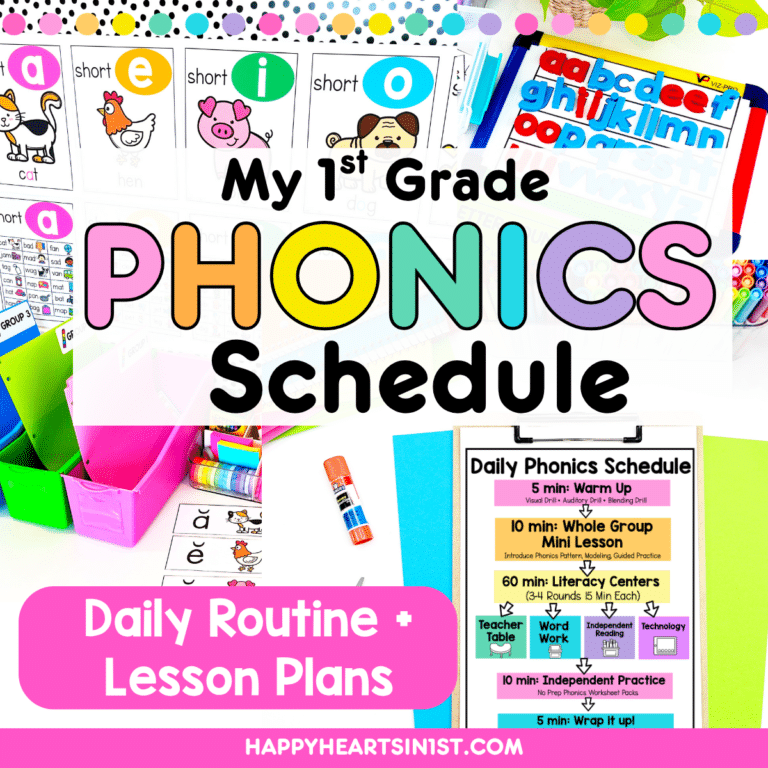
Grab Your FREE Phonics Schedule + Pacing Guide
Want help putting your phonics routine together?
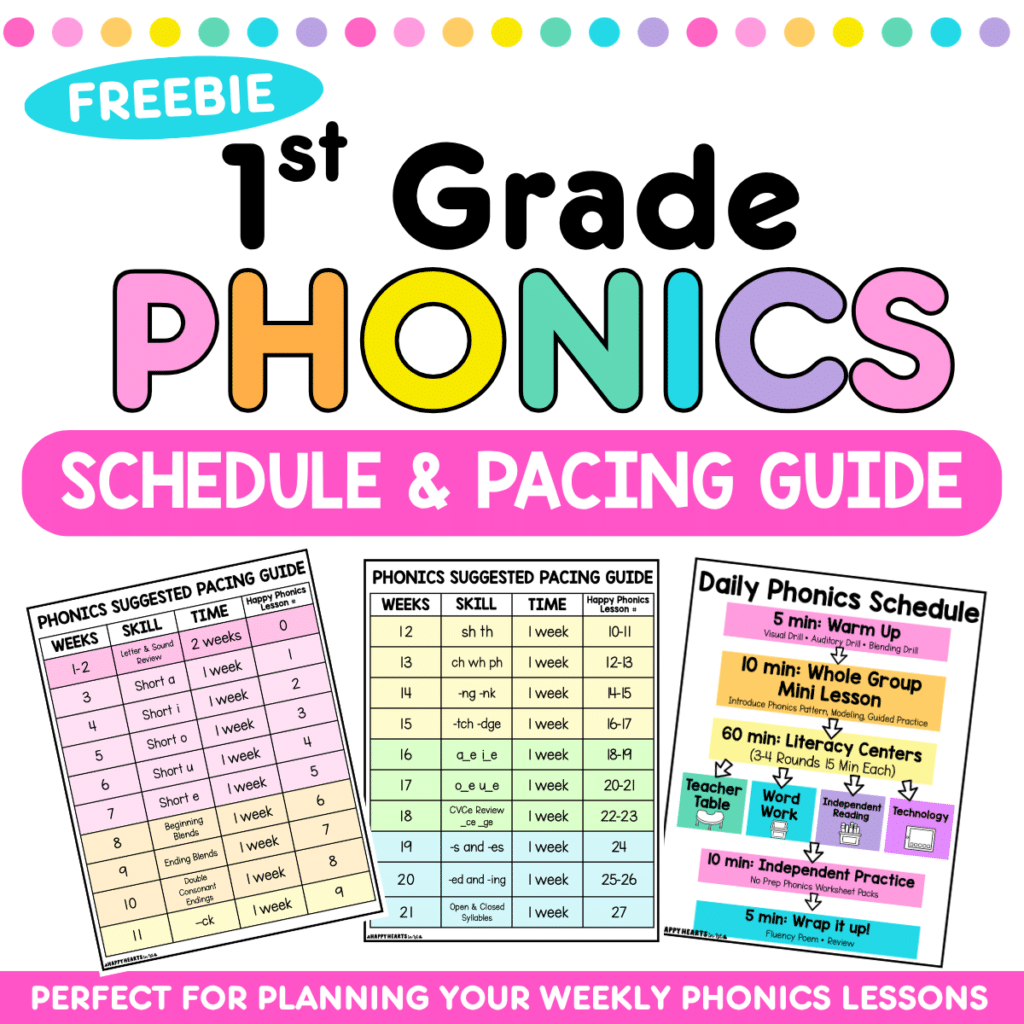
My FREE 1st Grade Phonics Schedule + Pacing Guide includes a sample daily routine and a suggested sequence for 38 weeks of phonics skills.
Use it as a starting point and adjust it to fit your students and curriculum!
Get My FREE Phonics Schedule + Pacing Guide
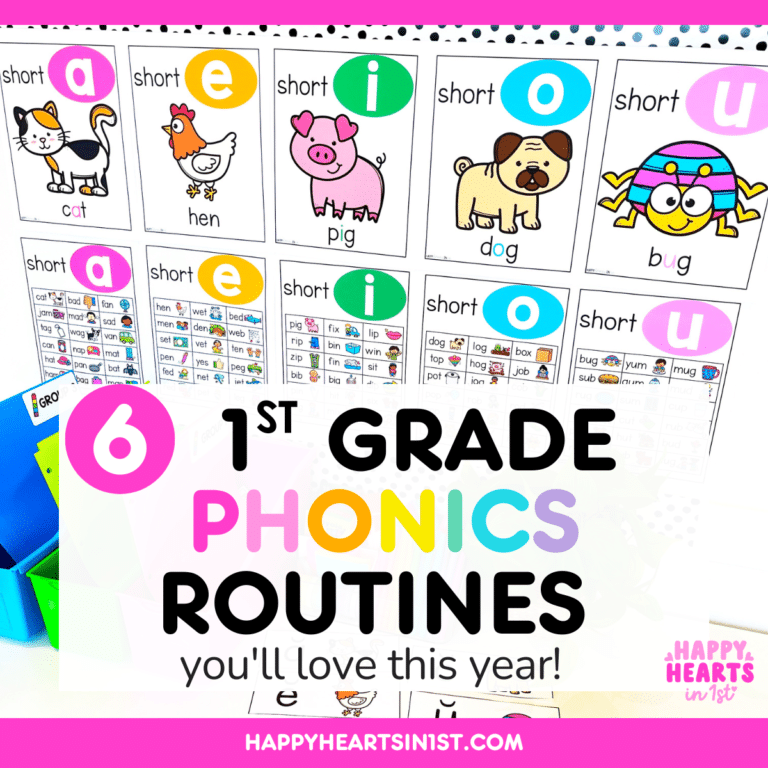
For more phonics planning ideas, visit these posts: