





Teaching 1st graders balancing equations is such an important step in helping them truly understand what the equal sign means: not “the answer is,” but “the same as.” Once that lightbulb goes off… math gets so much easier for them!
Today I’m sharing 4 simple, effective activities you can use to help your first graders build a solid foundation with balancing equations. These hands-on ideas help students see math as flexible, meaningful, and FUN!
1. Use a Number Balance to practice Balancing Equations
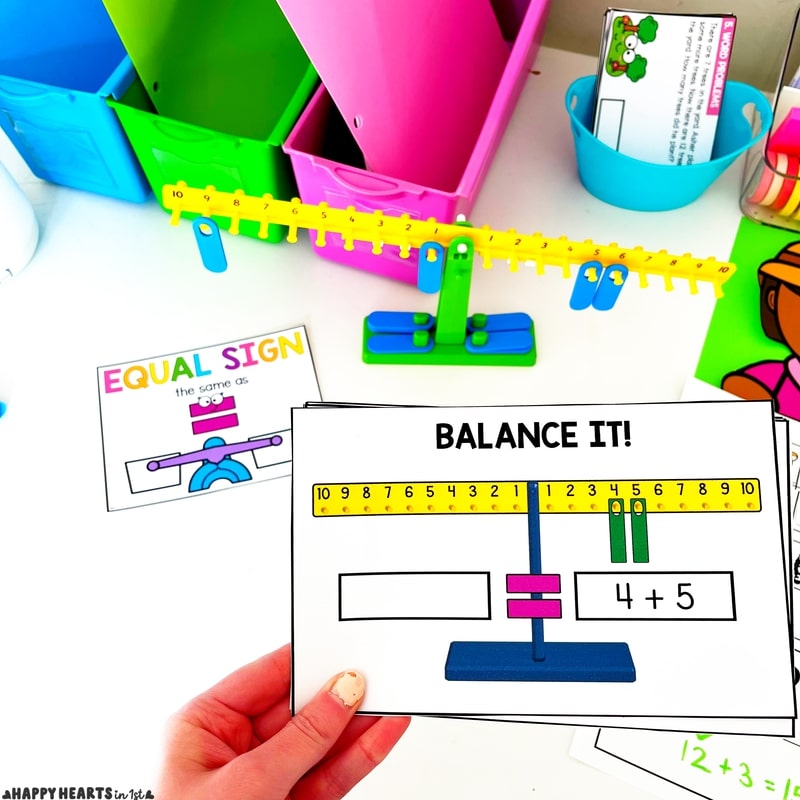
A number balance is one of the best tools for building conceptual understanding of the equal sign. Here’s one from amazon!
Students can explore:
- Putting one number tag on each side
- Adding multiple tags to one side
- Finding combinations that balance
- Seeing why numbers are equal or not equal
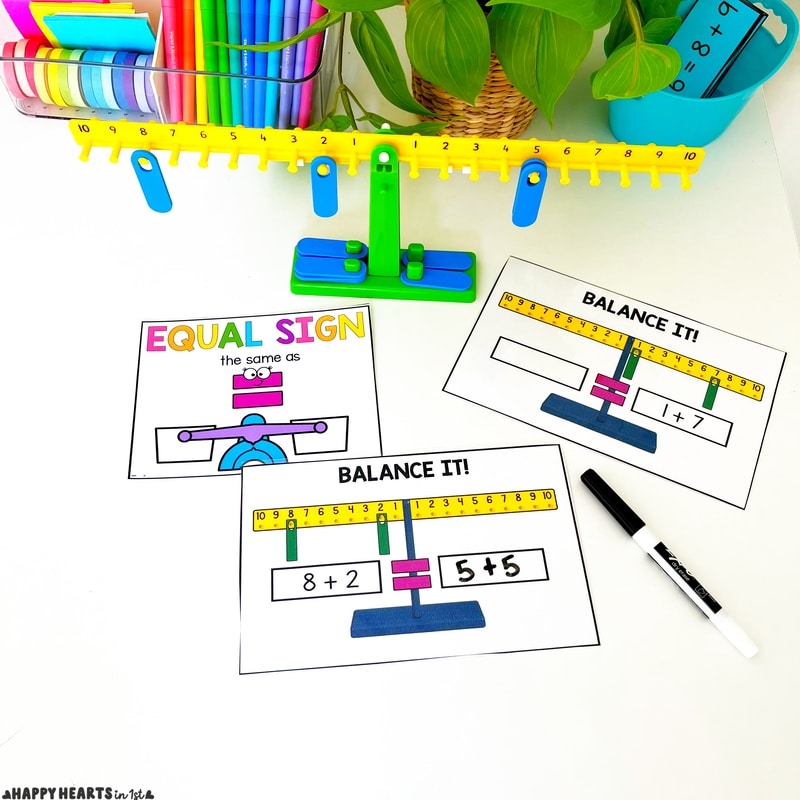
You’ll see so many “Aha!” moments when they discover that 3 + 2 balances with 5 or 6 = 4 + 2. This concrete exploration helps them feel what equality means before moving into abstract equations.
Teacher Tip:
Have students record balanced equations they discover during exploration time. It builds ownership and reinforces the idea that equations can look different but still be equal.
We also use a large number balance visual during our Balancing Equations mini lessons for our whole group math time! All of my math units include pre-made slides that are no prep and ready to go to teach all first grade math topics!
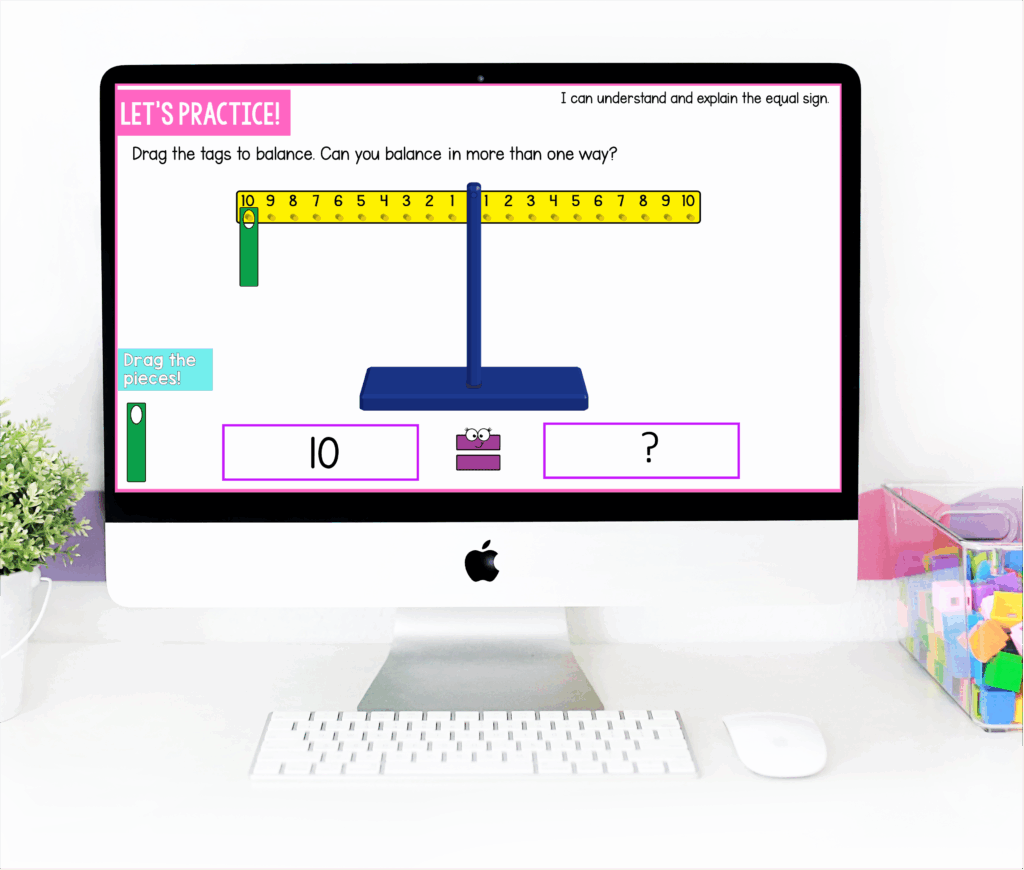
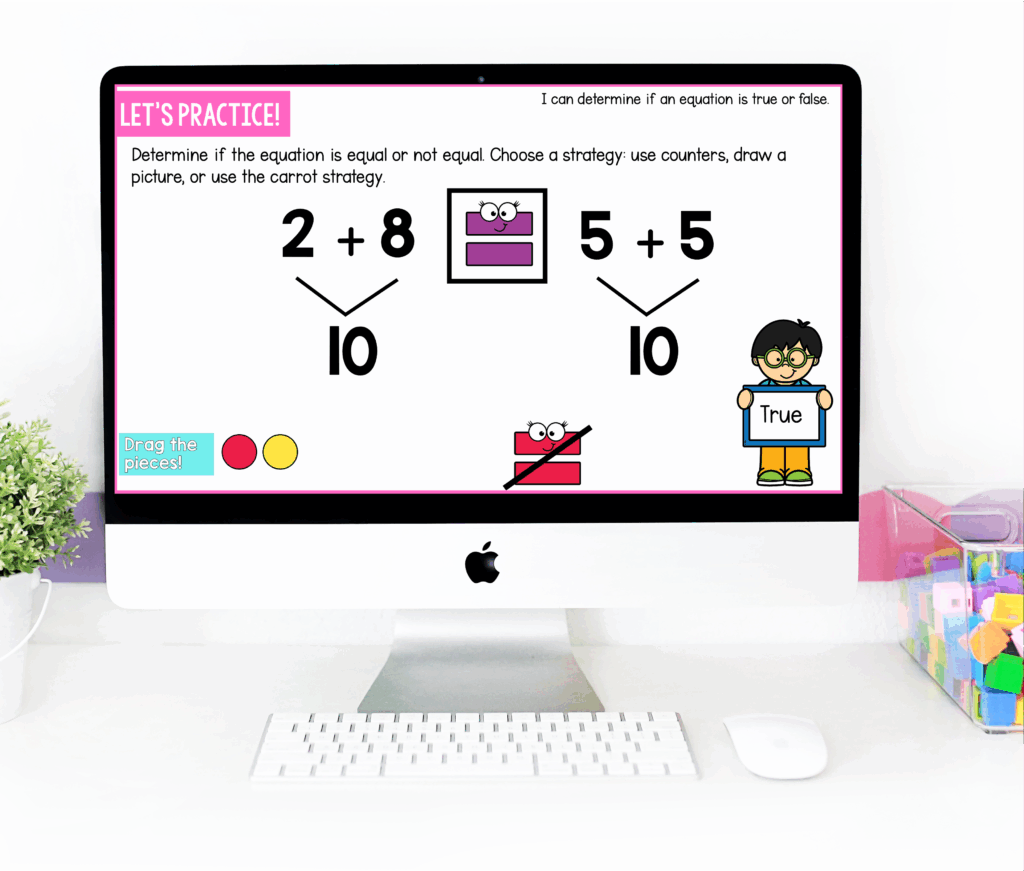
2. Use the “Carrot Strategy” 🥕
This is one of my favorite strategies to teach!
We draw a little carrot under each side of the equal sign. Then we:
- Solve the expression on the left
- Solve the expression on the right
- Compare both sides to check if the equation is balanced

Calling it a “carrot” makes it memorable for 1st graders, and once they learn it, they use it constantly! It’s such an easy way to build the habit of checking both sides of an equation.
3. True or False Sort for Balancing Equations in 1st Grade
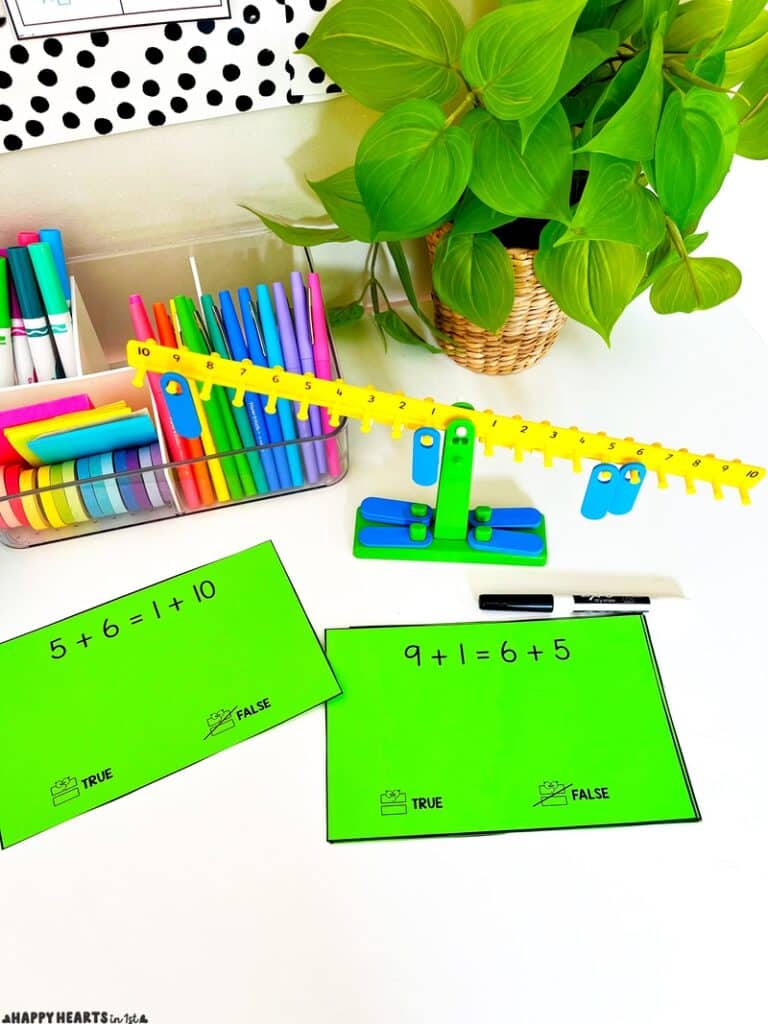
Once students understand how to compare both sides, it’s time to practice determining whether equations are true or false.
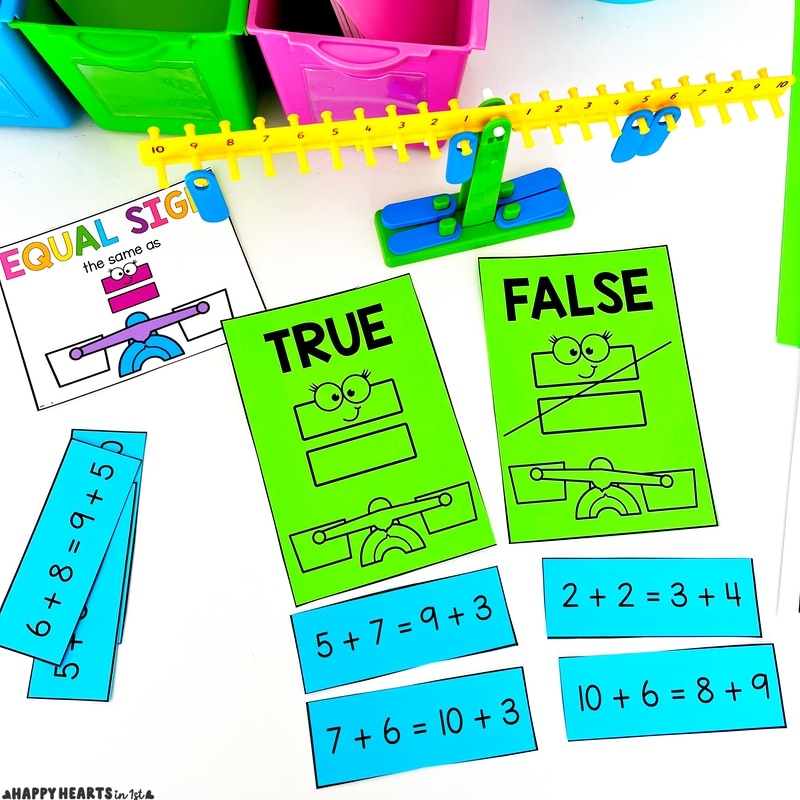
I like to start only with:
- simple addition equations
- no missing numbers yet
This keeps the focus on building the concept, not solving tricky problems.
Once students feel more comfortable with the process, I add in subtraction, mixed operations, and bigger numbers.
We always do this activity first in small groups. Then later it becomes one of the students math tub activities during daily math rotations.
4. Find the Missing Number
Once students can tell if an equation is balanced, they’re ready for the next step: finding the missing number.
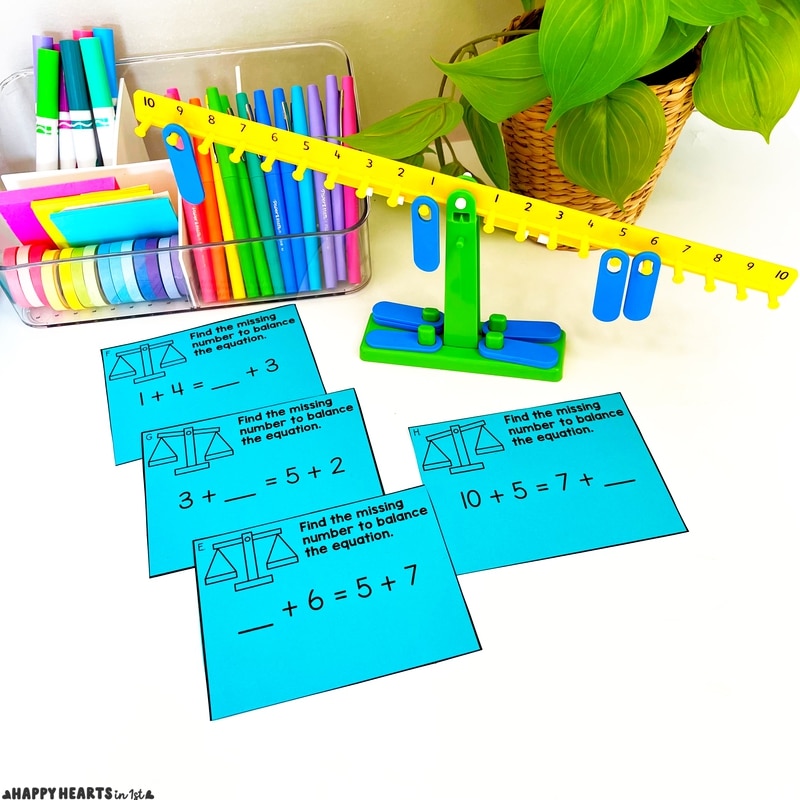
Before teaching this concept, we have already spent a lot of time learning about how to find a missing addend in an equation. If you want to grab FREE resources for teaching all about missing addend, Check out this post!

When we start finding missing numbers to balance equations, here’s the simple routine I teach:
- Solve the side with no missing number first.
- Use that answer to determine what the missing number must be.
This reduces overwhelm and gives students a clear starting point every time.
Students start to see patterns, relationships, and even begin using addition and subtraction facts together. It’s such a powerful step toward algebraic thinking in 1st grade!
Balancing Equations in 1st Grade Wrap it Up!
Balancing equations is all about helping students understand that both sides must be equal (or the SAME!) These four activities make that concept concrete, visual, and fun for first graders.
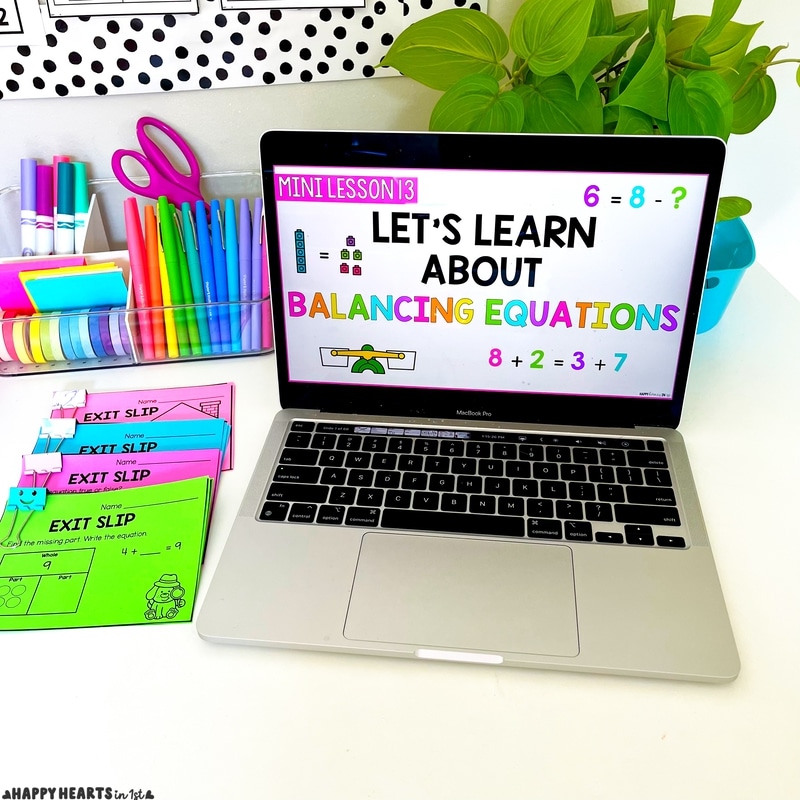
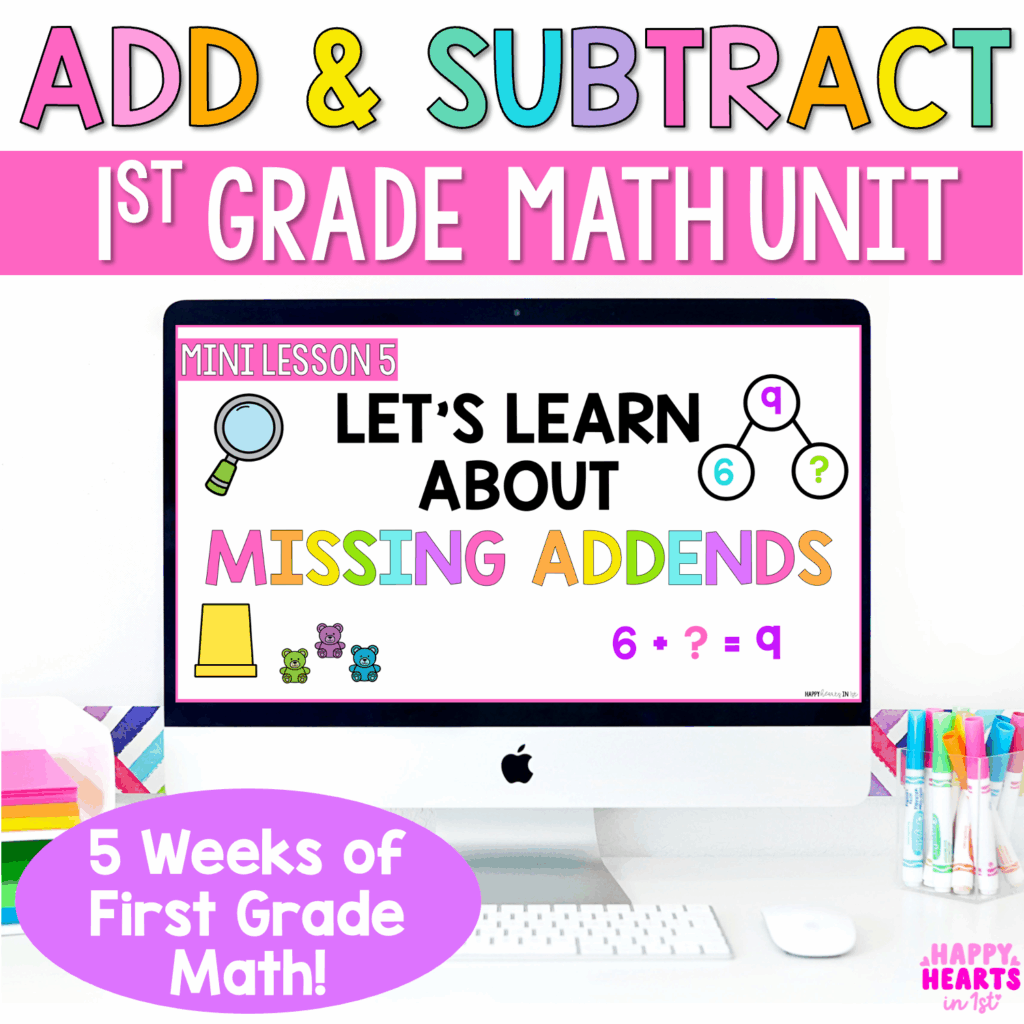
If you want all of these activities, plus Balancing Equations lessons, worksheets, assessments, and more, check out my Happy Math Addition and Subtraction Unit!
It has everything you need to teach:
- Fact Families
- Missing Addend
- 3 Addend Addition
- Balance Equations
- Word Problems