





In 1st grade, math centers and small groups are hands-down my favorite part of the day! 💛
I love sitting down with my students at the teacher table, getting to know their math thinking, and giving them exactly the support they need to build confidence and understanding. Small groups allow me to see their strengths, identify misconceptions, and help them grow in ways that whole-group instruction simply can’t.
Of course, for small groups to be successful, I need the rest of my class working independently in meaningful math centers. I want my students practicing and reviewing important skills, not completing busy work just to stay occupied.
When I first started teaching, math centers were actually one of the most stressful parts of my day. I spent hours every week searching for new activities that matched the exact skills I was teaching. I was constantly prepping, introducing new games, and trying to keep everything organized. It was exhausting, and my students weren’t nearly as independent as I wanted them to be.
Over time, I realized that many of the challenges I was experiencing were the result of a few common mistakes. Once I made some simple changes, math centers became one of the smoothest and most effective parts of our daily routine.
In this post, I’ll share the 5 biggest mistakes I stopped making during math centers—and what I do instead.
Math Centers Mistake 1: Changing our Center Routines every week
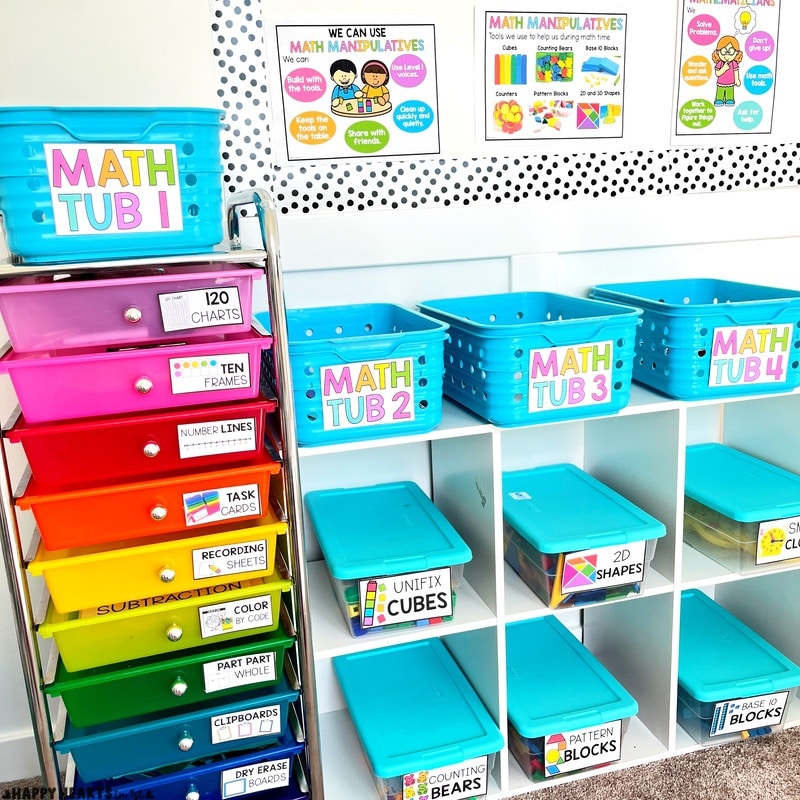
When I first started teaching, I thought math centers needed to be completely different every week. I spent hours searching for new games, printing activities, and prepping centers that matched the exact skills we were learning.
The problem? My students were constantly learning how to play a new game instead of focusing on the math.
Every week felt like starting over. I had to explain directions, answer questions, and reteach expectations. My students never had the chance to become truly independent because the routines were always changing.
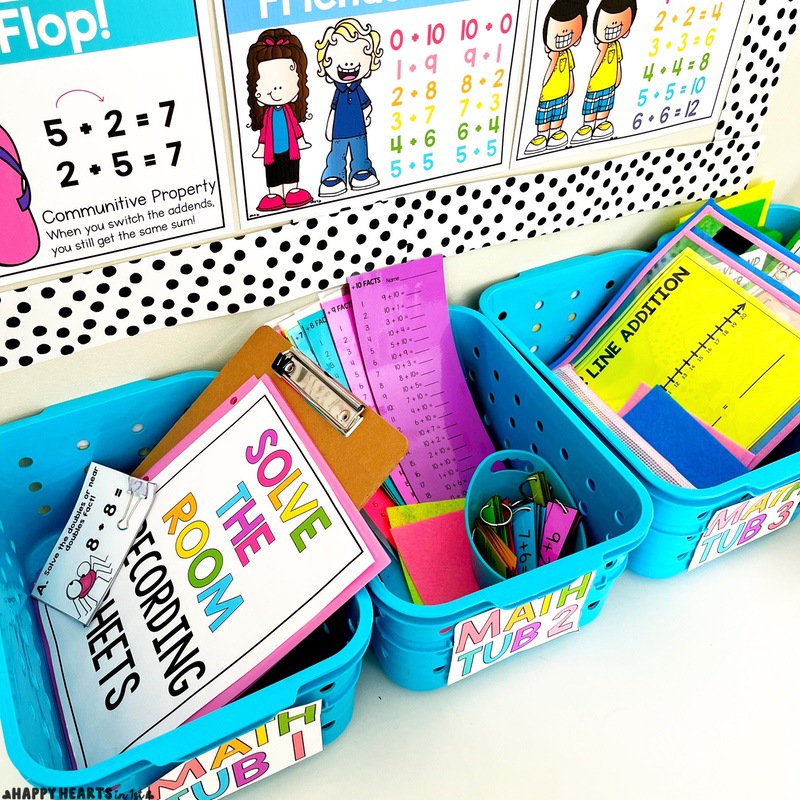
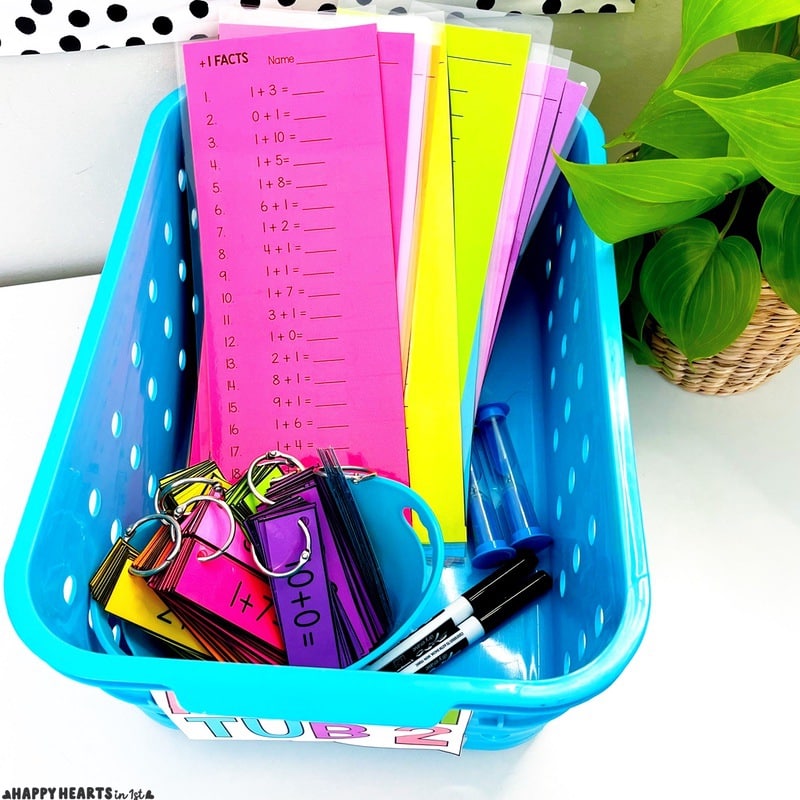
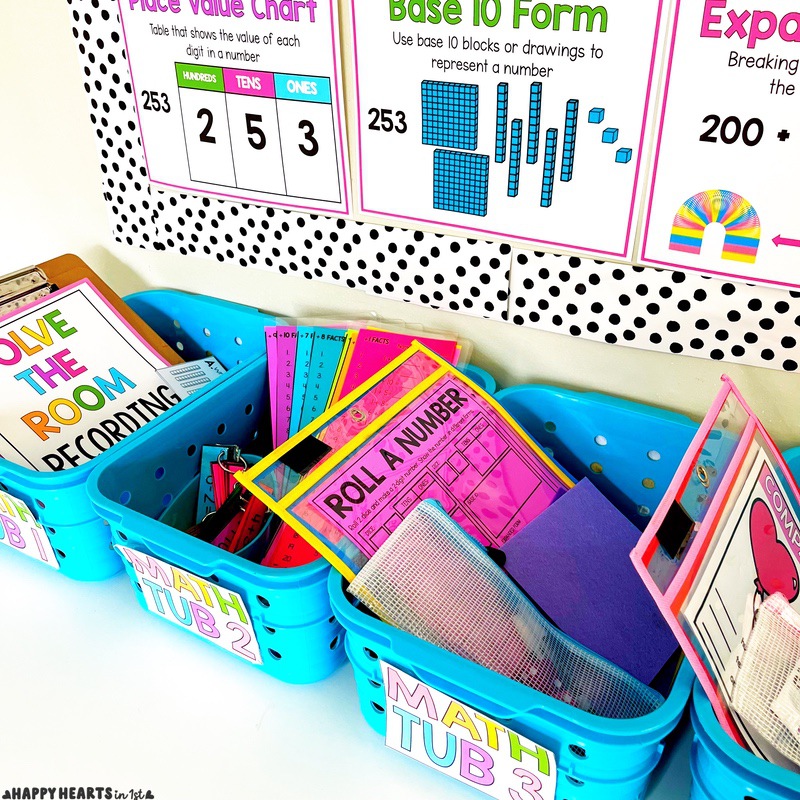
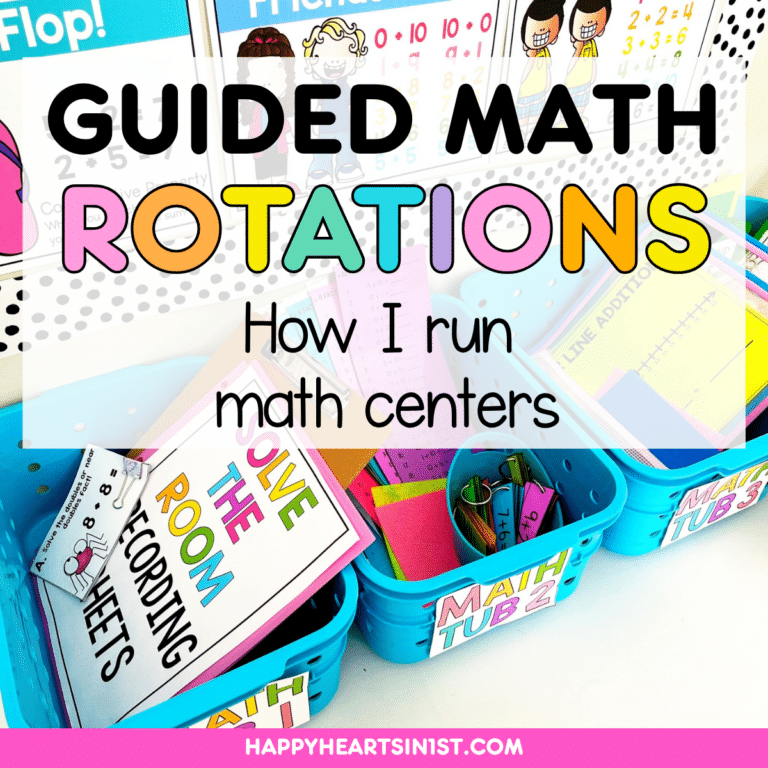
Now, I use the same center structures all year long. Activities like Solve the Room, Math Match, Roll & Cover, and Fact Fluency become familiar routines that students can complete independently.
Instead of changing the activity, I simply change the skill being practiced.
This one shift made a huge difference. My students became more independent, I spent less time prepping, and I was finally able to focus on my small groups without constant interruptions.
Read more about Math Center Routines here!
Find my favorite Math Center Routines that can be used all year long here!
Math Centers Mistake 2: Using Centers to Practice Skills We Were Still Learning
Another mistake I made was putting the exact skill we were currently learning into math centers.
I thought I was giving students extra practice, but what actually happened was that they needed constant help. Since the skill was brand new, students weren’t ready to complete the activities independently.
This led to lots of interruptions during small groups and frustration for students who weren’t confident with the skill yet.
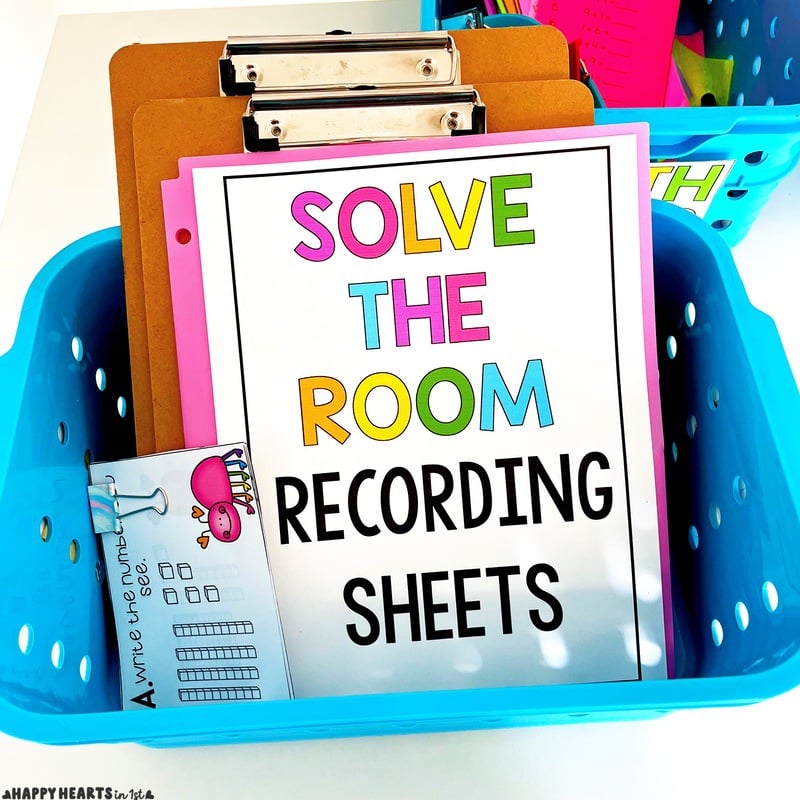
Now, I use math centers for meaningful review and practice. Students work on skills that have already been taught and practiced during whole group lessons and small groups.
When students are familiar with the skill, they can focus on applying their learning instead of trying to figure out what to do.
This simple change helped my students become more independent and allowed me to spend my small group time teaching instead of troubleshooting.
Mistake #3: Expecting Students to Learn Centers During Center Time
When I first started teaching, I would explain a center activity and then send students off to complete it independently.
The problem? Students weren’t ready.
They had questions, forgot directions, and needed constant support. I quickly realized that simply explaining a center wasn’t enough. If I wanted students to work independently, I needed to teach and practice the center routine before expecting them to do it on their own.
Now, I introduce new center activities during whole-group instruction. We complete the activity together, discuss expectations, model what it should look and sound like, and practice before it ever becomes a center.
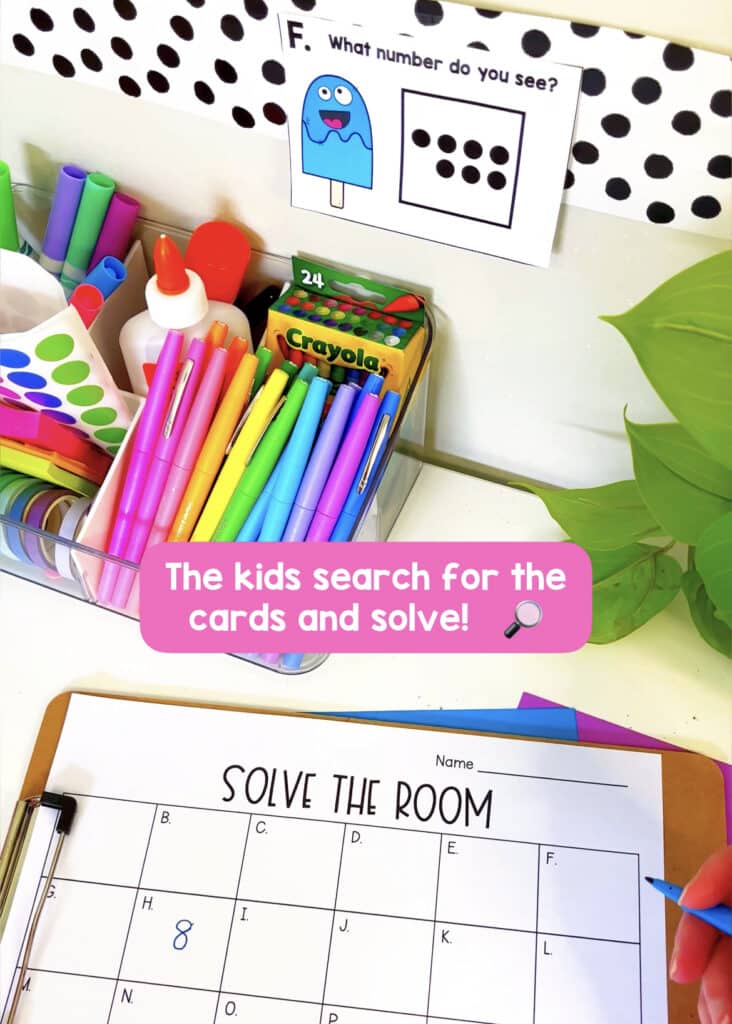
By the time students see the activity during center time, they already know exactly what to do.
Sometimes, students are first introduced to a center activity during small groups. Once they have practiced it with me and understand the expectations, it becomes a center the following week.
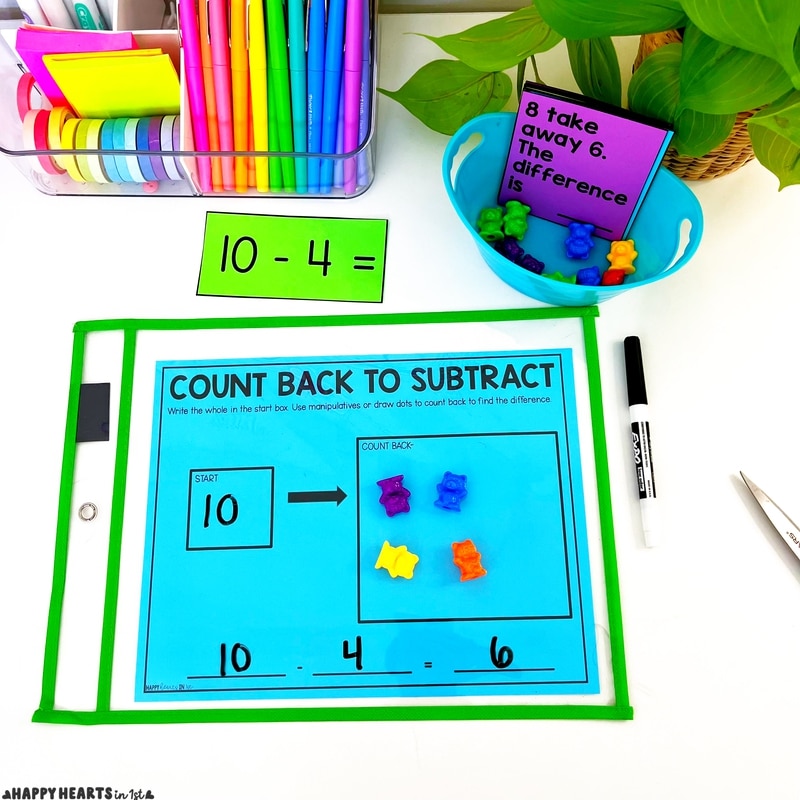
This simple change dramatically reduced interruptions during small groups and helped my students become much more independent.
Mistake #4: Planning Math Centers One Week at a Time
For years, I planned my math centers one week at a time.
Every week, I would look at the skills we were learning, choose center activities, print materials, and prep everything for the following week. It felt like I was constantly trying to stay one step ahead.
Not only was this time-consuming, but it also made it difficult to see the big picture of where we were headed.
Now, I plan an entire month of math centers at a time.
At the beginning of each month, I look at the skills we’ll be reviewing and map out all of my center activities. Then I can print, organize, and prep materials in batches instead of starting from scratch every week.
This simple change has saved me so much time and made math centers feel much more manageable. Instead of spending my weekends planning centers, I can focus on teaching and enjoying my time outside of school.
Find the free planning sheet here!
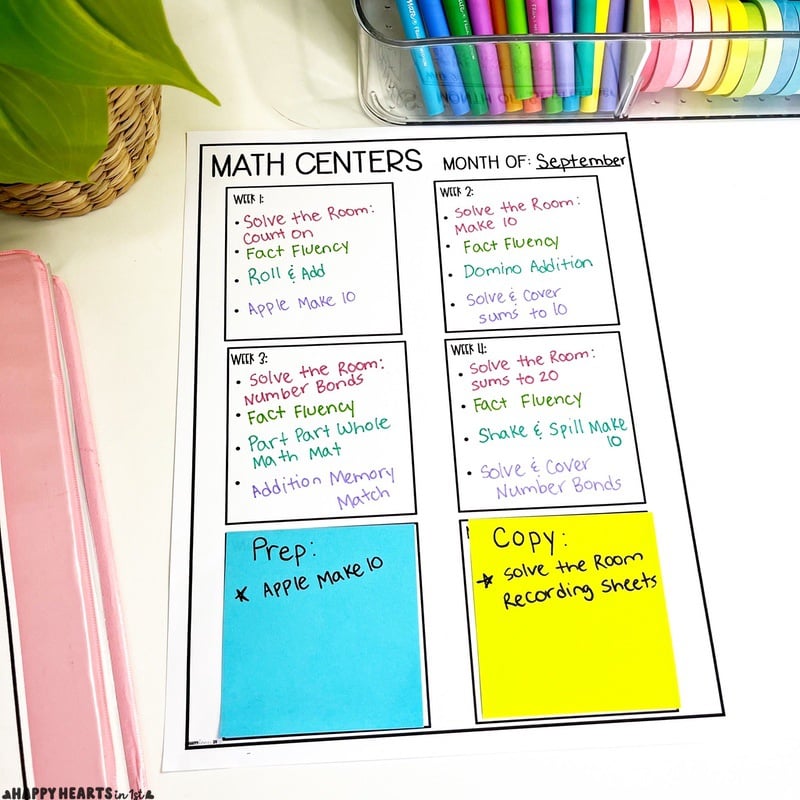
Mistake #5: Thinking Math Centers Needed to Be Complicated
One of the biggest mistakes I made was believing that math centers needed to be new, exciting, and different all the time.
I spent hours searching for elaborate games, creating complicated activities, and trying to come up with something my students had never seen before. I thought more complicated centers would lead to higher engagement.
In reality, the opposite was true.
The more complicated the activity, the more directions students needed, the more questions they asked, and the less independent they became.
Over time, I realized that the best math centers are often the simplest ones.
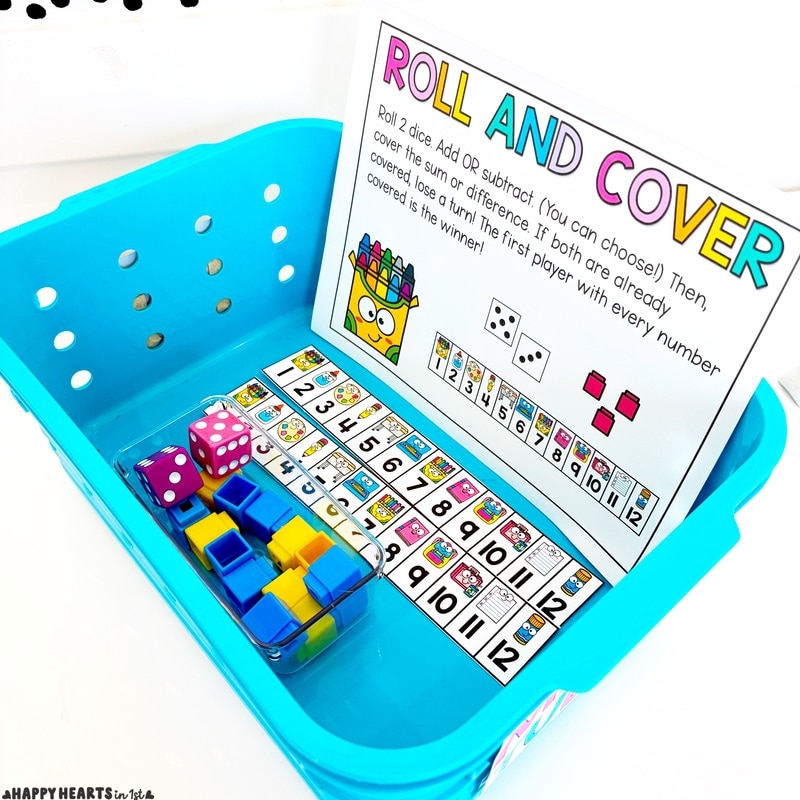
When students are familiar with the routine, they can spend their energy thinking about the math instead of figuring out how to complete the activity. Simple, predictable center structures allow students to build independence and confidence while giving me uninterrupted time to work with small groups.
Today, I focus on creating consistent routines that can be used again and again with different skills. My students know what to expect, centers require less prep, and our math block runs much more smoothly.
Final Thoughts
The biggest shift I made was realizing that I didn’t need more center activities, I needed better systems.
Once I started using consistent routines, planning ahead, and focusing on meaningful review, math centers became one of the smoothest parts of our day. My students were more independent, my small groups were more effective, and I spent far less time prepping each week.
If you’re looking to simplify your math block, start small. Choose a few consistent center routines, teach them well, and give your students time to build independence.
Looking for more math center tips? Be sure to check out my post with exactly how I run my Math Rotations here!


This is brilliant! Thank you for sharing!
i have moved up to second grade for 2026-2027 school year. This could be my last year before retiring. Thanks for all you do!
Angela