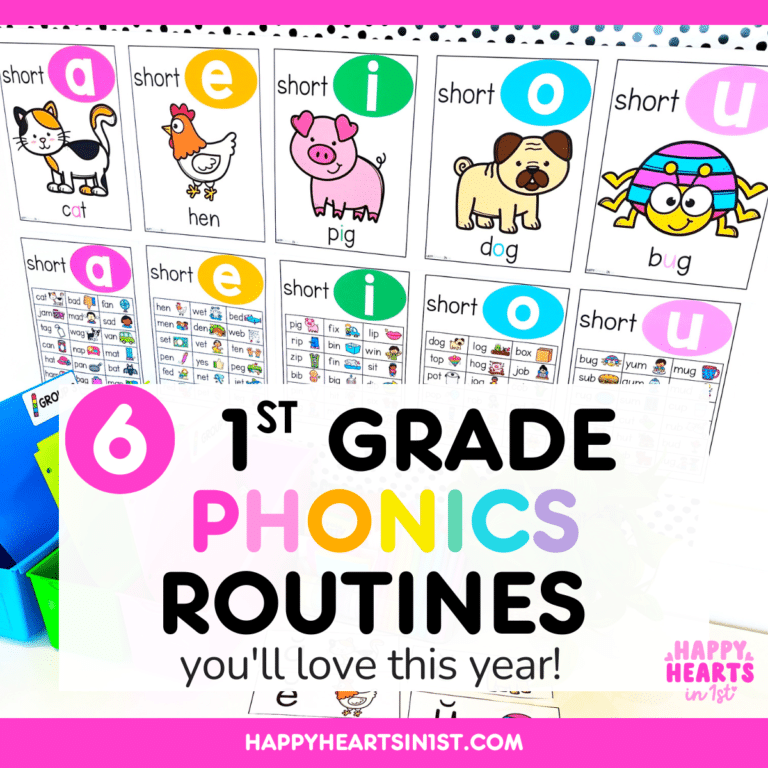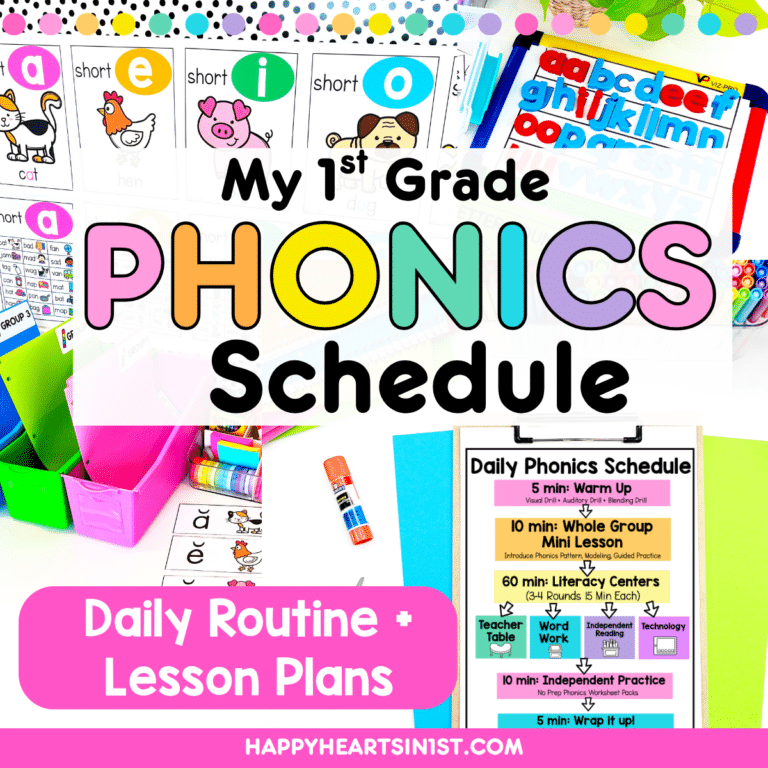


1st Grade Phonics Lessons are one of the most important parts of the day because this is when students build the skills they need to become confident readers.
It is amazing to see them go from sounding out simple words to reading with confidence. But getting students there takes strong 1st grade phonics lessons; ones that are systematic, explicit, and aligned with the Science of Reading.
Over the years, I’ve found that phonics feels so much easier when I use a simple routine:
Teach it. Practice it. Apply it.
This is the heart of my Happy Phonics System. In this post, I want to focus on the first part of that routine: Teach It.
Read more about my favorite phonics routines here!
The First Step in My 1st Grade Phonics Routine
Before students can practice a phonics skill independently, they need explicit instruction.
They need to hear the sound, see the spelling pattern, blend words, map sounds, read words, write words, and practice the skill with support.
That’s why I always begin with the Teach It part of my phonics routine.
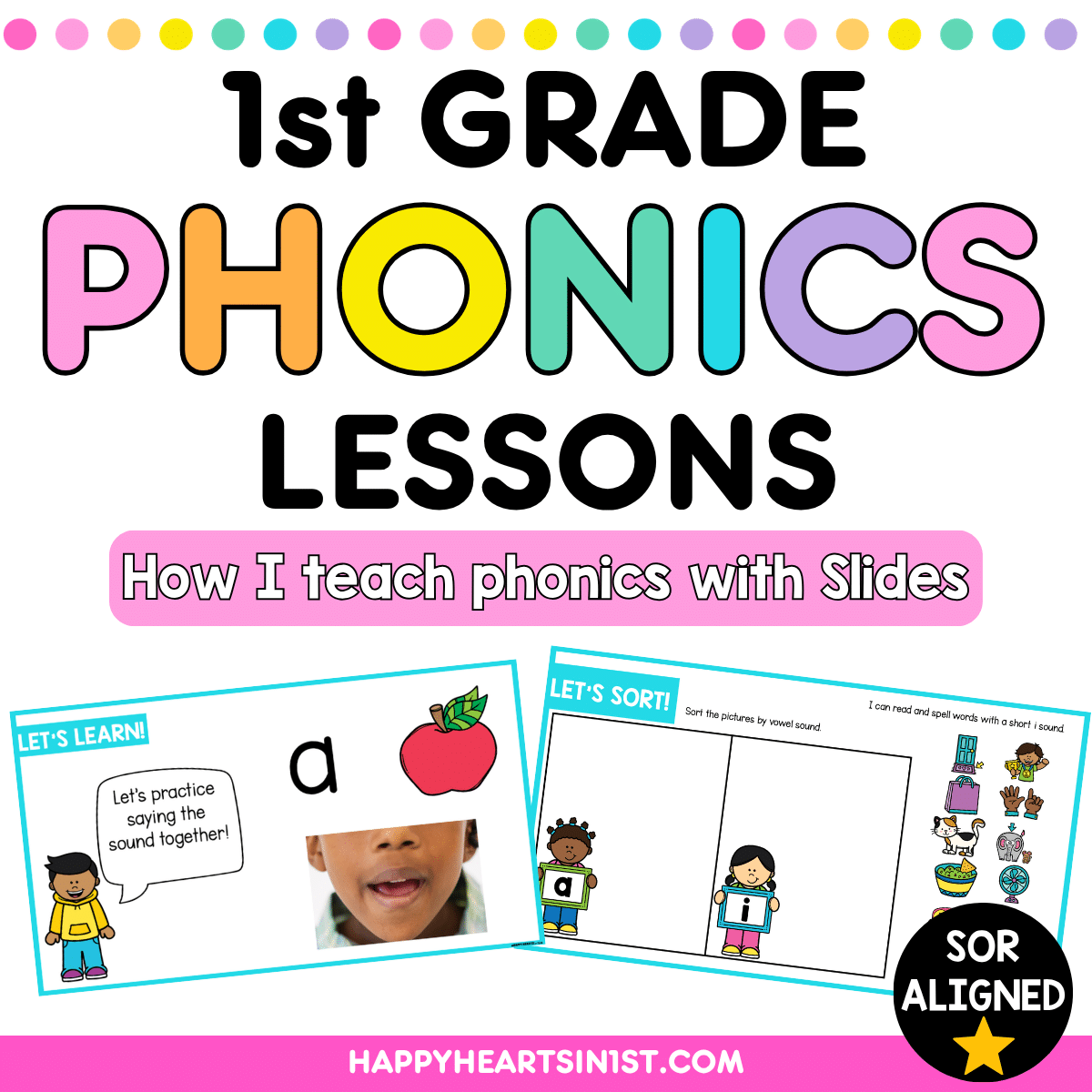
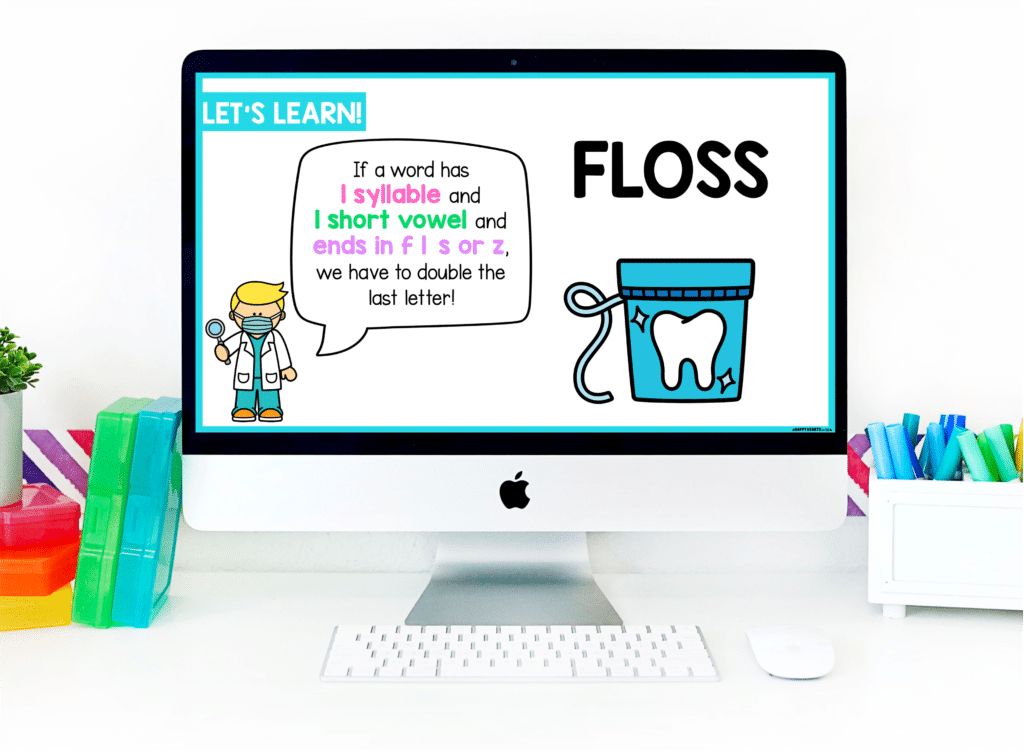
In my classroom, I teach phonics using interactive phonics slides. These slides take the guesswork out of planning my lessons and give me a clear, consistent routine to follow each day.
Instead of trying to piece together a lesson from scratch, I can open the slides, gather my students, and move through a phonics lesson that is engaging, explicit, and easy for students to follow.
How I Set Up My 1st Grade Phonics Lessons
During phonics lessons, my students sit on the rug next to a turn and talk partner. Each student also has a dry erase board so they can participate throughout the lesson.
This is one of my favorite ways to teach phonics because students are not just sitting and listening.
They are actively engaged the whole time.
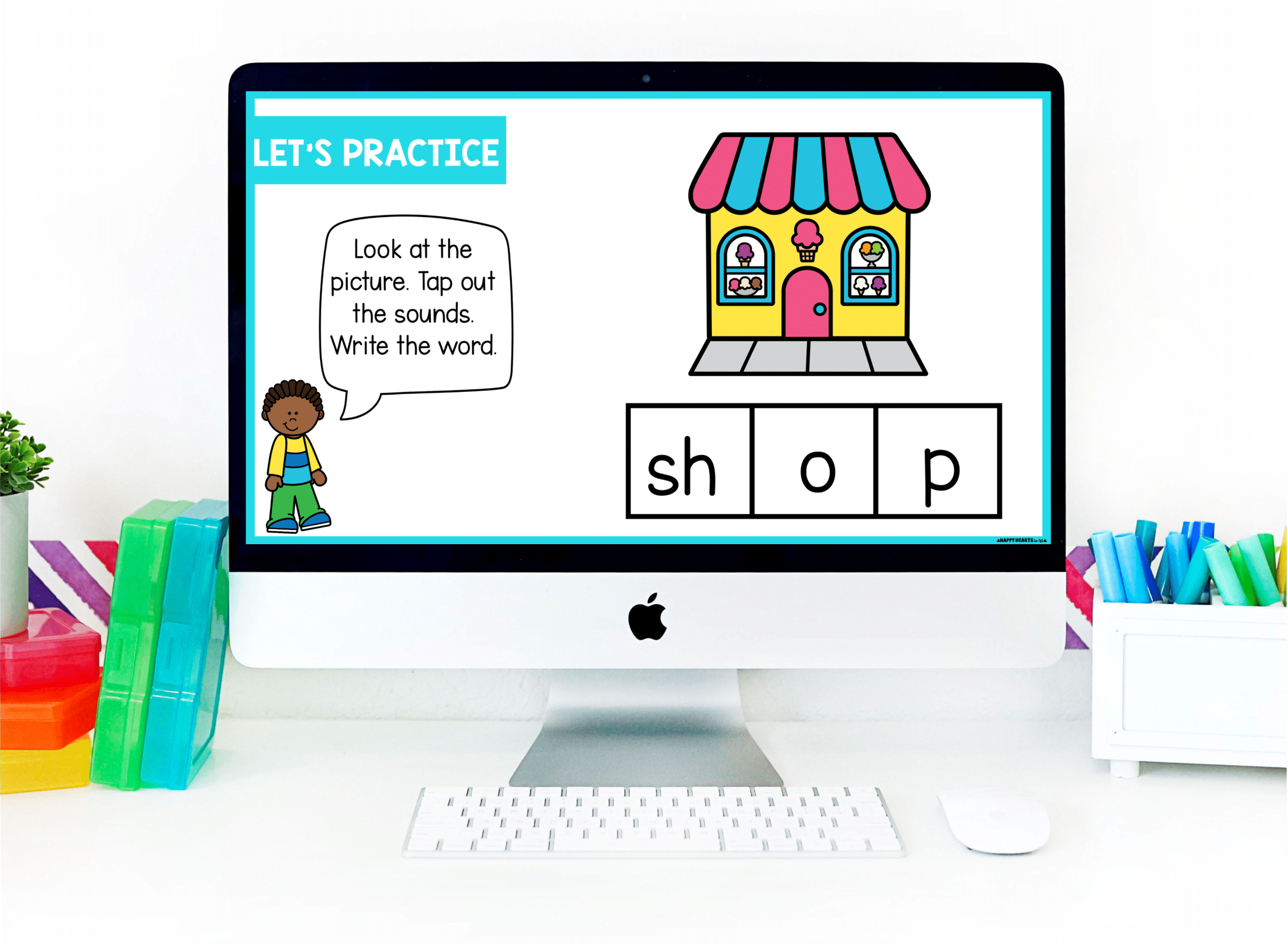
Students are saying sounds, blending words, mapping sounds, writing words, reading sentences, sorting words, and practicing the new phonics pattern with me.
The dry erase boards are key because every student gets to respond. I can quickly see who understands the skill, who needs more support, and who is ready to move on.
Why a Familiar Phonics Routine Matters
One thing that makes a huge difference in phonics instruction is using a familiar format.
When students know what to expect, they can focus on the phonics skill instead of trying to learn a brand new activity every day.
That is why I love using the same lesson structure again and again.
The skill changes, but the routine stays familiar.
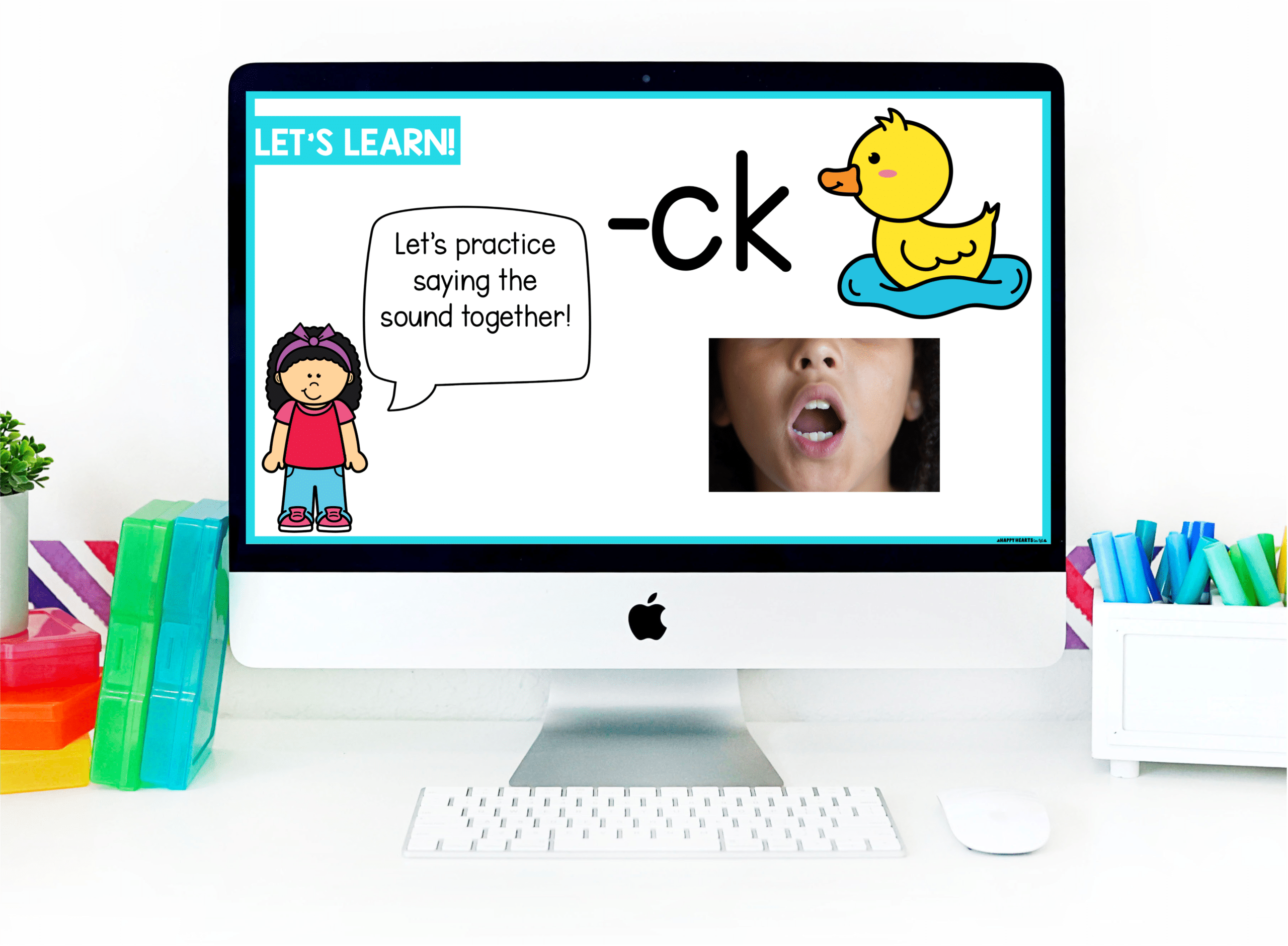
Students know they will warm up, review sounds, practice blending, read words, map words, sort words, read sentences, and participate in interactive activities.
This consistency helps phonics lessons run smoothly and helps students build confidence.
What My Phonics Lessons Include
Each Happy Phonics lesson includes a variety of Science of Reading-aligned activities to help students learn and practice the target skill.
A typical lesson includes:
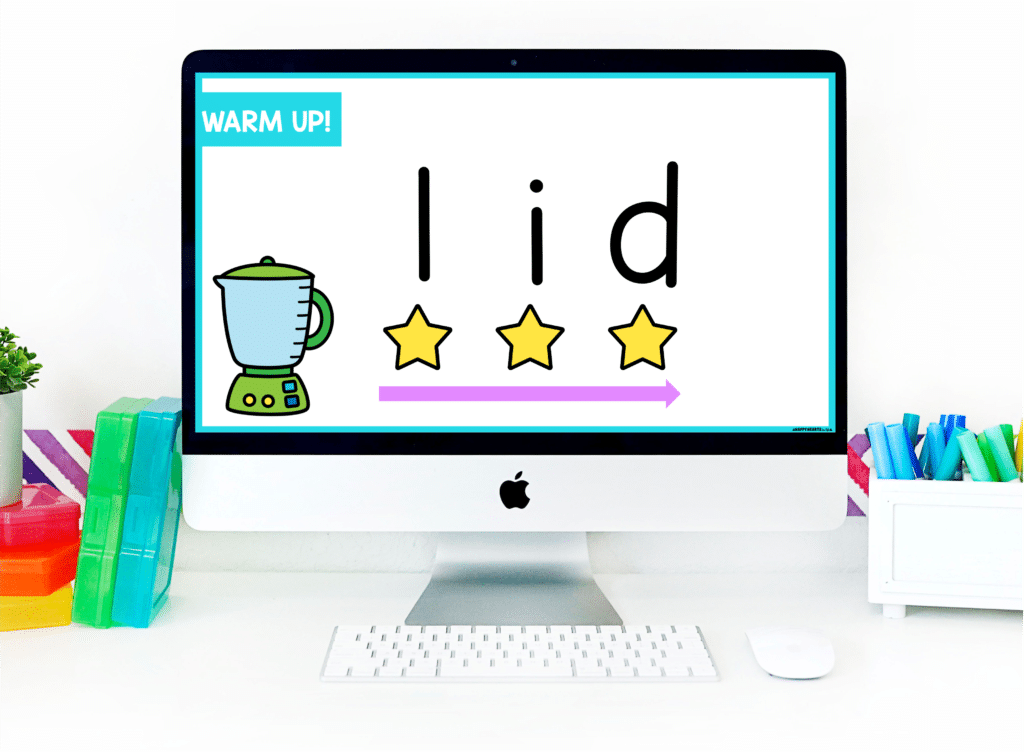
- spiral review warm-up drills
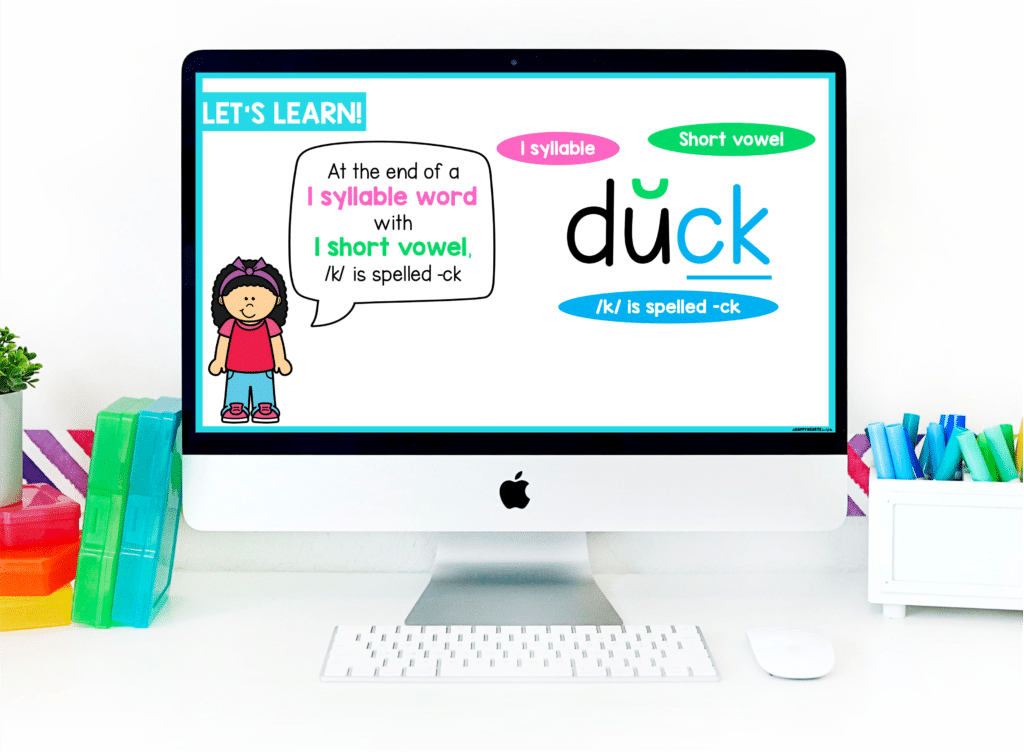
- explicit modeling
- sound and spelling pattern practice
- blending practice
- reading new words
- writing new words
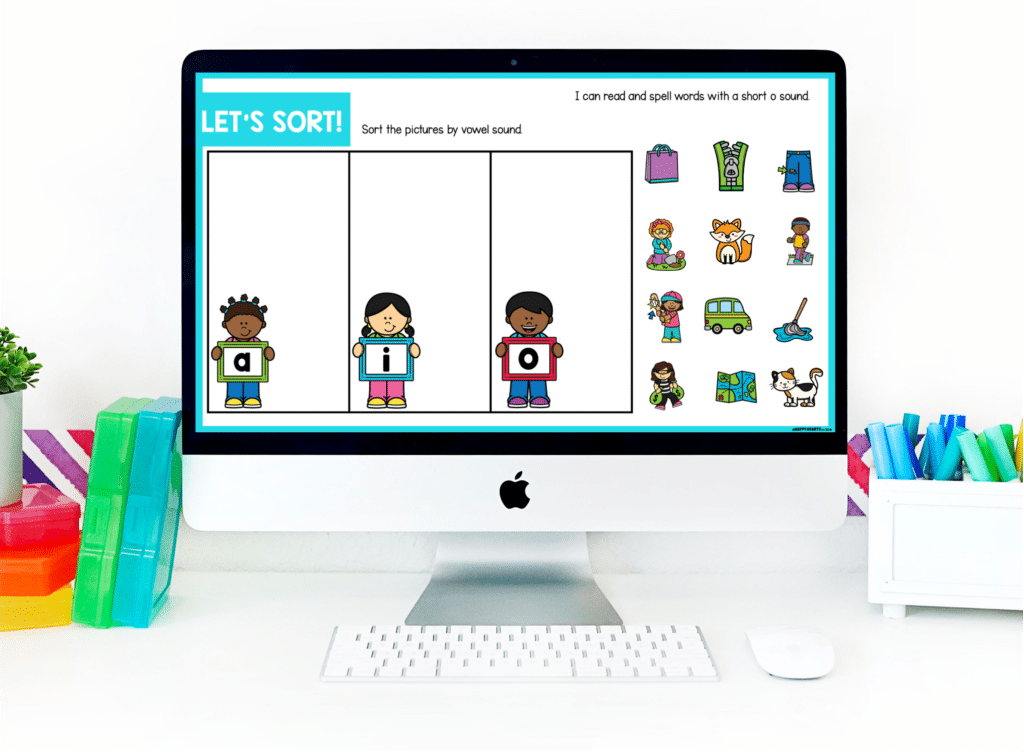
- word sorting
- sentence work
- interactive phonics activities
These pieces work together to help students truly understand the phonics pattern, not just memorize a list of words.
Students are practicing both decoding and encoding, which helps them connect reading and spelling.
What This Looks Like in the Classroom
A phonics lesson might begin with a quick warm-up to review previously taught sounds or words. Then I introduce the new sound or spelling pattern and model how to read words with that pattern.
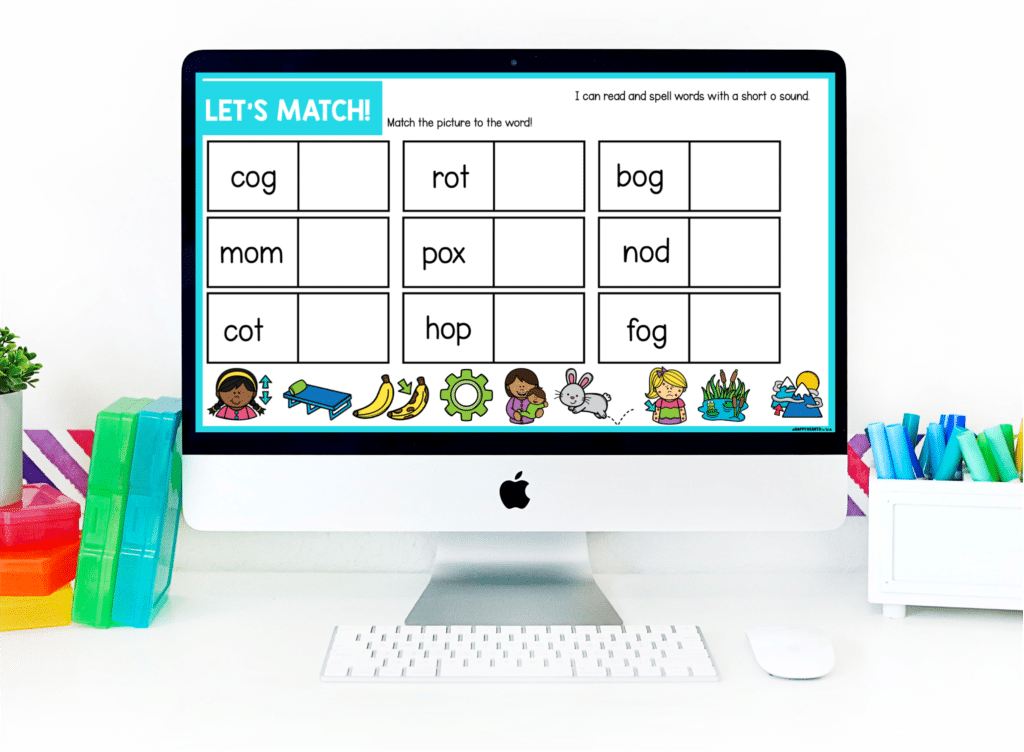
Students practice blending words with me, then they use their dry erase boards to write or map words. We might sort words by pattern, read sentences together, or complete a quick interactive activity on the slides.
Throughout the lesson, students are talking, writing, reading, and participating.
This keeps the lesson engaging while still giving students the explicit instruction they need.
Why I Love Teaching Phonics with Slides
Teaching phonics with slides has made my phonics block so much easier to manage.
The planning is already done. The routine is ready to go. The visuals are engaging. The activities are consistent. And students know exactly what to expect.
I do not have to start from scratch each time I teach a new phonics skill.
I can open the lesson, gather my students on the rug, pass out dry erase boards, and teach.
The slides help me stay focused while still giving students plenty of opportunities to participate.
The Goal of the “Teach It” Routine
The goal of the Teach It part of my phonics routine is simple:
Students need clear instruction before they are expected to practice independently.
When students are explicitly taught the skill, they are much more prepared to practice it in centers, small groups, independent work, and connected text.
That is why the Teach It part matters so much.
It gives students the foundation they need before moving into the Practice It and Apply It parts of the routine.
What Phonics Skills are included?
The Happy Phonics Slides Bundle includes ready-to-teach lessons for the major 1st grade phonics skills students need throughout the year.
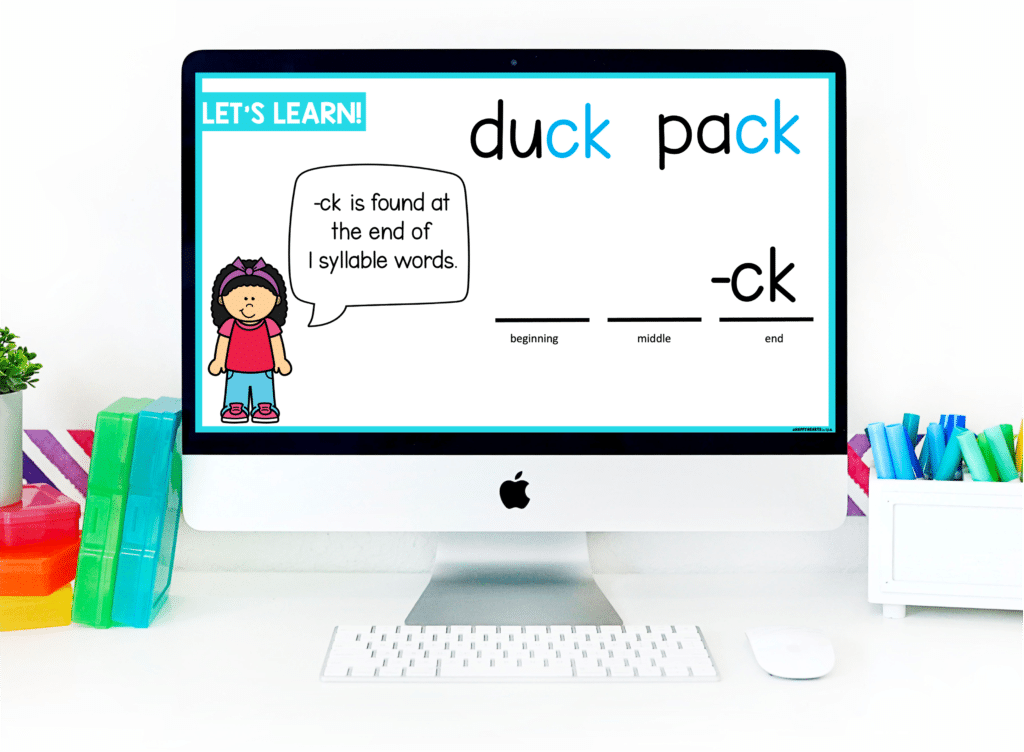
Skills include short vowels, blends, digraphs, glued sounds, magic e, vowel teams, r-controlled vowels, diphthongs, soft c and g, silent letters, contractions, multisyllabic words, and more.
Each skill includes interactive slides for review, explicit teaching, blending, reading words, building words, sorting, sentence practice, and application.
Try a 1st Grade Phonics Lesson for Free
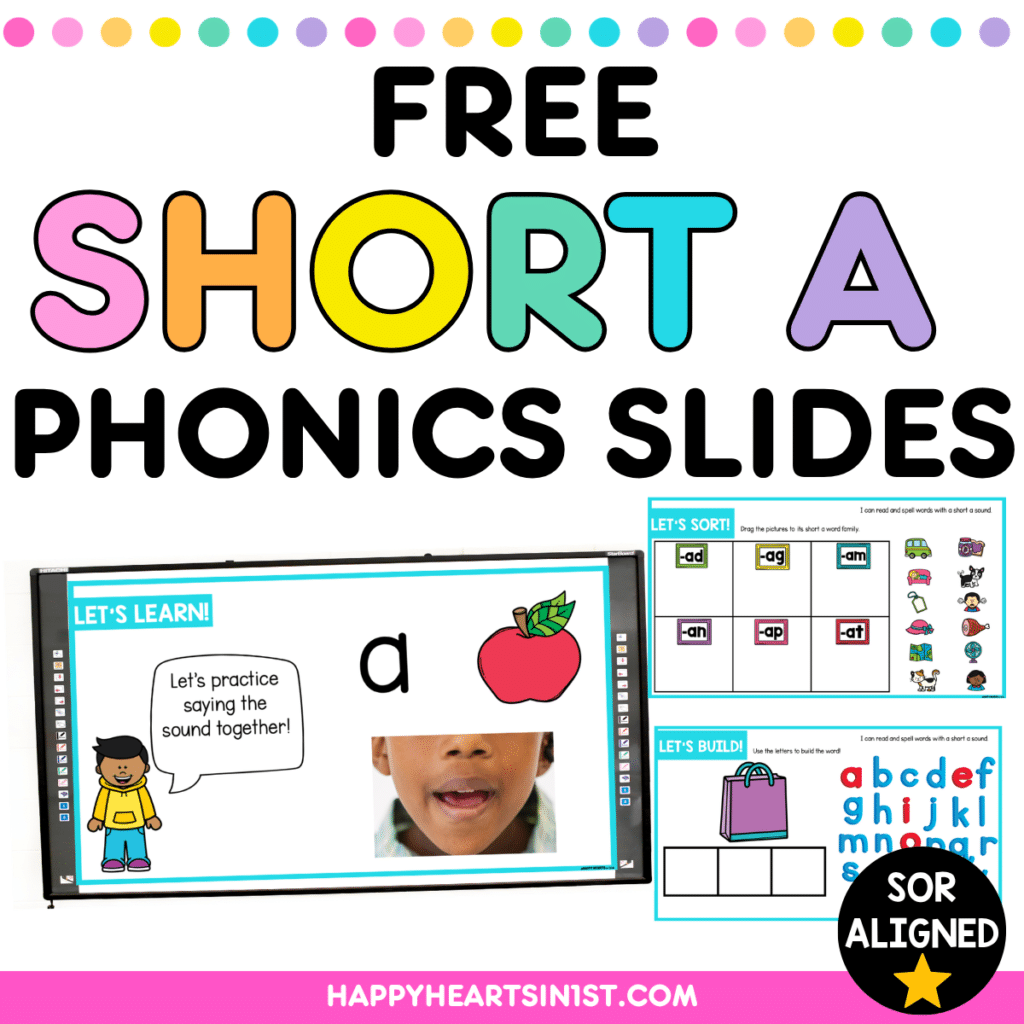
If you want to see exactly how I teach phonics in 1st grade, I have a free Short A Phonics Slides lesson you can try with your students.
This free lesson gives you a peek at how I use slides to teach phonics in a simple, engaging way that aligns with the Science of Reading. Find it here!
Ready to Teach Phonics with Slides?
If you want ready-to-use slides for every 1st grade phonics skill, you can check out my Happy Phonics Slides Bundle.
These slides are designed to take the planning off your plate while giving students explicit, engaging phonics instruction. Each lesson follows a familiar routine with spiral review, modeling, word reading, word writing, sorting, sentence work, and interactive practice.
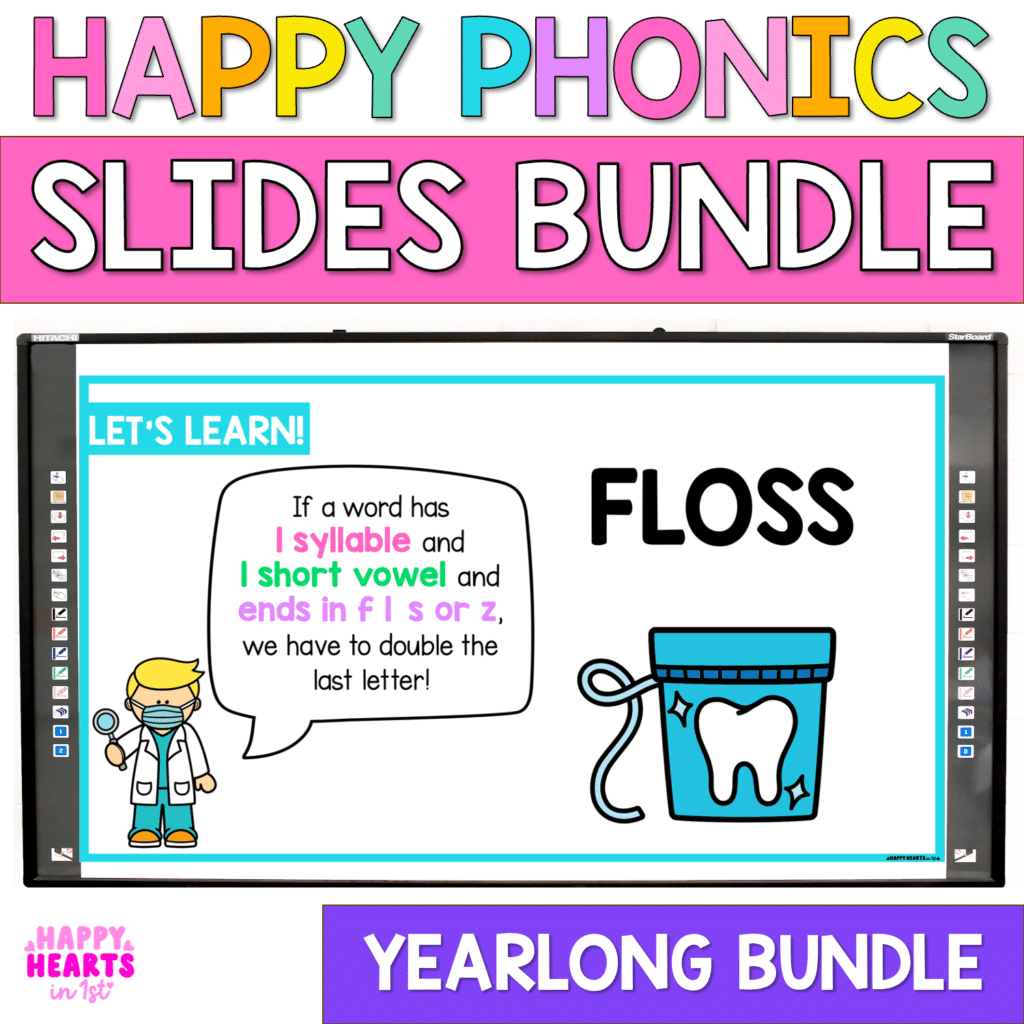
The slides are the Teach It part of my Happy Phonics System.
But a strong phonics routine doesn’t stop after the lesson.
Students also need time to practice the skill and apply it in meaningful ways. That’s why the full Happy Phonics System has 3 parts:
Teach It: Use Happy Phonics Slides for explicit, engaging phonics instruction.
Practice It: Use Decode the Room Phonics Centers and phonics sorts to get students up and moving while they decode words and practice the target skill.
Apply It: Use no-prep phonics pages, small group tools, fluency practice, and quick checks to help students read, map, write, sort, and apply the skill independently.
When all 3 parts work together, phonics becomes easier to plan and more effective for students.
You have a clear lesson to teach the skill, engaging centers to practice it, and meaningful follow-up activities to help students apply what they’ve learned.
That’s how I build a simple, consistent 1st grade phonics routine that helps students become confident readers!